
WALHI: 15 Landfills on Fire, Urges End to Open Dumping
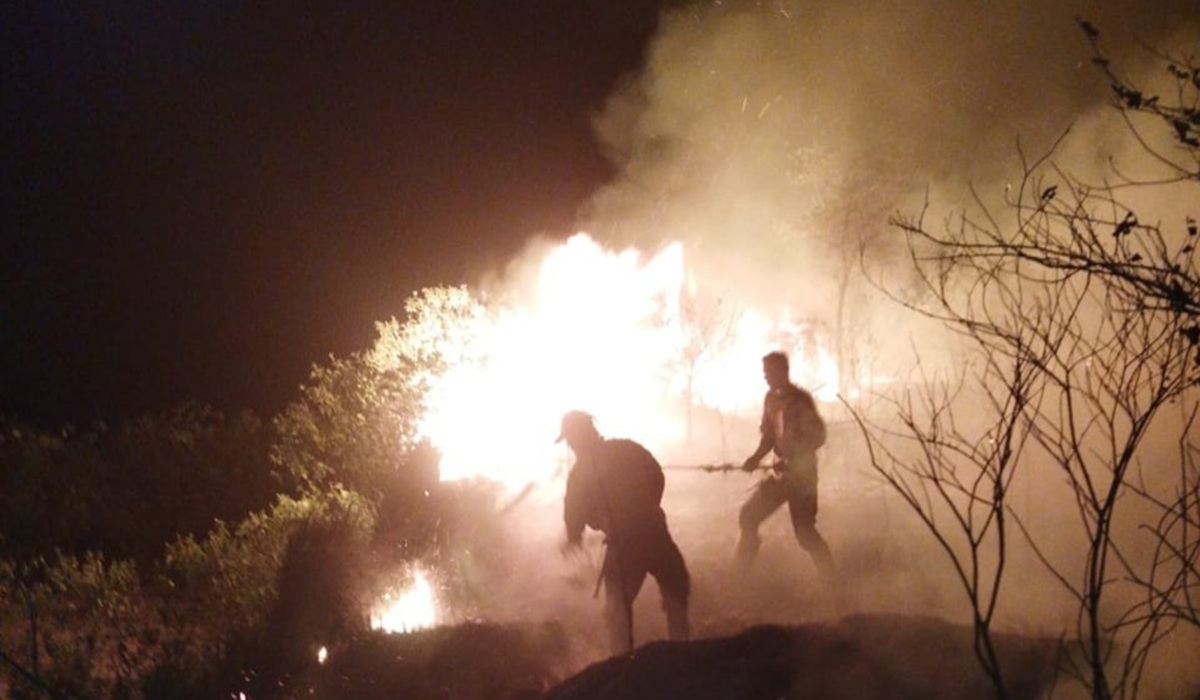
Fires at landfills (TPA) throughout 2026 are seen as an indication of serious issues in Indonesia’s waste management governance. The Indonesian Forum for the Environment (WALHI) has recorded that at least 15 landfills have experienced fires in various regions throughout this year.
Wahyu Eka Styawan, WALHI National Urban Justice Campaigner, noted that fires occurred at the Telaga Punggur Landfill in Batam, Jatiwaringin in Tangerang, Pakusari in Jember, Cipayung in Depok, Sumur Batu in Bekasi, Cikolotok in Purwakarta, Benowo in Surabaya, Dengung in Lebak, Troketon in Klaten, Malabar in Cilacap, Sorong City Landfill, Ciniru in Kuningan, Nangkaleah in Tasikmalaya, and Putri Cempo in Solo.
According to Wahyu, these incidents cannot be viewed solely as an impact of the dry season. Recurring fires indicate structural problems in waste management, particularly in landfills that still employ open dumping systems.
WALHI’s findings are further supported by methane gas emission simulations. Using the First Order Decay (FOD) method based on 2006 IPCC guidelines and waste generation and composition data from 512 regencies/cities for the 2020-2025 period, WALHI estimates that net methane emissions from national landfills will reach approximately 334,109 tonnes in 2025.
This figure is equivalent to about 9.02 million tonnes of CO2e. WALHI predicts that methane emissions could potentially double over the next 25 years if there are no fundamental changes in the waste management system.
“What needs to be understood is that this increase in emissions is not only influenced by new waste entering the landfill. Waste that has been buried for years continues to decay and produce methane. This is a ‘methane debt’ that will continue to be released into the atmosphere even if the volume of incoming waste decreases,” Wahyu stated in a briefing on Thursday (10/9).
WALHI noted that approximately 60.7 per cent, or 312 landfills in Indonesia, still use the open dumping method. In this system, waste is piled openly without adequate gas management.
This condition is believed to increase the potential for methane formation, especially from organic waste undergoing decomposition. During long dry seasons, gas accumulated within the waste piles can trigger fires. Flames can also continue to smoulder beneath the piles, making the firefighting process more difficult.
“This means that landfill fires occurring throughout 2026 are likely not the last. As long as open dumping practices are maintained, every long dry season will continue to present similar, even greater, fire risks as methane gas accumulation increases,” Wahyu emphasised.
In addition to environmental and climate impacts, landfill fires also pose risks to public health. Smoke from the fires can carry fine PM2.5 particles and several hazardous substances, including carbon monoxide, sulphur dioxide, dioxins, and furans.
Exposure to these pollutants can trigger acute respiratory disorders, increase the risk of Acute Respiratory Infections (ISPA), and exacerbate chronic diseases such as asthma and Chronic Obstructive Pulmonary Disease (COPD).
In light of these conditions, WALHI is urging the President of the Republic of Indonesia, along with the Ministry of Environment, to undertake a thorough overhaul of national waste management.
One urgent step identified is reducing the amount of organic waste entering landfills. This can be achieved through waste sorting at the source, composting, and the development of maggot cultivation from the household to the sub-district level.
WALHI noted that approximately 61 per cent of methane emissions from landfills originate from organic waste. Therefore, managing organic waste before it reaches the landfill is considered a vital strategy to suppress emissions.
WALHI also requested that the government accelerate the transition of landfill management systems from open dumping to controlled landfill, and gradually towards sanitary landfill. Furthermore, methane capture and utilisation systems should be implemented across all landfills.
The government is also encouraged to completely abolish open dumping practices in accordance with the mandate of Law Number 18 of 2008. Other necessary steps include strengthening fire mitigation ahead of the peak dry season and increasing the obligation to report waste data through the National Waste Management Information System (SIPSN).