
W.R. Soepratman and the Anthem That Arrived Before the Nation
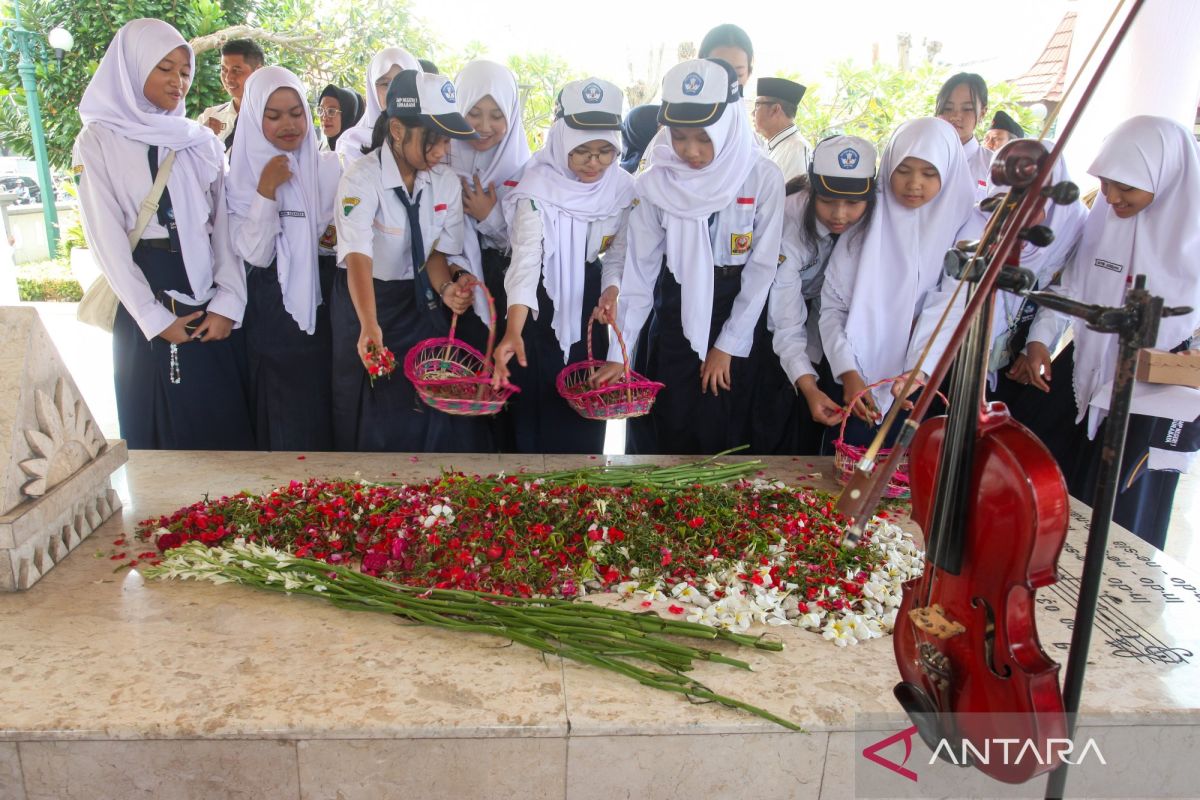
Every Monday morning, a ritual unfolds in hundreds of thousands of schools across Indonesia. Children line up under the sun, and as the command is given to salute the red and white flag, the strains of ‘Indonesia Raya’ fill the air for one minute and fifty seconds. Many may not fully grasp why they must stand at attention; some are merely enduring the heat or waiting for the ceremony to end. Yet, a song created by a humble young man named Wage Rudolf Soepratman nearly a century ago still has the power to make millions pause, whether in schools, government offices, stadiums, or the State Palace. Even on foreign soil, when an Indonesian athlete ascends the podium, strangers willingly stand and unite their voices.
Stripped of its history, the melody is merely a sequence of sounds. But humans have a habit of imbuing objects with meaning. A piece of cloth becomes a flag, a sequence of notes becomes a national anthem, and a territory becomes a country. French sociologist Emile Durkheim spoke of the ‘totem’, a physical object onto which people project sacred values and shared ideals. The totem is not just an object, but a memory taking physical form. The red and white flag is one such totem, and perhaps ‘Indonesia Raya’ is another. When thousands stand before the flag and sing the same song, a phenomenon Durkheim called ‘collective effervescence’ occurs, dissolving individual egos and transforming a crowd into a cohesive spiritual bond.
‘Indonesia Raya’ was not born from a political decree. W.R. Soepratman brought it into history with his violin at a time when ‘Indonesia’ was more an idea than a reality. When he first played it at the Second Youth Congress in 1928, there was no state called Indonesia, only a collection of islands the colonial government referred to as the Dutch East Indies. Soepratman, born in Batavia in 1903 to a KNIL sergeant major, was neither a general nor an official with a pulpit. He was a journalist and a self-taught musician who worked for newspapers like Kaoem Moeda and Sin Po, which exposed him directly to the conversations about native awakening. He came not with a military uniform, but with a violin; not with a war command, but with musical notation. His background in words and tones allowed him to understand that a nation is built not only by political decisions, but also by the feeling that different people are living the same story.
His journalistic career gave him a window to observe society objectively, capturing the anxieties, debates, and aspirations of the youth. Soepratman translated this pulse into music. He was not a composer from a grand musical institution but was largely self-taught, gaining knowledge while living with his brother-in-law, Willem van Eldik, who gave him access to instruments and Western musical scores. According to the Youth Pledge Museum, on 28 October 1928, at the Indonesische Clubgebouw building on Jalan Kramat Raya, Soepratman performed ‘Indonesia Raya’ for the first time on his violin, without lyrics. Under the tight surveillance of the colonial authorities, a song that explicitly mentioned Indonesia could only be presented as music. There were no explosions or war cries in the melody, just a gentle flow of notes filling the room. The congress participants came from diverse regions and backgrounds, speaking different mother tongues and holding varied worldviews. We cannot know exactly what they felt hearing Soepratman’s violin, but the melody of a nation that did not yet exist had arrived before the nation itself.