
Vulnerabilities of the Malacca Strait and Contingencies of Asymmetric Conflict in the Region
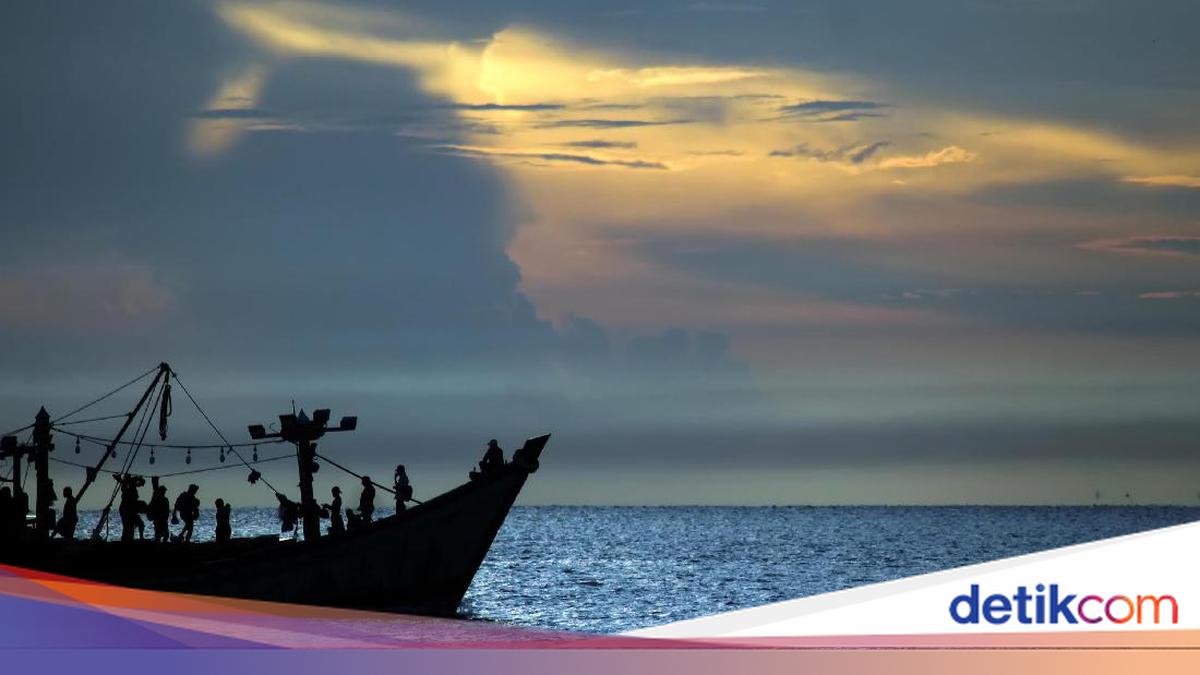
The Malacca Strait, like the Strait of Hormuz, is a strategic strait that, if subjected to contingencies of asymmetric conflict in the South China Sea, would cause complications in the economic sphere for numerous countries. This is because the world’s busiest strait transports 23.3 million barrels of oil per day carried by tanker ships from various nations.
In 2024, there were 19,507 bulk tankers and 9,724 very large crude carriers (VLCCs) passing through the Malacca Strait. The strait is the lifeblood of the global economy. Approximately 25-30% of maritime trade is transported through it: 80% of which consists of China’s crude oil imports.
Industrial countries in East Asia are highly dependent on the Malacca Strait, so it is no exaggeration to say that the Malacca Strait makes a significant contribution to the global economy.
The Malacca Strait, which separates the Malay Peninsula from the island of Sumatra, is about 930 km long, with the narrowest point of 38 km (24 miles) at the Philip Channel (Singapore), and the widest point of 250 km at the northwest end of We Island, Sabang.
It is at that narrowest point where various problems can arise, whether due to armed conflict, blockade, or ship accidents.
Every year, the Malacca Strait is navigated by 75,000 ships of various types, meaning thousands of ships pass through there every day. If the strait experiences a contingency, those ships cannot pass, disrupting the supply of goods. As a result, a crisis would occur, similar to what happened in the Suez Canal in 2021.
The Suez Canal was paralysed for a week after the 400-metre-long container ship MV Ever Given ran aground across it, blocking the navigation channel with its massive hull. Consequently, other ships could not pass, causing disruptions in the logistics distribution flow from Asia to Europe and vice versa.
The Suez Canal paralysis was purely due to an accident, not asymmetric warfare. The situation would certainly be more serious if the canal’s closure was due to war, as Iran did by blockading the Strait of Hormuz during the Iran-US-Israel war.
South China Sea Conflict
A contingency in the Malacca Strait could occur if the potential conflict in the South China Sea (SCS) or the Taiwan Strait spirals out of control and turns into a limited war or open war between countries in the region. As is known, there are overlapping claims in the SCS involving China, Vietnam, the Philippines, Malaysia, Brunei Darussalam, and Malaysia.
China unilaterally claims 90% of the waters in the SCS as its own, despite objections from the other claimant countries. China even does not recognise the decision of the International Arbitration Court stating that China has no basis to claim the SCS as its sovereign territory.
In such a context, if an armed conflict occurs in the SCS, the Malacca Strait, which serves as the gateway to the Indian Ocean, would experience contingencies, especially if the conflicting countries use the strait as an arena for asymmetric warfare, as Iran did in the Strait of Hormuz.
In addition to the claimant countries, the SCS also hosts US warships conducting Freedom of Navigation Operations (FONOPs), as they consider those waters international waters. As a result, tensions often arise between the US and China.
Potential conflict also exists in the Taiwan Strait, because China considers the Republic of Taiwan not a sovereign state, but part of China. This situation arose after the civil war in 1949 between the Chinese Communist Party and the Kuomintang Party ended with the Kuomintang’s defeat and retreat to Taiwan Island until now.
If China launches a military operation to seize Taiwan, a major disaster would occur, as the US would not allow that invasion to happen. The US has the Taiwan Relations Act passed by the US Congress. That regulation states that the US will assist Taiwan if the country is attacked by another nation.
If that happens, the Taiwan Strait would be blockaded by China. Subsequently, the Malacca Strait could also be blockaded by the US or China to gain tactical and strategic advantages.
Strategic Straits as a Medium for War
In the Iran-US-Israel war in February-March, it was evident how a strategically valuable strait was used as one strategy to gain tactical advantages in warfare. Iran, with full calculation, closed the Strait of Hormuz to force the US to ceasefire.
The US-Iran-Israel war is a fourth-generation asymmetric war carried out by Iran. In addition to closing the Strait of Hormuz, Iran also employed proxies Hezbollah, Hamas, and Houthi to fight on three different fronts.
On the other hand, the Iranian Armed Forces (Artesh) along with the Islamic Revolutionary Guard Corps (IRGC) launched numerous cheap drones at Israel as well as US military bases in Gulf countries.
Iran’s asymmetric warfare strategy had an impact on global oil shortages due to 20% of its supply being held in Hormuz, while Iranian drones and missiles were able to deplete expensive US-Israeli missiles.
Such a situation must be avoided and should not happen in the Malacca Strait. For that reason, strategic thinking from countries in the region is needed to safeguard the Malacca Strait and avoid conflict contingencies by prioritising multilateral or bilateral diplomacy to prevent armed conflict.
Source: jawawa.id (https://jawawa.id/newsitem/vulnerabilities-of-the-malacca-strait-and-contingencies-of-asymmetric-conflict-in-the-region-1776851560)
Originally published by detikcom (https://news.detik.com/kolom/d-8456442/kerawanan-selat-malaka-dan-kontingensi-konflik-asimetris-di-kawasan), translated from Indonesian