
Volunteers Harvest Seagrass Seeds to Restore England's Coastal Ecosystems
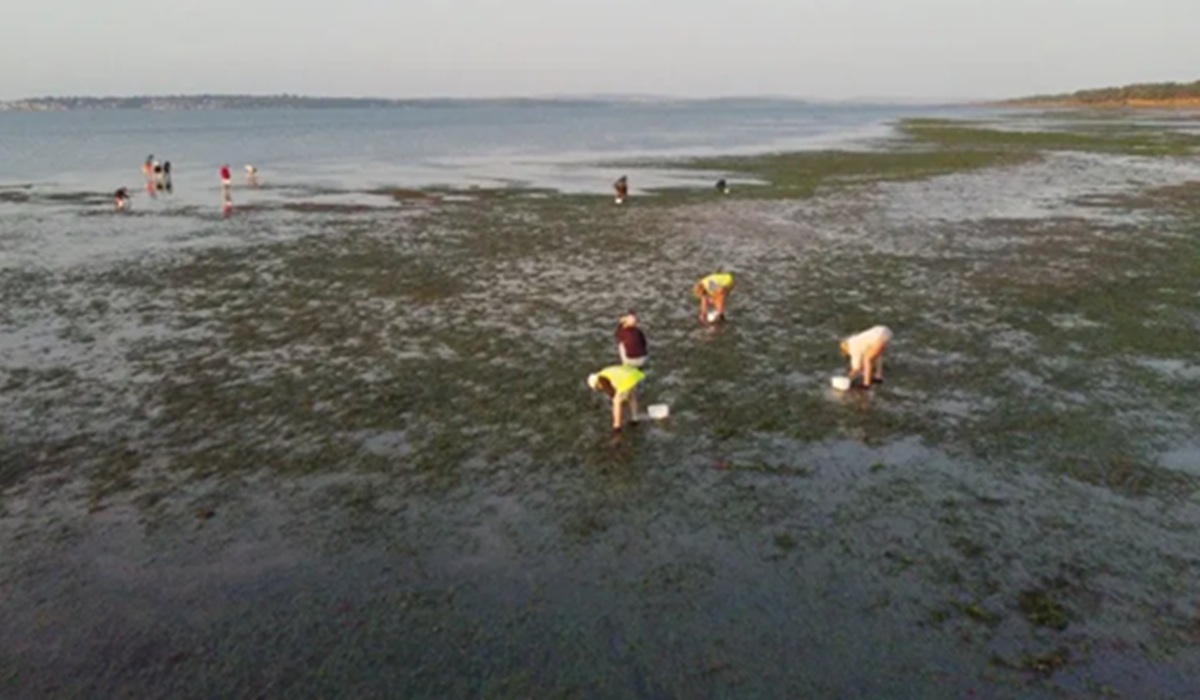
In the early hours of around 04.00 local time, dozens of volunteers gathered at Calshot Beach near Southampton, England. As the tide in the Solent receded dramatically, the beach revealed expanses of seagrass that conservationists hope will help restore a dwindling coastal ecosystem.
The volunteers’ main purpose is to harvest seagrass seeds. Much like trees on land, seagrass has an extraordinary ability to absorb pure carbon. An equivalent area of seagrass can absorb up to 35 times more carbon dioxide than a tropical rainforest, locking it away and releasing oxygen back into the environment. In addition, seagrass meadows provide vital habitat for thousands of marine species.
The United Kingdom has lost more than 90 per cent of its seagrass meadows over the past century due to disease outbreaks, human activity, and pollution. Seabeds that were once green and teeming with life are now damaged and bare.
The seed-collection effort is led by Tim Ferrero of the Hampshire and Isle of Wight Wildlife Trust. Carrying white plastic buckets, the volunteers comb the beach area to pick the right parts of the plant.
“Seagrass is the only flowering plant in the sea,” said Ferrero as he walked through the meadow. “They do everything land plants do: flowering, pollinating, and producing seeds underwater. So what we are doing is collecting seeds from existing meadows to plant elsewhere in order to rebuild seagrass beds.”
Picking the seeds requires care. The pod-shaped petals that are harvested are slightly rounder and paler than the flat blades of seagrass.
“Sometimes you just have to feel around for the short stalks that feel like they contain a packet of Tic Tacs,” said one volunteer, Sophie Whitemoor.
Another volunteer, James Harper, kept refining his technique. “It’s simply a matter of finding the roundest stalks,” he said.
Although they had to race against time before the tide came back in, the volunteers’ enthusiasm never waned. A volunteer named Jackie Mellan explained her motivation: “For me, it’s purely passion-driven. Whenever there’s a chance to get out and help a restoration project, I always join in.”
The buckets filled with seeds are then taken to the University of Portsmouth’s Institute of Marine Sciences in Eastney. The seeds are placed in large tanks of seawater to undergo a natural rotting-out process for 8 to 12 weeks, allowing the seeds to detach from their stalks.
Once separated, the seeds are stored in tanks of high-salinity water at a cold temperature of 1 to 3 degrees Celsius throughout the winter. When spring arrives, the volunteers will be ready to sow the precious seeds back into the sea.
Source: jawawa.id (https://jawawa.id/newsitem/volunteers-harvest-seagrass-seeds-to-restore-englands-coastal-ecosystems-1784616669)
Originally published by Media Indonesia (https://mediaindonesia.com/humaniora/912898/perjuangan-sukarelawan-berburu-benih-rumput-laut-demi-pulihkan-pesisir), translated from Indonesian