
Volkswagen Considers Cutting 100,000 Jobs and Closing Four Plants
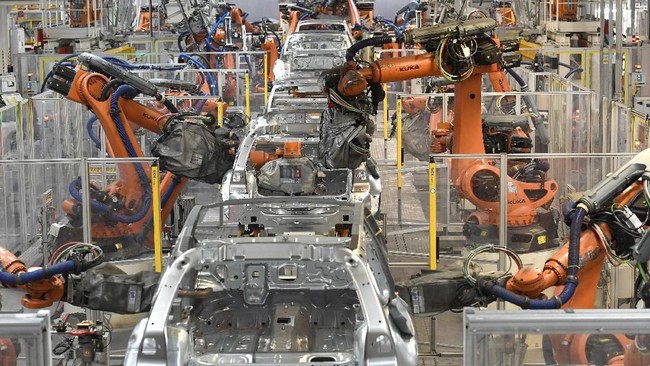
Volkswagen is considering closing four plants in Germany and increasing redundancies to as many as 100,000 people, two Reuters sources have revealed. Members of VW’s supervisory board have been informed of the plan, which will be discussed at a meeting on 9 July. The move comes as the carmaker faces mounting pressure from Chinese competitors, high car import tariffs to the United States, and declining demand in Europe, which the company says makes its business model unsustainable. According to the sources, the closure of plants in Hanover, Zwickau, Emden, and Audi’s Neckarsulm site would endanger more than 45,000 jobs. That would add to the 50,000 redundancies currently planned. In absolute terms, 100,000 job cuts and the closure of four assembly plants would be the largest restructuring in the history of the automotive industry. It would be comparable to the massive overhaul GM undertook ahead of and during its 2009 bankruptcy and in the early 1990s, when it cut as many as 74,000 jobs over four years and closed or idled 21 plants. Volkswagen CEO Oliver Blume presented the plan to senior executives earlier this week to rally support for the sweeping cuts, which are likely to face fierce resistance from trade unions and the state of Lower Saxony, the carmaker’s second-largest shareholder. The overhaul was first reported by Manager Magazin, which also said the world’s number two carmaker would cut investment by around 15% to just over US$148 billion over the next five years. Blume and Chief Financial Officer Arno Antlitz aim to fundamentally restructure the 89-year-old company, including separating the core VW brand and parts operations into distinct entities, the magazine added, citing sources. Meanwhile, Volkswagen shares traded at a 16-year low on Friday, down 3.4% at 13:35 GMT, indicating investor scepticism that the plan will succeed. “High costs are only a symptom, not the cause. They do not address the root cause, which is weak sales,” Ingo Speich of Volkswagen shareholder Deka told Reuters. “VW must deliver attractive products that the market wants; that would end the debate about costs.” A Volkswagen spokesperson declined to comment on “confidential documents.” “The entire group, including brands and subsidiaries, must undergo extensive change,” the spokesperson said. VW’s works council and the influential IG Metall union in Germany vowed to oppose the measures, saying in a joint statement on Friday: “If the plan proceeds, we will do everything in our power to prevent it.” The prime minister of Lower Saxony said the state would not approve the plan. Porsche SE, the investment firm of the Porsche and Piech families and Volkswagen’s largest shareholder, declined to comment. Volkswagen’s plan is likely to highlight its unique governance and ownership structure, which gives significant influence to labour representatives and Lower Saxony. In the 2025 financial year, the group’s global headcount was 667,164, with nearly 43% employed in Germany. Blume’s first attempt to close a plant in Germany in 2024 faced fierce union resistance, forcing a retreat. At that time, management had proposed closing or selling several sites as part of a major cost-cutting drive to address overcapacity and weak EV demand, triggering strikes and a prolonged standoff with IG Metall and the works council, which hold significant sway over company decisions. As market conditions worsen, Blume is under greater pressure to revive Volkswagen’s fortunes as the company battles tariffs and increasing competition from Chinese carmakers, its biggest threat. “The VW Group has suffered from years of neglecting workforce adjustments due to the strong grip of the regional government and unions on the company,” said independent automotive analyst Matthias Schmidt. “Market reality is hitting the German giant hardest.” Major carmakers continue to lose market share to locally produced electric vehicles in China. According to AlixPartners, the market share of non-Chinese carmakers fell to 32% in 2025 from 57% in 2020. After being the top carmaker in China for years, Volkswagen was displaced to second place by BYD in 2024 and fell to third in 2025. The decline has now spread to premium carmakers such as BMW, which issued a surprise profit warning last week partly due to weak sales in China. Chinese carmakers are also expanding into emerging markets and growing rapidly in Volkswagen’s home region of Europe. BYD, Chery, SAIC, and Leapmotor doubled their combined market share in Europe through May compared to last year, according to ACEA. Dozens of other Chinese carmakers have launched or plan to launch their products in Europe in the near future.
Source: jawawa.id (https://jawawa.id/newsitem/volkswagen-considers-cutting-100-000-jobs-and-closing-four-plants-1782561053)
Originally published by CNBC Indonesia (https://www.cnbcindonesia.com/news/20260627174757-4-746234/gawat-raksasa-otomotif-mau-phk-100000-karyawan-dan-tutup-4-pabrik), translated from Indonesian