
Volkswagen Car Plant Becomes Israeli Weapons Production Centre
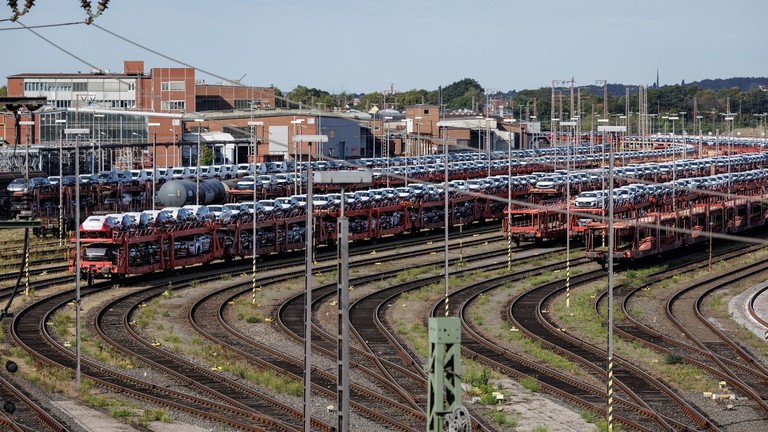
The Volkswagen plant in Osnabrück, Germany, is to be converted from a car production facility into a centre for the defence industry. Israeli arms manufacturer Rafael Advanced Defense Systems will become the first major industrial partner at the site.
Volkswagen announced the agreement on Monday (7/9) with the government of the state of Lower Saxony and the Israeli investment firm Aurelius Capital regarding the sale of the plant. Aurelius will hold the majority stake, whilst Lower Saxony will also own a share.
The plant will be gradually transformed into a centre for the development and production of security and defence technology. The initial project is a partnership with Rafael to produce air defence systems and their components for Germany and other European customers.
Rafael is an Israeli state-owned defence company that developed the Iron Dome missile defence system. Israeli media reported that the Osnabrück facility will produce a number of components for the system, including military vehicles, launchers and generators.
However, the Tamir interceptor missiles used by Iron Dome will not be manufactured at the plant.
The conversion carries a historical dimension. The Osnabrück plant was previously owned by Karmann, a coachbuilding firm that produced aircraft components for the German military during the Nazi era. The company also used forced labour during the Second World War.
Volkswagen took over Karmann’s operations in Osnabrück after the company went bankrupt in 2009. In 2024, Volkswagen decided to halt vehicle production at the plant by summer 2027 at the latest.
The new agreement is expected to preserve jobs for more than 1,200 workers. However, the plant’s change of use also signals a shift in German industry as the government ramps up defence spending.
Lower Saxony’s Minister-President Olaf Lies said the change was inseparable from the fundamental shift in Germany’s security situation and the growing need for protection.
The deal initially faced objections from the Qatar Investment Authority, one of Volkswagen’s major shareholders. The final transaction structure does not place Rafael as owner of the plant; ownership will rest with Aurelius and Lower Saxony.
The plant’s repurposing comes as Volkswagen itself undergoes a sweeping restructuring. Last week the company confirmed plans to cut up to 100,000 jobs worldwide by 2030.
Volkswagen faces weak demand in Europe, high energy costs following the end of cheap Russian gas supplies, American tariffs and intensifying competition from Chinese carmakers.
Volkswagen is not the only European automotive manufacturer eyeing the defence industry. Mercedes-Benz has also begun viewing the sector as a new opportunity.
The shift from automotive to defence production is taking place as European Union member states expand their military capacity. Russia regards this build-up as preparation for a possible direct conflict.
Russian Foreign Minister Sergey Lavrov has even accused Germany and EU member states of transforming into a ‘Fourth Reich’. Russian President Vladimir Putin has also claimed that NATO countries have moved from merely supporting Ukraine to preparing for war with Russia.
The conversion of the Volkswagen plant is a concrete example of how the war in Ukraine and Europe’s changing security policies are beginning to reshape industrial structures. A plant that previously produced civilian vehicles is now being prepared to enter the European defence production chain.
Source: jawawa.id (https://jawawa.id/newsitem/volkswagen-car-plant-becomes-israeli-weapons-production-centre-1788846660)
Originally published by Media Indonesia (https://mediaindonesia.com/internasional/930917/pabrik-mobil-volkswagen-jadi-pusat-produksi-senjata-israel), translated from Indonesian