
Volcano Observation Post Explains Black Sand Rain as Effect of Ile Lewotolok Eruption
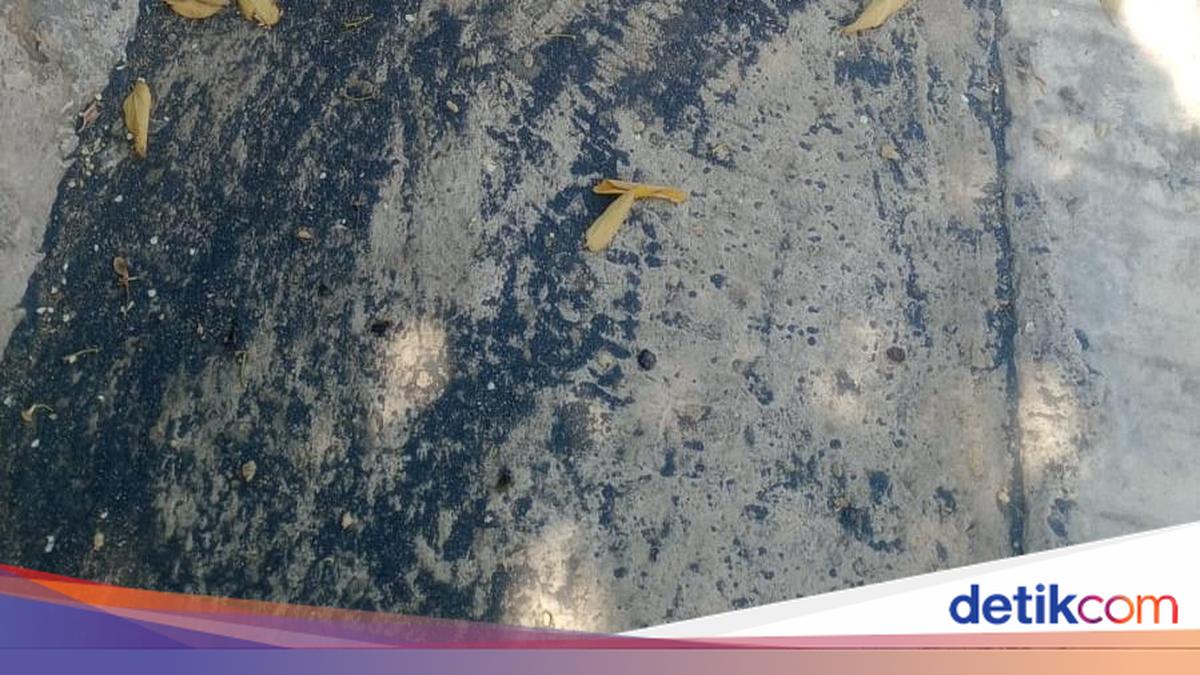
Mount Ile Lewotolok in Lembata Regency, East Nusa Tenggara, released volcanic ash mixed with black sand which rained down on villages on the volcano’s slopes. The ash covered roads, vegetation and residents’ settlements.
Yeremias Kristanto, an officer at the Ile Lewotolok Volcano Observation Post (PGA), explained that volcanic ash can indeed take the form of sand released into the air as a result of a volcanic eruption.
“Ash and sand are both pyroclastic material, which is material produced by an eruption of Mount Ile Lewotolok that is thrown into the air and then falls back down,” Yeremias said when contacted by detikBali on Tuesday (8/9/2026).
The Head of Amakaka Village, Ambrosius Boyang, showed detikBali the black volcanic ash that had settled on the roads as a result of the eruption of Mount Ile Lewotolok.
“The sand that falls like rain is pitch black. We are bathing in dust every day,” he said briefly.
As is known, 11 villages in Ile Ape Sub-district, Lembata, were exposed to volcanic ash rain from Mount Ile Lewotolok on Tuesday.
“The information as of this morning remains the same as yesterday, and 11 villages have been affected. These 11 villages are Napasabok, Bunga Muda, Lamawara, Amakaka, Tanjung Batu, Waowala, Beutaran, Tagawiti, Dulitukan, Palilolon and Kolipadan,” said the Head of Ile Ape Sub-district, Laurens Manuk.
Laurens said the increasing intensity of the eruptions at Mount Ile Lewotolok, with winds blowing from the east-southeast to the north-west, had caused the eruption dust to be very massive and to fall continuously on settlements.
“Crops are starting to be disturbed, people’s eyes hurt, and their bodies itch. We have communicated with the Lembata Regency Disaster Management Agency (BPBD) to ensure masks are in stock at the warehouse for distribution to the community,” he concluded.
Stanislaus Ara Kian, an officer at the Ile Lewotolok Volcano Observation Post, explained that the eruption occurred at 06.35 Central Indonesian Time on Tuesday, with an ash column reaching 800 metres above the summit.
“This eruption was recorded on the seismogram with a maximum amplitude of 40 millimetres (mm) and a duration of approximately 3 minutes,” Stanislaus said in an official statement on Tuesday.