
Volcanic ash poses danger to aircraft, here is why flights are suspended
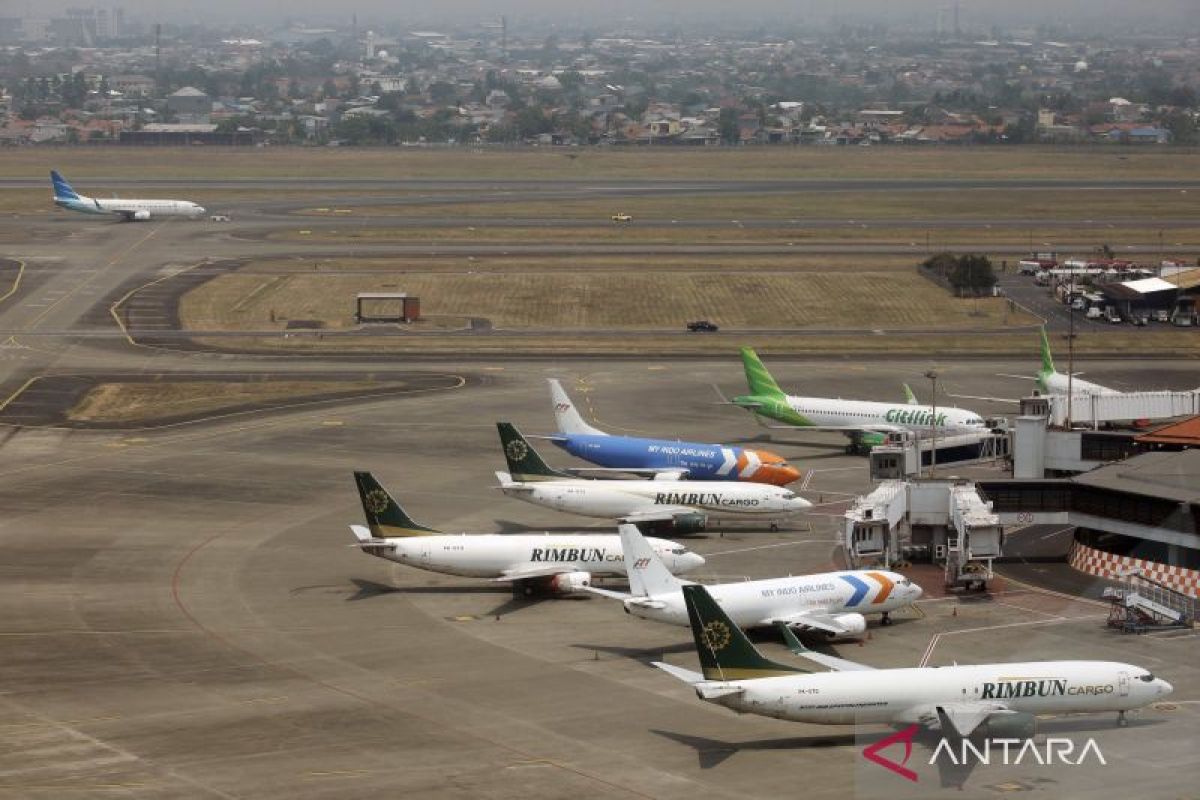
Jakarta (ANTARA) – The spread of volcanic ash from Mount Anak Krakatau has disrupted flights across several parts of Indonesia. The situation is not merely a matter of visibility, but relates to the risk of damage to aircraft engines and components.
Mount Anak Krakatau erupted again in early September 2026. The volcanic ash subsequently spread to several regions in Java and Sumatra, including Jakarta. The condition forced a number of airports to temporarily suspend flight operations as a safety measure.
On 6 September 2026, ash clouds were reported to reach altitudes of up to around 50,000 feet on the Sumatra side. As a result, more than 1,500 flights and roughly 170,000 passengers were affected at several airports.
Volcanic ash is not ordinary dust
Volcanic ash consists of fragments of rock, minerals and volcanic material of very small size. These particles are abrasive in nature and can be carried by wind over great distances from the eruption source.
According to the United States Geological Survey (USGS), volcanic ash can pose a serious threat to aviation even when aircraft are far from the volcano. High-concentration ash clouds can reduce visibility, damage aircraft systems and cause interference with jet engines.
Consequently, an aircraft does not need to be directly above Mount Anak Krakatau to be affected. As long as a flight path has the potential to intersect with an ash cloud, routes can be diverted or flights temporarily suspended.
One of the greatest risks comes from the possibility of volcanic ash entering jet engines.
When an aircraft passes through an ash cloud, particles can be sucked into the engine. Because temperatures in certain parts of the engine are extremely high, the ash material can melt and then re-deposit on cooler engine components.
These deposits can disrupt airflow and engine performance. The abrasive nature of ash can also erode components, increasing the risk of damage. In certain conditions, engines can even lose thrust or suffer a flameout.
Aircraft can lose engine power
This danger has already materialised in a number of aviation incidents.
The USGS records one serious case in 1982, when a Boeing 747 flew through an ash cloud resulting from the eruption of Mount Galunggung in Indonesia. The aircraft lost power in all four engines and descended approximately 25,000 feet before three engines were successfully restarted. The aircraft ultimately landed safely in Jakarta.
USGS data also shows that of 129 documented encounters between aircraft and volcanic ash clouds up to 2009, 79 caused varying degrees of damage to the airframe or engines. Nine incidents even involved engine failure while the aircraft was in flight.
The danger of volcanic ash does not stop at the engines. Abrasive particles can scratch aircraft windscreens, reducing pilot visibility.
Ash can also interfere with aircraft systems and accelerate wear on various components. Even at lower concentrations, exposure to ash and volcanic aerosols can accelerate engine and component wear, necessitating more frequent maintenance.
These conditions mean flights must remain cautious even when ash concentrations do not appear very thick from the ground.
Why not simply fly higher?
Volcanic ash clouds do not sit at one specific altitude. The material can spread across various layers of the atmosphere and be carried by wind in different directions.
In the latest Anak Krakatau eruption, for instance, ash was observed reaching altitudes of up to 50,000 feet. Because the spread can reach aircraft cruising levels, simply raising or lowering altitude is not necessarily a solution.
Pilots and air traffic controllers must consider the location, altitude, concentration and direction of movement of ash clouds before determining whether a flight path is safe.
Volcanic ash is not always easy to see
Ash clouds also have characteristics that make them difficult to identify by sight alone.
The USGS states that volcanic ash can reduce visibility and is not always easy to distinguish from ordinary clouds. Therefore, information from satellites, volcano monitoring, atmospheric reports and coordination between aviation authorities becomes critically important.
This explains why the decision to close airports or divert flights can be taken even when weather conditions around the airport appear relatively normal.
Airport closures are carried out as a precautionary measure when the ash spread is deemed capable of endangering flight operations.
Following the development of the Anak Krakatau eruption, a number of airports were affected and flights had to be suspended or adjusted. Latest reports also indicate that eight airports were affected by the volcanic ash spread.
Such decisions aim to prevent aircraft from entering areas with dangerous ash concentrations. Delaying flights may indeed leave passengers stranded or disrupt travel schedules, but the measure is taken to reduce a far greater safety risk.
Safety is the priority
Flight bans during volcanic ash threats do not mean aircraft are incapable of handling bad weather. Volcanic ash has different characteristics because it can enter engines, disrupt aircraft systems and cause serious damage.
Previous aviation cases show that encounters between aircraft and ash clouds can end in loss of engine power. Therefore, when the ash from Mount Anak Krakatau enters flight paths, diversion, delay or temporary suspension of flights becomes part of safety procedures.
In short, volcanic ash can render aircraft unable to fly not only because it obstructs visibility, but because it can damage engines and aircraft components to the point of causing loss of thrust. Monitoring the spread of ash is essential so that aircraft do not enter risky airspace, as summarised from various sources.