
Volcanic Ash Disrupts Flights: The Costs Driving Airline Losses
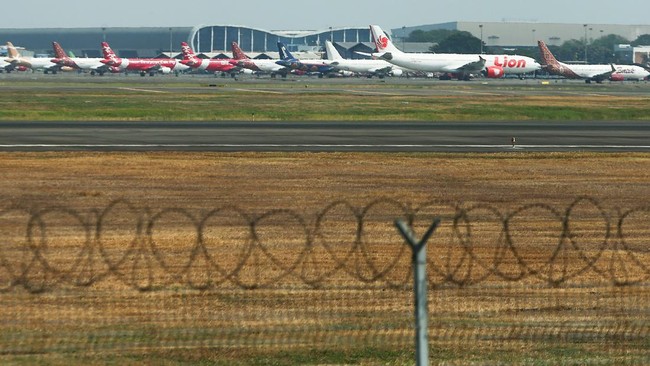
Volcanic ash can become a costly problem for airlines because flight disruptions do not automatically eliminate the various costs attached to aircraft operations. Even when flights are suspended, a number of expenditures continue to accrue.
The primary pressure comes from lost revenue when flights are cancelled. Seats that were previously sold no longer generate flight revenue, while the refund process can also strain an airline’s cash flow.
“The largest component usually comes from lost revenue due to cancellations. Roughly, its contribution can be around 50% to 60% of the total financial impact because seats that have been sold but do not fly mean that revenue is lost,” said the Secretary General of INACA, Bayu Sutanto, to CNBC Indonesia on Tuesday (8/9/26).
The problem is that flight cancellations do not erase a company’s fixed costs. Aircraft still incur leasing obligations, while crews and various operational needs must still be managed even when the planes are not flying.
“Aircraft still undergo depreciation or leasing costs, crews must still be paid, and when flights are diverted, additional costs for fuel and parking at alternative airports arise. Therefore, in IROP (Irregular Operations) conditions, revenue decreases but most fixed costs continue to run,” said Bayu.
Passenger handling becomes another cost item that increases when disruptions last for several hours. Airlines must prepare various services in accordance with applicable regulations, especially when delays become prolonged or flights must be cancelled.
“For passengers, there are costs for meals, communication, accommodation in certain conditions, up to the refund process or flight changes. If the disruption lasts until night and passengers require a hotel, these service costs can increase significantly,” said Bayu.
Additionally, there is the potential for technical costs if an aircraft is actually exposed to volcanic ash. Ash can be a serious issue for aircraft engines, meaning that planes passing through contaminated areas may require additional inspections before returning to operation.
“If an aircraft flies through an area affected by ash, there are maintenance consequences. Engine inspections, including borescope checks, may be required, and the costs can reach approximately US$20,000 to US$50,000 per engine. This is why airlines are extremely cautious regarding volcanic ash,” noted Bayu.