
Vocational training strengthens economic independence of disaster victims: Deputy Minister
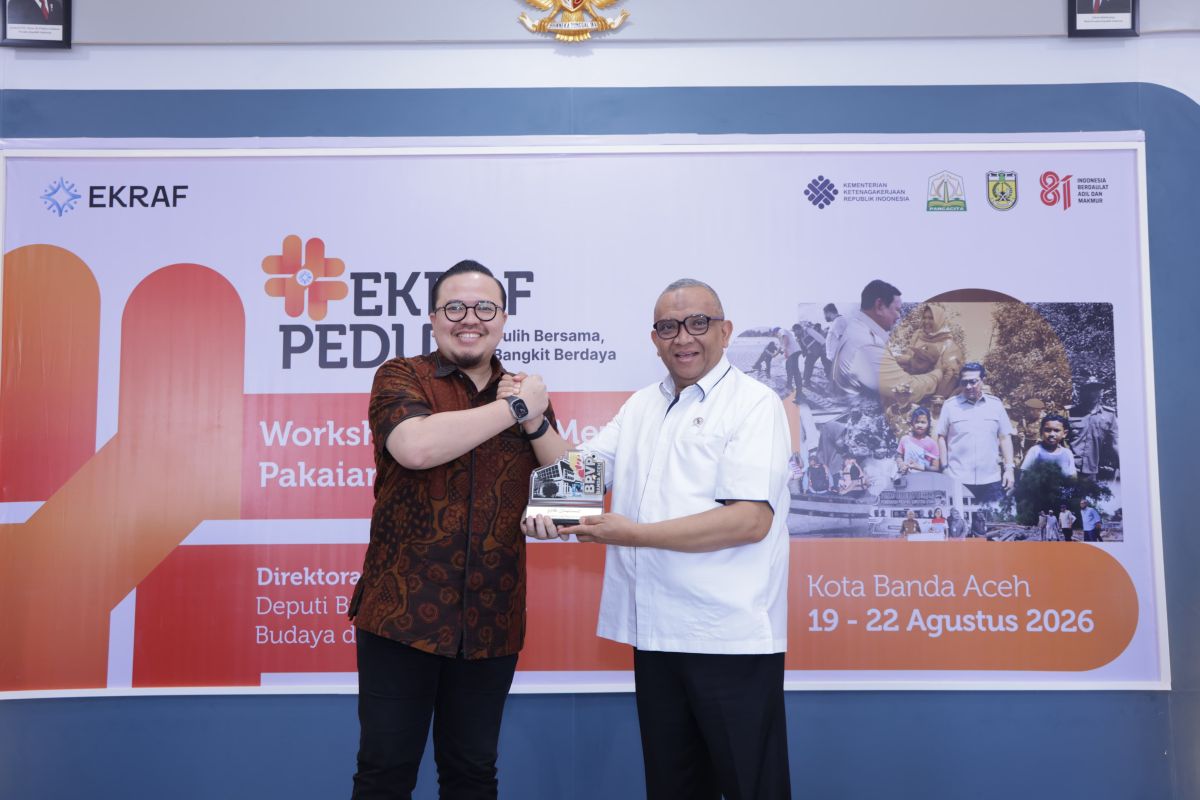
Deputy Manpower Minister Afriansyah Noor has assessed that vocational training is one of the efforts to strengthen economic independence for victims of natural disasters.
“Disasters not only leave an impact on infrastructure and the environment, but can also disrupt economic activity, livelihoods, community businesses, and labour productivity,” the Deputy Minister said in a statement in Jakarta on Wednesday.
Furthermore, he said post-disaster recovery needs to pay attention to community capacity in addition to rebuilding infrastructure and the environment.
One of the efforts undertaken by the Ministry of Manpower through the Banda Aceh Vocational Training and Productivity Centre, in cooperation with the Ministry of Creative Economy, is organising a “Ready-to-Wear Clothing Sewing Technical Workshop” in the context of accelerating post-disaster rehabilitation and reconstruction in Sumatra, held in Banda Aceh.
In this activity, the Ministry of Creative Economy initiated the workshop, while the Banda Aceh Vocational Training and Productivity Centre served as one of the implementation sites and provided technical support through vocational training.
According to the Deputy Minister, ready-to-wear sewing skills are relevant to the development of the creative economy because they can produce value-added products while opening up business opportunities for the community.
Afriansyah appreciated the cross-ministerial collaboration in the activity. He assessed that post-disaster rehabilitation and reconstruction require the involvement of various parties to connect training with the economic potential that exists in the region.
In the field of fashion, Afriansyah sees that Aceh has great potential because it is supported by cultural wealth, motifs, crafts, community creativity, and local identity that can be developed into creative economy products.
“This potential must be followed by improving competence. It is not enough to simply produce good products; we must be able to produce quality products with attractive designs, in line with trends, with identity, competitive prices, and able to be accepted by consumers,” he said.
He added that training needs to connect skills with real needs in the field, from the production process to the ability to develop and market products.
“From skills to products, from products to businesses, from businesses to income, and from income to economic independence. This is the spirit of vocational training that we must continue to build,” said Afriansyah.