
Vocational Talent Urged to be Adaptive in Facing Changes in the Working World
Changes in the requirements of the working world mean that graduates of vocational education can no longer rely solely on technical skills. Vocational talent is also required to be able to adapt, build networks, work across sectors, and transform competencies into creative works and economic opportunities.
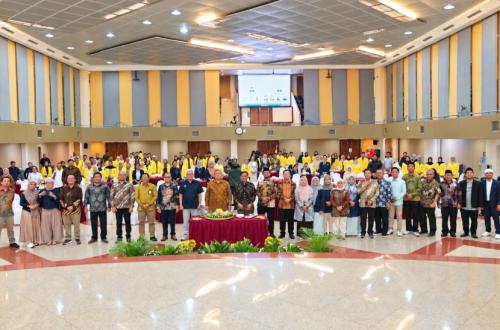
Muhammad Yunus, Director of the Vocational School at Universitas Terbuka (UT), stated, “They are also required to be able to adapt, build networks, work across sectors, and transform competencies into works and economic opportunities,” during the UT 2026 National Vocational School Seminar at UTCC, South Tangerang, on Tuesday (15/09/2026).
According to Yunus, these changes necessitate a strengthening of the relationship between vocational education and the professional world. The competencies acquired by students need to be aligned with industrial needs and the development of business sectors.
“Vocational education is not just about mastering competencies. More than that, student competencies need to be connected to the needs of the working world and industrial developments,” Yunus explained.
This requirement was one of the issues discussed in the UT 2026 National Vocational School Seminar, themed “Learn, Link, Lead: Empowering Vocational Talent through Academia–Industry Collaboration”. The forum discussed the connectivity of vocational education with universities, the industrial world, the business world, the government, and the creative economy ecosystem.
The strengthening of ties with the working world is being undertaken by the UT Vocational School through the signing of Memorandums of Understanding (MoU) and Memorandums of Agreement (MoA) with several partners. This cooperation covers competency development, practice-based learning, and the strengthening of industrial networks.
In addition to industrial needs, vocational talent also faces growing opportunities within the creative economy sector. Technical skills need to be developed into the ability to create works and economic value so that graduates do not only depend on conventional employment paths.
This perspective was discussed in a keynote speech from the Ministry of Creative Economy of the Republic of Indonesia, titled “Vocational Meets Creative Economy: From Competence to Creation and Economic Strength”. The discussion highlighted the relationship between vocational education competencies and the development of works, innovation, and creative economic activities.
Changes in labour demand patterns and the development of the creative economy mean that vocational education needs to expand the scope of graduate readiness. While mastery of technical competence remains the foundation, the ability to adapt, build networks, and transform competencies into tangible works will also determine the contribution of vocational talent in the workforce.