
Vocational School Students Equipped with Knowledge to Face the Working World
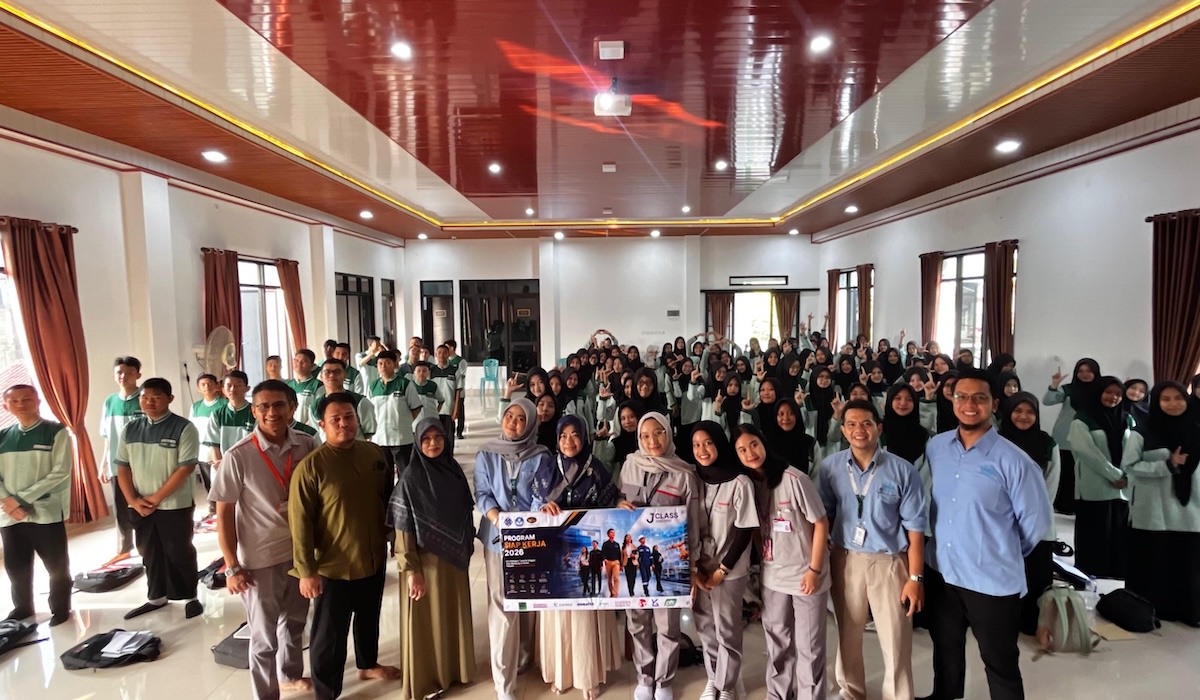
At least eight vocational high schools (SMK) in Bekasi Regency are involved in a work-readiness preparation programme that brings students together with companies within the Jababeka Industrial Estate.
The programme involves 18 tenant companies serving as speakers, trainers, and partners in developing learning materials to reduce the gap between school graduate competencies and industrial labour requirements.
Vega Violetta Puspa, Director of Jababeka Infrastructure, stated that the Jababeka Community Acceleration Class (JClass) was developed to respond to the skills gap issue between high school and vocational school graduates and industrial needs.
“JClass is present to address the competency gap between SMA or SMK graduates and the needs of industry in Bekasi Regency, which is one of the largest industrial hubs in Indonesia,” Vega said recently.
She explained that the latest programme was held at SMK Garuda Nusantara on 31 August. This school is part of the eight schools that have participated in JClass, alongside SMK Bina Mitra, SMK Kitri Bakti, SMKN 2 Cikarang Pusat, SMK Islam Al-Amin, SMKN 2 Cikarang Barat, SMK Kesehatan Sentra Medika Cikarang, and SMK Dewantara 2 Cikarang Pusat.
Direct involvement from companies, she added, is a key differentiator of this programme compared to job training that relies solely on classroom learning. Students gain insights into work culture, professional ethics, and the competencies required by companies.
JClass is implemented through three development tracks. The Career Acceleration Class focuses on building mental readiness, ethics, and professional attitudes before students enter the workforce. Meanwhile, the Digital Acceleration Class focuses on enhancing digital and administrative skills. The third track, the Entrepreneur Acceleration Class, targets the development of micro, small, and medium enterprises (MSMEs) around the Jababeka Industrial Estate.
According to Vega, the strength of the programme lies in the involvement of companies that deal directly with labour needs every day. “What distinguishes JClass from general job training programmes is the direct involvement of tenants or companies operating within the Jababability Industrial Estate,” she noted.
Participating companies include PT Sintertech Indonesia, PT Precision Tools Service Indonesia, PT Dharma Controlcable Indonesia, PT Fukoku Tokai Rubber Indonesia, PT Astemo Bekasi Manufacturing, PT Asahi Cipta Prima, PT Cisindo, PT Mane Indonesia, and PT Komatsu Undercarriage Indonesia. Also involved are PT Asia Indopack Indonesia, PT Asia Indopack Industries, PT Hanes Supply Chain Indonesia, PT Yasufuku Indonesia, PT Unilever Indonesia Tbk, PT T.RAD Indonesia, PT Sari Takagi Elok Produk, PT Nippon Steel Indonesia, and PT Prodia Diagnostic Line.
These companies do not only provide material but are also involved in aligning training with the competency standards applicable within the industrial environment. For students, this pattern provides an early opportunity to understand the situation they will face after graduation, ranging from corporate culture and professional attitude to the skills required by the business world.
Schools also receive additional preparation for students beyond the academic and vocational competencies taught through the curriculum. Through the entrepreneurship track, the programme also targets MSMEs around the industrial area with materials on business development, market expansion, and opportunities to enter industrial supply chains.
PT Jababeka Infrastructure, a subsidiary of PT Jababeka Tbk that manages the Jababeka Industrial Estate, aims for this collaboration between schools and companies to narrow the gap between graduate competence and actual corporate needs. With this approach, SMA and SMK graduates in Bekasi Regency are expected to possess not only diplomas and technical abilities but also a deeper understanding of work standards before entering the industrial environment.