
VOC Governor-General Extorted the People Through Taxes, Including Taxes on Hair, Long Nails, Gambling and Prostitution
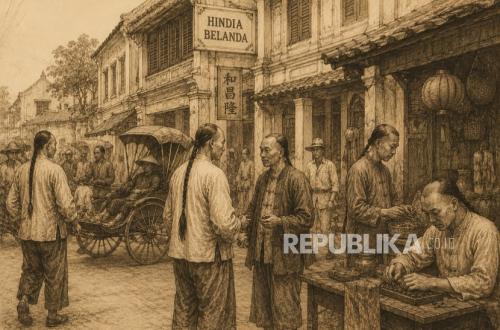
VOC Governor-General J.P. Coen possessed a particular skill for tax collection. Upon appointing Souw Beng Kong as the Kapitan Cina, he issued a regulation on 9 October 1619: every Chinese person aged between 16 and 60 was required to pay a tax of 1.5 reales per capita. This significant and burdensome tax remained in effect for 200 years, lasting until 1900.
When mainland China was conquered by the Manchu dynasty, customs from the northern part of the country were transmitted to its colonies. Consequently, the Chinese people followed the practices of the conquerors. The tops of their heads were shaved smooth, while the back was lengthened and then braided or tied, similar to women’s hairstyles. In addition to the constant task of shaving the top of the head—which grew as quickly as a beard—every head was also subject to taxation.
It was not merely a head tax. The Dutch recognised the Chinese community’s fondness for gambling, which was practised at almost every event, including during funerals within families. The Dutch also noted their inclination towards sexual activities; thus, taxes were imposed on gambling and on brothels (suhian).
Furthermore, there was a tax on long fingernails, which served as a symbol of the wealthy and leisure class. Other levies included taxes on tobacco and the slaughtering of pigs. While modern taxpayers are reminded via letters, in those days, flags were displayed at the residence of the Kapiten Cina to remind the community to settle their taxes promptly. To this day, a neighbourhood known as Kampung Tiang Bendera exists in Jakarta Kota.
Meanwhile, Chinese residents living outside the city limits paid their taxes to the ‘potia’, the headman or overseer of plantations and farms. Much like modern tax officials, some officials in the past also engaged in corrupt dealings with taxpayers.
The Chinese community in Indonesia, particularly the younger generation, once resisted the mandatory use of the queue (braided hair). They had refused to follow the custom since 1904, even though the older generation regarded it as an ancestral tradition. This practice was only officially abolished in 1911.
Source: jawawa.id (https://jawawa.id/newsitem/voc-governor-general-extorted-the-people-through-taxes-including-taxes-on-hair-long-nails-gambling-and-1782998411)
Originally published by Republika (https://news.republika.co.id/berita/thjpmy282/gubernur-jenderal-voc-peras-rakyat-lewat-pajak-ada-pajak-rambut-kuku-panjang-judi-dan-pelacuran), translated from Indonesian