
Vladimir Putin, ASEAN and Indonesia: A World Leader's Vision
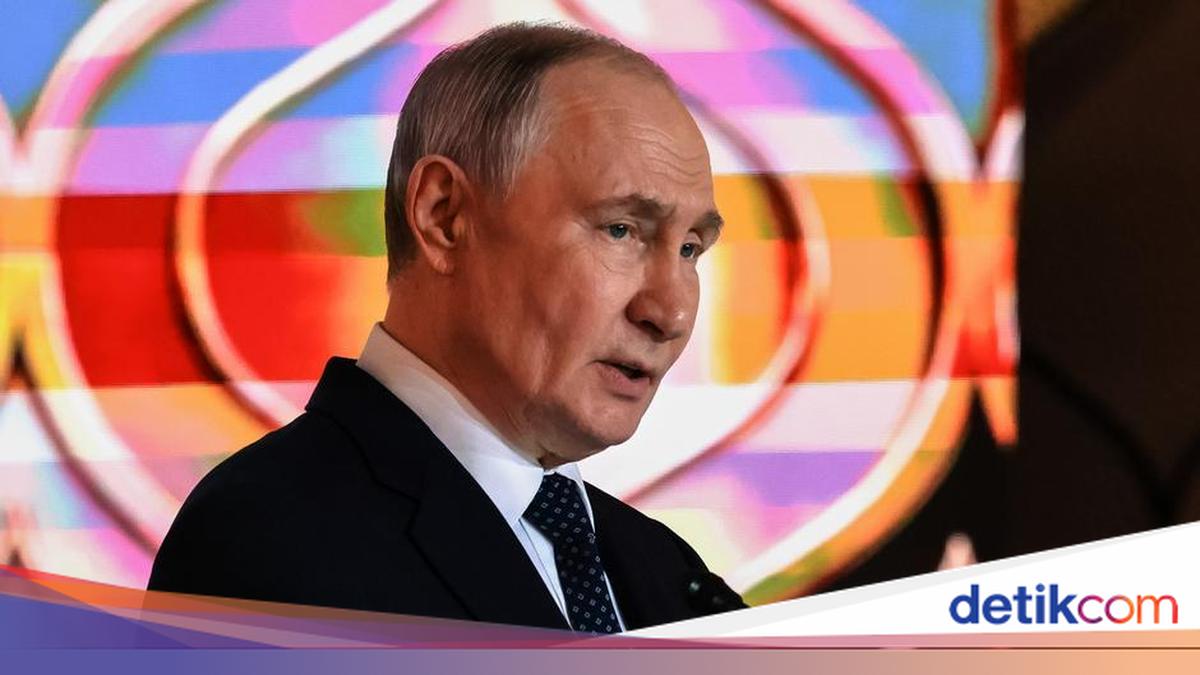
The 35-year milestone of the Russia-ASEAN partnership may not be a primary concern for many. Amid the torrent of information on the Middle East conflict, trade wars, the global economic slowdown, and ever-shifting geopolitical tensions, the anniversary of relations between Russia and ASEAN can easily be lost from the headlines. Yet for President Vladimir Putin, this event holds a significance far greater than a mere diplomatic ceremony. Before the leaders and representatives of ASEAN nations, Putin is delivering an important message to the world: Russia wishes to remain present as an active strategic partner in the Asia-Pacific and Indo-Pacific arena. Russia wants to be part of the major conversation about the future of a region that is currently the centre of world economic growth and a meeting point for various global geopolitical interests.
Many people view Putin only through the lens of conflict, economic sanctions, and rivalry with the West. Such a perspective is too narrow to read the full direction of Russia’s policy today. A leader of a country as large as the Russian Federation certainly thinks far beyond one or two ongoing crises. He must consider the global balance of power, international trade routes, energy security, food security, and regional stability that will determine the future of the next generation. This is why relations with ASEAN are important. The Southeast Asian region today is home to more than 680 million people with an economic growth rate that continues to advance. ASEAN has developed into one of the world’s most dynamic economic centres. Any global leader with a far-sighted view will surely pay serious attention to this region.
On various occasions, Putin continues to reaffirm Russia’s commitment to enhancing the strategic partnership with ASEAN countries. Economic cooperation is being expanded. Energy cooperation is being strengthened. Food security has become a shared agenda. Regional security issues also receive special attention. All of this demonstrates that Russia views ASEAN as an important partner in building a more balanced and inclusive world order. Russia’s attention to ASEAN also cannot be separated from the ongoing global dynamics. The conflict in the Middle East still holds much uncertainty. The relationship between the United States and Iran remains one of the factors that could broadly affect regional stability. The world certainly hopes that various diplomatic mechanisms can function well so that tensions do not escalate into a larger conflict. If the situation deteriorates, the impact will be felt by almost all countries. International trade routes could be disrupted. Energy prices have the potential to experience volatility. Global food distribution would be affected. Developing countries will face far heavier pressures compared to developed nations. It is for this reason that world leaders with a far-reaching vision are beginning to build various lines of communication and cooperation to anticipate these possibilities.
In this context, Indonesia’s position becomes highly strategic. As the world’s largest archipelagic state and a maritime axis connecting the Indian and Pacific Oceans, Indonesia has a very important role in maintaining regional stability. The international shipping lanes passing through Indonesian waters are the lifeblood of global trade. Indonesia’s stability has a direct influence on the stability of the wider region. Indonesia also holds a unique position because it is capable of building good relations with various world powers. The free and active foreign policy it has pursued so far provides ample space for Indonesia to contribute to building dialogue, creating communication bridges, and strengthening inter-state cooperation. I view Putin’s attention to ASEAN and the Asia-Pacific region as a reflection of a leader’s mindset that looks far ahead. While some parties are still busy reading the world from the angle of today’s ongoing conflicts, Putin appears to be preparing for various possibilities that could occur five, ten, or even twenty years into the future.
On 24 June, I have the honour of attending the meeting of the International Committee of the Movement for the Liberation of Nations in St. Petersburg as a permanent member from Indonesia. The presence of Indonesia and the Golkar Party in this international forum holds significant meaning as it serves as a bridge for dialogue between various nations committed to sovereignty, independence, and equal inter-state cooperation. This forum is also a continuation of the spirit that emerged during the 35th anniversary of the Russia-ASEAN partnership. The world needs more dialogue than confrontation. The world needs more cooperation than hostility. The world needs more leaders who are capable of thinking about the future of humanity as a whole. History always reserves a special place for leaders who can see further than their era. From the various developments occurring today, I see Vladimir Putin striving to position Russia as an important part of the major conversation about the future of ASEAN, the Asia-Pacific, and the changing world order. Time will prove the extent to which that vision is realised. But one thing is certain: world leaders with a far-sighted view always understand that the future is built through partnership, not through isolation.