
Visiting the 'heavenly lake' in Xinjiang
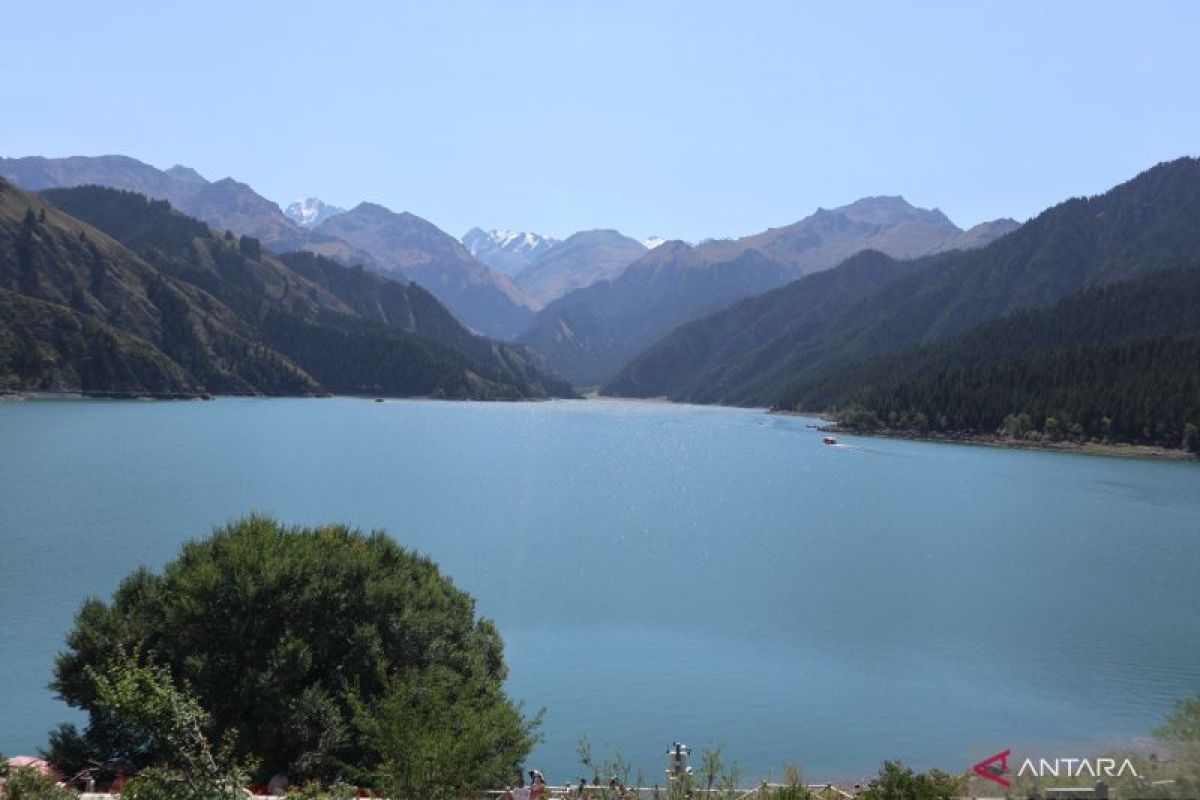
Snow-capped mountains, scorching deserts, green grasslands, and crystal-clear lakes form a visual harmony in western China: Xinjiang.
This vast landscape of 1.66 million square kilometres is the largest administrative region in China, covering nearly one-sixth of the country’s total land area.
The region, officially named the Xinjiang Uighur Autonomous Region, often draws scrutiny from international human rights organisations regarding the treatment of ethnic Uighurs and other Muslim communities. Beijing, on the other hand, firmly denies such allegations.
According to the 2020 census, ethnic Uighurs are the largest population group in Xinjiang, numbering 11.62 million people, or around 44.96 percent of the total population.
However, behind the complex geopolitical dynamics, Xinjiang has another equally compelling face: its spectacular natural landscapes.
Xinjiang’s natural architecture is shaped by three mountain ranges and two giant basins that stretch across the region.
In the north lie the Altai Mountains and the Junggar Basin, in the middle of which stretches the Gurbantünggüt Desert, the second-largest desert in China.
In the south lie the Kunlun Mountains, which form the border with the Tibetan Plateau, as well as the Tarim Basin. In the middle of this basin stretches the Taklamakan Desert, the largest desert in China.
Meanwhile, in the central part lies the Tianshan mountain range, which extends from west to east and divides Xinjiang into two parts, north and south. It is within the Tianshan range that Tianchi Lake is located.
Therefore, we do not hold mountain biking events, trail running, or specific festivals to promote Tianchi Lake. The story of this lake is already widely known among the Chinese public. People from various regions want to come and see it.
Source: jawawa.id (https://jawawa.id/newsitem/visiting-the-heavenly-lake-in-xinjiang-1788137520)
Originally published by Antara (Indonesian) (https://www.antaranews.com/berita/5718009/wisata-ke-danau-surgawi-di-xinjiang), translated from Indonesian