
Visiting China, Fadli Zon Explores Establishing Indonesian Cultural House
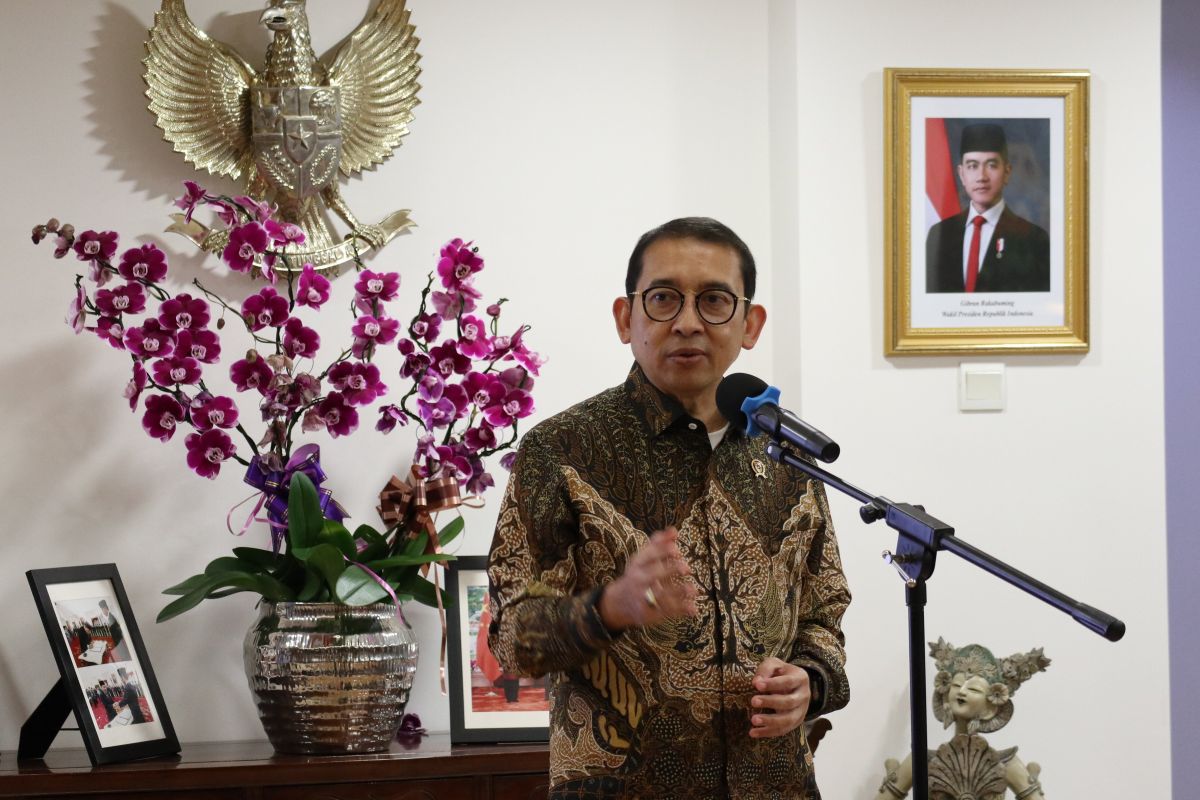
Beijing (ANTARA) - Culture Minister Fadli Zon is exploring the establishment of an Indonesian Cultural House in Beijing as a medium for promoting, educating, and conducting Indonesian cultural diplomacy in China.
“Here, we have also come to explore the location for the Indonesian Cultural House and to prepare for next year’s cultural exhibition,” said Culture Minister Fadli Zon at the Embassy of the Republic of Indonesia (KBRI) in Beijing on Sunday (26/4) evening.
Fadli conveyed this during a meeting with the Ambassador of the Republic of Indonesia to China and Mongolia, Djauhari Oratmangun, as well as Indonesian Citizens (WNI), including students and several Indonesian language lecturers and gamelan instructors at various campuses in Beijing, Tianjin, Shijiazhuang, and other cities.
The Indonesian Cultural House is known to have already been established in several countries, including Australia, France, Germany, Japan, Myanmar, Singapore, Timor Leste, Turkey, and the United States.
“Previously, I was in Shanghai for the inauguration of a research centre and cooperation in animation and video games, signed by the University of Indonesia. We also want to involve the private sector, especially Chinese business circles with cultural activities here, to become a cultural bridge between Indonesia and China,” Fadli added.
In addition, Fadli, along with Director General of Diplomacy, Promotion, and Cultural Cooperation Endah Tjahjani, met with Chinese business actors in the arts and culture sector, such as gallery owners, museums, and production houses in China.
“We also hope that next year Indonesia can participate in the Shanghai Film Festival and the Beijing Film Festival. We can send Indonesian filmmakers. Last year, we were invited to a small film festival in Fuzhou, but we hope next year we can attend larger festivals,” Fadli stated.
Fadli admitted that the ministry he leads is a new ministry that for the first time handles culture independently, separate from other entities.
However, Fadli explained, based on Article 32 paragraph 1 of the 1945 Constitution, it is mandated that “The State advances Indonesian national culture in the midst of world civilisation by guaranteeing the freedom of the community to preserve and develop cultural values.”
“Why culture becomes one of the very important parts in nation-building is because there is a constitutional mandate. At least there are 10 objects for advancing our culture, starting from language and literature, oral traditions, customs, traditional games, local knowledge, manuscripts, rituals, and of course arts, which have many branches starting from music, film, visual arts performances, and others,” Fadli explained.
Given the diversity of Indonesian culture, Fadli described Indonesia as having “mega diversity” because it has 1,340 ethnic groups with 718 languages, representing 10 percent of the world’s languages.
“So far, we have not given serious attention to our cultural potential, but now we want to move towards a cultural economy, towards a cultural industry. In Indonesia, this has not yet been made an important ‘soft power’ in accordance with the constitutional mandate, namely how to advance Indonesian national culture in the midst of world civilisation, including in China, which also has a very large population,” said Fadli.
In addition to having a very diverse culture, Fadli mentioned that Indonesia also has a very ancient culture, especially after the discovery of the world’s oldest prehistoric painting in the Muna Islands, Southeast Sulawesi, aged 67,800 years, based on research by BRIN, the Ministry of Culture, and Griffith University.
Fadli also mentioned that 16 Indonesian cultures have been registered with UNESCO since 2003, including wayang, keris, batik, angklung, pinisi boat, gamelan, pantun, Balinese dance, saman dance, jamu, kolintang, and kebaya, together with other Asian countries.
“Currently, what needs to be done is how this culture is not only cultural heritage but becomes a cultural economy and then a cultural industry, ‘cultural and creative industry’. This is very important because it will be sustainable,” Fadli stated.
Source: jawawa.id (https://jawawa.id/newsitem/visiting-china-fadli-zon-explores-establishing-indonesian-cultural-house-1777272688)
Originally published by Antara (Indonesian) (https://www.antaranews.com/berita/5543661/kunjungi-china-fadli-zon-jajaki-pendirian-rumah-budaya-indonesia), translated from Indonesian