
Viro Shifts Business Model, Enters Premium Modular Construction Segment
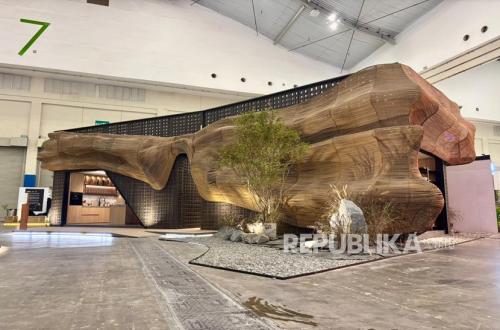
Building materials company Viro is beginning to expand its business model into the premium modular construction sector through the launch of the ViroFab building system at the ARCH:ID 2026 event in ICE BSD City.
This step marks a shift in Viro’s positioning, from previously being known as a provider of specialty building materials to a player offering integrated modular-based construction solutions.
Executive Vice President of PT Polymindo Permata, Johan Yang, stated that the development of ViroFab is a continuation of the company’s long experience in the construction materials industry, now integrated into a modern prefabricated building system.
“After decades of building expertise in construction materials, we are now bringing that discipline into a more integrated prefabricated modular building system,” said Johan.
To date, modular or prefab construction has often been associated with standard and cost-efficient buildings. However, through ViroFab, the company is attempting to shift that perception by introducing an approach targeting the premium segment.
This is demonstrated through the introduction of TenuNyaman, a realised modular building project displayed directly to the public. This project serves as proof that prefab systems can be applied to buildings with exclusive designs and high quality.
According to Johan, the presence of this project affirms that modular construction is not merely a concept but can already be implemented for high-end architectural needs.
As an initial stage, Viro is introducing the Virocroft product line, namely one- to two-storey modular buildings with an area of up to 200 square metres, designed for resort and premium residential needs.
The targeted market includes tourist destination areas such as Labuan Bajo, Sumba, and Lombok, which require fast construction solutions without compromising design quality.
Looking ahead, the company is also preparing further developments through villa and multi-storey luxury residential lines, as part of the ViroFab roadmap.
Viro assesses that modular systems offer solutions to several classic challenges in the construction industry, such as cost uncertainty, construction duration, and quality consistency.
Through factory fabrication that reaches 70-90% of the total construction, projects can be completed with more measurable time and higher precision.
Additionally, this approach is considered capable of minimising the potential for cost overruns that often occur in conventional construction.