
Viral Video Shows Alex Rins Clashing with Mandalika Marshal and Giving the Middle Finger; MGPA Responds
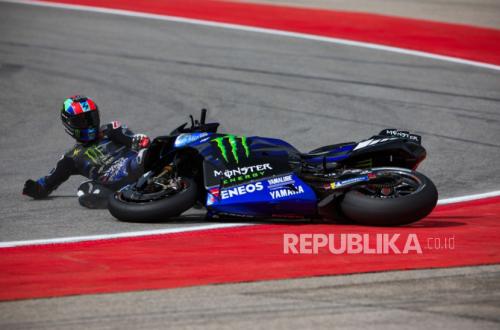
JAKARTA — The handling of Alex Rins after he crashed during a free-practice session for the 2026 Pertamina Grand Prix of Indonesia at the Pertamina Mandalika International Circuit has become a talking point on social media. A video showing the rider not being taken straight back to the paddock prompted criticism of the track marshals on duty.
However, Priandhi Satria, managing director of the Mandalika Grand Prix Association (MGPA) from 2022 to 2026, said the incident should be understood in light of operating procedures and the division of responsibilities among circuit staff. He said it could not be judged solely on the basis of a clip circulating online.
Priandhi, commonly known as Andhi Satria, is one of four people in Indonesia to hold the highest-level licence from the Fédération Internationale de Motocyclisme (FIM). He said the vehicle seen in the video was a flying marshal bike, not a moto taxi. The two vehicles have different roles in race operations, including responding to crashes.
“The motorcycle being used was a flying marshal bike, not a moto taxi. You can see a portable fire extinguisher on the back,” Andhi said, citing information he had received from several parties.
During a race, flying marshals assist with monitoring and responding to incidents on the circuit. Moto taxis, meanwhile, help transport riders from designated areas to specified locations, in line with procedures and operational conditions.
Andhi said flying marshals could take a rider only as far as a transfer point where a recovery vehicle arranged by the organiser was waiting. The journey would then continue in a vehicle suited to the evacuation requirements.
He said the arrangement was not new. The procedure had been used previously and formed part of the safety plan agreed and approved by the race director before the event began.
The transfer point serves as the handover location between the flying marshal bike and the next recovery vehicle. The division of responsibilities is necessary to ensure staff do not leave their work areas for too long and can continue carrying out their duties on the circuit.
“They followed the SOPs for their respective duties. The flying marshal seen in the video could take him only to the transfer-car point that had been approved and arranged in advance,” Andhi said in a written statement received by Republika.co.id.
He understood that a rider who has crashed would want to return to the garage as quickly as possible. Adrenaline and heightened emotions after an incident can make a rider eager to leave the scene straight away.
But not every member of staff can meet that request. If a rider is picked up by a moto taxi, the journey can continue further in accordance with the procedures. A flying marshal, by contrast, cannot leave their post for too long because they must return to their operational duties.
“Riders naturally want to be taken back to their garages as quickly as possible. That is possible with a moto taxi, but not if they happen to be taken by a flying marshal, because that would mean the marshal leaving their post for too long, contrary to the procedures established and approved before the race,” Andhi said.
Andhi also cited changes to routes and the movement of operational vehicles. He said Dorna and the FIM, as the championship’s owner and governing authority, had removed some service-road markers in several sections, requiring the movement of moto taxis and flying marshals to be adjusted to conditions on the ground.
Operational vehicles therefore cannot move freely around the circuit. Each must follow the available routes, respond to the needs of the incident and comply with the previously determined and approved placement of personnel.
In MotoGP, the response to a rider’s crash must take into account not only the individual’s needs, but also the safety of everyone involved and the continuation of operations on the circuit.
Every staff member has responsibilities to fulfil during a session. The deployment of personnel, choice of vehicle and handover point for a rider are all part of a safety system that cannot be disregarded.
Andhi also referred to guidance from the International Road-Racing Teams Association (IRTA) on riders’ emotional state after a crash. High adrenaline levels can affect a rider’s spontaneous reaction when events do not go as expected.
Even so, he said, this did not diminish the importance of communication and mutual respect between riders and track staff.
“There is no problem from Dorna’s side, really, because everyone was doing their job,” Andhi said.
He said the explanation was important context for the criticism spreading on social media. The video could give the impression that the marshal was unwilling to help the rider. But understanding the vehicle types, the limits of staff members’ authority and the evacuation procedure is necessary to assess the incident in full.