
Viral Video of Anak Krakatau Erupting Confirmed as Hoax
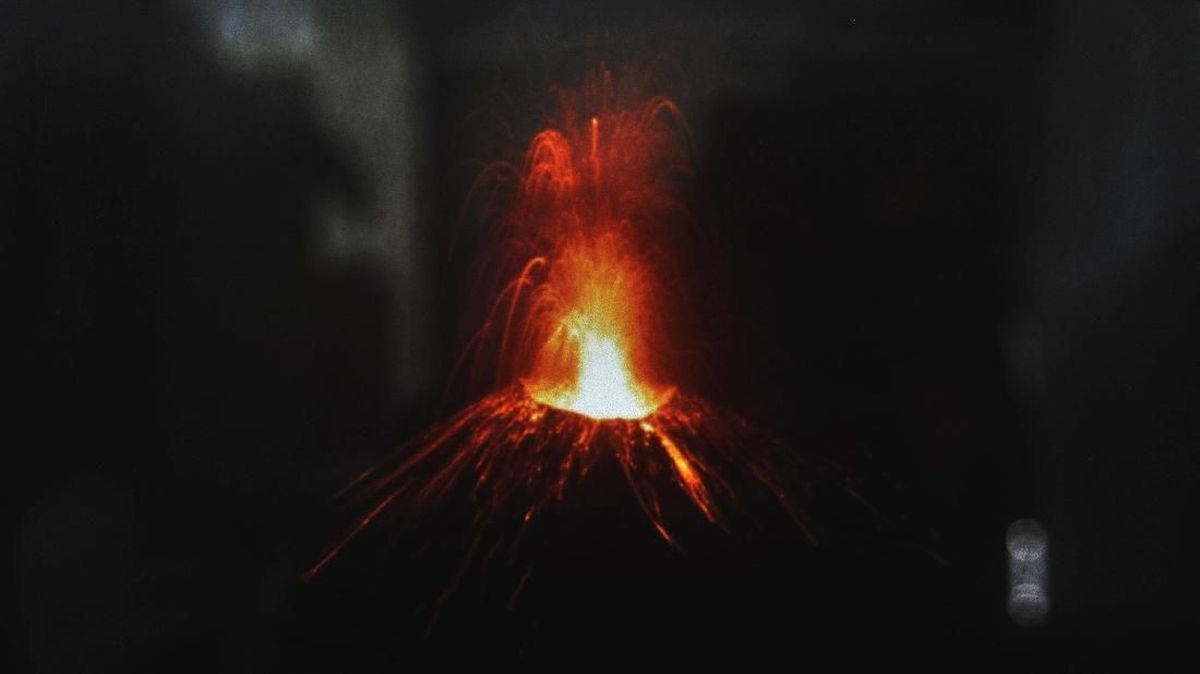
A video showing a large eruption of Mount Anak Krakatau (GAK) accompanied by bursts of fire in the Sunda Strait at night has been widely circulated on social media. Amid the volcano’s current Level III (Siaga) alert status, officials have confirmed that the recording does not depict the current conditions of the volcano. In the approximately 10-second video, a clear burst of incandescent fire from GAK is seen billowing high from the crater, accompanied by thick black smoke. The video, believed to have been taken from a vessel in the Sunda Strait, prompted various reactions from netizens.
Responding to the viral video, Mount Anak Krakatau Observation Post officer Andi Suwardi stressed that the recording is not documentation of the latest eruptive activity from GAK. “The video circulating is not the current condition of GAK. The current activity of GAK is certainly not like what is seen in the video recording,” Andi explained on Saturday evening. He added that based on monitoring results, the last eruption of GAK occurred on Friday around 3:00 PM WIB. After that, until Saturday afternoon and evening, no further eruptive activity had been observed.
Although no new eruptions have occurred, the status of GAK remains at Level III (Siaga), and the public is urged to comply with the Geological Agency’s recommendation not to conduct activities within a 3-kilometre radius of the volcano’s crater. “We urge the public, fishermen, and tourists not to enter the designated danger zone for their safety,” he concluded.
Responding to public concern, Lampung Regional Police Head of Public Relations, Commissioner Yuni Iswandari, reminded the public not to easily believe information that cannot be verified. She also urged the public to always refer to information provided by official agencies such as the Geological Agency, BMKG, BPBD, and the local government. “We urge you not to immediately believe information circulating on social media if it is not from an official agency. Also, do not spread unverified information, as it can cause public unrest,” she explained.
She revealed that the Lampung Regional Police have increased preparedness after GAK’s activity status was raised to Level III (Siaga) by activating the Aman Nusa Task Force, strengthening the Natural Disaster Command Post, and increasing patrols in coastal areas to anticipate potential impacts of volcanic activity. “Following the increase in GAK’s status, we activated the Aman Nusa Task Force so that the response to the community can be carried out more quickly if conditions require immediate handling,” she said. In addition, a Natural Disaster Command Post has long been prepared, both at the Lampung Regional Police Headquarters and all ranks (Resort Police), which also have Disaster Management Task Forces. “This step is taken so that personnel and disaster management facilities are ready to be mobilised at any time if an emergency occurs,” she stated.
According to her, this preparedness is not only focused on preparing personnel but also on strengthening coordination with local governments, BPBD, the Indonesian National Armed Forces (TNI), and other relevant agencies so that handling can be carried out in an integrated manner if GAK’s activity continues to increase. In addition to ground personnel, the Lampung Regional Police are tightening surveillance in the Sunda Strait waters through the Water and Air Police Directorate (Polairud). “Polairud personnel patrols are routinely carried out in coordination with relevant agencies to monitor the development of GAK’s activity, as well as to convey appeals to communities around the coast,” she concluded.
Previously, the Geological Agency of the Ministry of Energy and Mineral Resources (ESDM) announced that it had raised the activity status of Mount Anak Krakatau from Level II (Waspada) to Level III (Siaga) on Thursday afternoon. The status increase was made following a surge in volcanic activity marked by increased shallow volcanic earthquakes, sulphur dioxide gas emissions, deformation of the volcano’s body, and a series of eruptions. Along with the increase to Siaga status, the relevant authorities stressed that the public should not approach the volcano within a 3-kilometre radius from the crater and should always monitor developments through official channels.