
Viral Father-Daughter Sleeping in Grave to Teach About Death
The story of a father in China who once dug a grave for his own daughter has returned to public attention. It was not because the child had died, but to teach her about death as she suffered from a serious illness since birth.
The story comes from the Zhang family in Neijiang, Sichuan Province, China. Their daughter, Zhang Xinlei, was born with severe thalassemia, a blood disorder that requires lifelong blood transfusions and carries risks of developmental problems and heart complications.
According to the South China Morning Post (SCMP) on Wednesday (19/8/2026), the illness made Xinlei’s childhood very different from that of other children her age. She spent more time alone, playing with her pet dog or in a neighbour’s sand pile.
Stem cell transplantation can be a potentially curative treatment for the condition. However, finding a suitably matched donor remains a major challenge for many patients.
When Xinlei was just two years old, her family faced two problems at once: the difficulty of finding a matching donor and the high cost of treatment. Her father, Zhang Liyong, earned only about 2,500 yuan, or around Rp6 million per month, working at a glass factory.
Meanwhile, Xinlei’s medical expenses over two years had exceeded 140,000 yuan, or around Rp370 million. The family’s savings were drained, even though villagers also donated to help them.
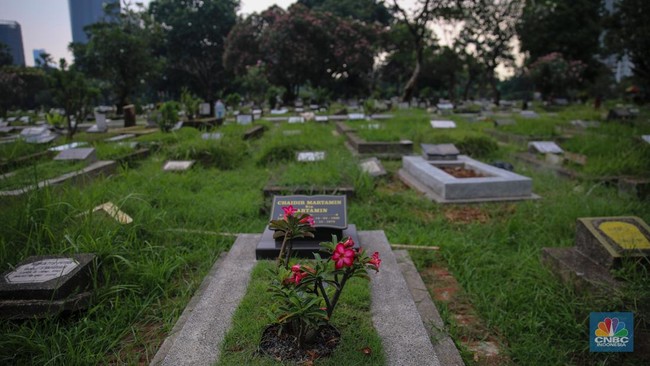
Amid a situation that felt increasingly hopeless, Zhang made a decision that later sparked controversy. In June 2017, he dug a grave on family land. Zhang then often lay down and played with Xinlei inside the hole.
He called it his daughter’s “final resting place”. Zhang hoped that by making Xinlei accustomed to being inside the grave, she would no longer feel afraid of death if the illness ever took her life.
Meanwhile, his wife put up a sign near the site asking the public for help. Zhang’s actions immediately drew mixed reactions from the Chinese public. Some sympathised with the family’s condition and urged the government to step in and help with Xinlei’s treatment.
However, many also criticised Zhang. He was accused of violating cultural taboos and of exploiting his daughter’s suffering to gain attention.
“I would never be able to lay my child in a grave. That is every parent’s worst nightmare,” one internet user said, as quoted by SCMP.
The widespread attention on the family’s story ultimately brought major change. Public fundraising succeeded in collecting money for Xinlei’s treatment, while the local government covered most of her medical costs.
Another positive development came in August 2017 when Xinlei’s younger sister was born. The sister’s umbilical cord blood was then stored for use in Xinlei’s treatment.
Xinlei subsequently underwent an eight-hour umbilical cord blood stem cell transplant. The procedure was seen as the only therapy with the potential to cure her illness.
After a long recovery period, Xinlei’s blood test results were reported to have returned to normal. She no longer needed monthly blood transfusions as before. Xinlei only needed regular rehabilitation, with the costs later covered by a local entrepreneur, according to a report by Marriage and Family Magazine.
Recent photos circulating on social media show Xinlei’s life after the difficult period. Her mother said medical examinations had confirmed that her daughter’s health was in good condition.
Xinlei is now in primary school. She has grown into a cheerful child who enjoys drawing and dancing, and is said to have good academic performance.
The most symbolic change occurred at the grave that her father had dug. Xinlei’s parents have now turned the site that was originally prepared as their daughter’s final resting place into a sunflower garden.
Her mother called it “Xinlei’s magical garden” and believes the garden will bring good fortune to the family.
The latest news about Xinlei has again attracted the attention of Chinese internet users.
“This girl has already been in a grave, so that chapter is over. May little Xinlei’s life go smoothly from now on,” one internet user wrote.
Another said, “This is the best news I have seen all year. This is what charity and social support should mean.”
Xinlei’s case has also highlighted the high number of thalassemia sufferers in China.
According to an official report in 2020, there were nearly 300,000 people with moderate to severe thalassemia in the country.
Since 2015, the Chinese government has run a number of prevention programmes in high-risk provinces in the south. These programmes include prenatal screening and treatment cost subsidies.
Southern China is known to be a region with a relatively high risk of thalassemia. The condition is mainly linked to historical evolutionary pressure from malaria, as well as a number of geographical, climatic and demographic factors.