
Viral Case of Zidan the Elephant Chained for Three Years Prompts UGM Expert to Highlight Animal Welfare
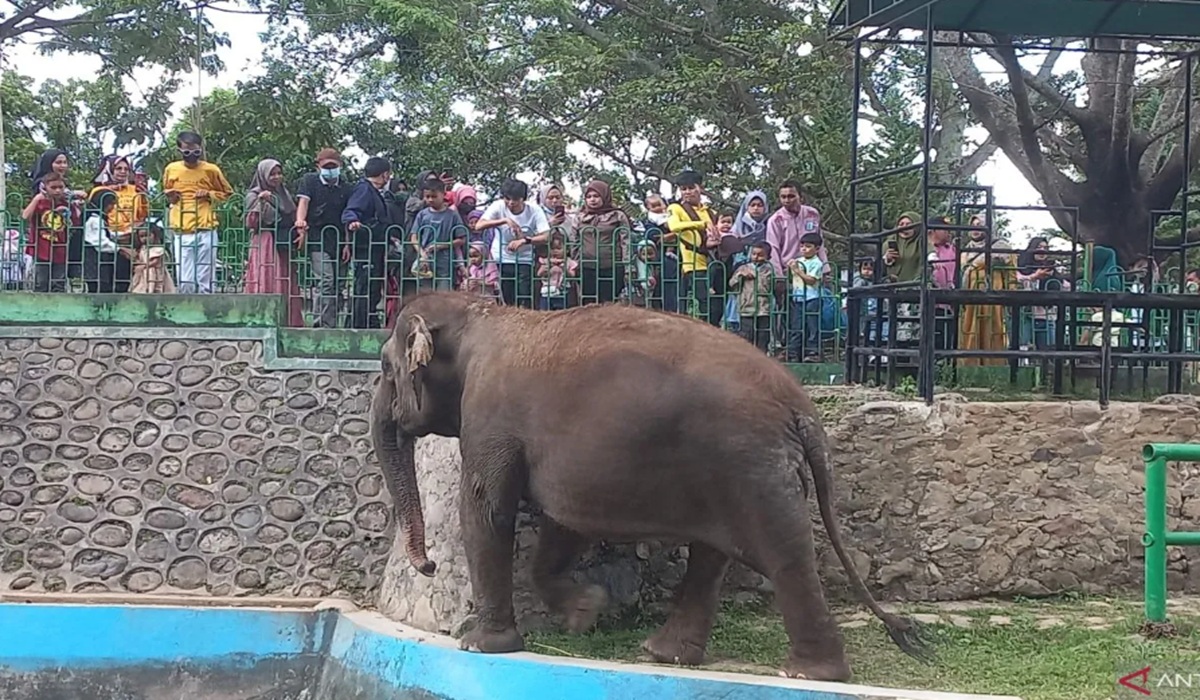
A Sumatran elephant named Zidan, residing at the Kinantan Zoo and Culture Park (TMSBK) in Bukittinggi, West Sumatra, has come under scrutiny after it was revealed that the animal has been chained for three years. This restriction significantly limits the elephant’s movement, a measure implemented due to changes in behaviour and increased aggression that have resulted in injuries to mahouts (elephant handlers).
Wildlife researcher and Professor at the Faculty of Veterinary Medicine, Universitas Gadjah Mada (UGM), Prof. Dr. drh. R. Wisnu Nurcalyo, stated that such restrictive treatment should not be practised. He noted that elephants must be given the opportunity to move and engage in natural behaviours, even under controlled supervision.
“The chains should not be short. There must be periods where the elephant is released to roam, provided it is controlled and monitored,” Wisnu said on Thursday in Yogyakarta.
Prof. Wisnu added that elephant welfare extends beyond mere nutrition and physical health. Animals also require an appropriate environment, space to move, opportunities to bathe or wallow, and social interaction with other elephants.
He explained that animal welfare encompasses meeting nutritional and water needs, providing a suitable environment, maintaining physical health free from injury, allowing for natural behaviours, and ensuring a positive mental state. “Welfare is not just about having enough food and being free from disease. They must also have space to walk, bathe, wallow, and interact with others,” he clarified.
Regarding Zidan, it was noted that male elephants can become aggressive, particularly during ‘musth’ (a period of heightened testosterone). While this is a primary factor in behavioural changes, Wisnu noted that aggression is not solely driven by this biological state.
The musth period can last several months and is influenced by age, physical condition, social status, and the environment. Furthermore, pain from injuries, restricted movement due to chains, boredom, and uncomfortable environments can exacerbate aggressive behaviour. “The factors are not just musth, but also physical pain and an uncomfortable environment,” he said.
Therefore, Prof. Wisnu argued that managing aggressive elephants requires a holistic approach. While restricting movement may be necessary in specific circumstances to ensure the safety of humans and animals, it should not serve as a long-term management strategy.
In the wild, male elephants can return to interacting with their environment and social groups after passing through musth. However, unsupportive environments—such as limited space, lack of activity, no opportunity to wallow, or insufficient food—can lead to significant stress.
Beyond environmental factors, Wisnu emphasised the vital role of the mahout. A mahout’s duty extends beyond care; they must understand the individual character and behaviour of the elephant they manage.
A close bond between mahout and elephant can aid management, as the handler understands the animal’s habits and behavioural shifts. If current handlers struggle, he suggested that management should consider involving senior elephant handlers with experience in managing similar characters. “A mahout must understand the elephant’s character. If they cannot handle it, a senior elephant handler from elsewhere should be brought in,” he suggested.
Elephant management must also maintain detailed records of health and individual conditions. Information regarding health, behaviour, reproduction, nutrition, and handling history is essential for determining appropriate management steps.
He added that the decision to keep an elephant in a conservation institution or relocate it must consider the facility’s ability to meet the animal’s needs.
“Key aspects to consider include the availability of large, comfortable spaces, opportunities for movement, facilities for bathing or wallowing, shelter, soil conditions, clean food and water, physical health, the opportunity for natural behaviour, and social interaction with other elephants,” he stated.
Consequently, relocation is not merely about moving an animal from one place to another; the destination must be capable of providing an environment that meets the animal’s specific needs.
More broadly, Prof. Wisnu believes that the management of animals in conservation institutions requires continuous evaluation. Management involves not only the safety of visitors and staff but also animal welfare, healthcare, enclosure design, reproductive management, handling during musth, and emergency preparedness.
He noted that conservation institutions must meet established standards, including animal welfare principles. Evaluation is necessary to ensure these standards are implemented in practice. “There needs to be an evaluation of how we manage these animals, their welfare, their health, and the safety of both humans and the animals themselves,” he concluded.
For the case of Zidan, the initial step should be an evaluation of the elephant’s condition and the current management practices to ensure the needs of Zidan and other animals at TMSBK are being met based on welfare principles.
Source: jawawa.id (https://jawawa.id/newsitem/viral-case-of-zidan-the-elephant-chained-for-three-years-prompts-ugm-expert-to-highlight-animal-welfare-1789624485)
Originally published by Media Indonesia (https://mediaindonesia.com/nusantara/934368/viral-gajah-zidan-dirantai-tiga-tahun-pakar-ugm-soroti-kesejahteraan-satwa), translated from Indonesian