
Violence in Daycare: A Stark Warning for Childcare Systems
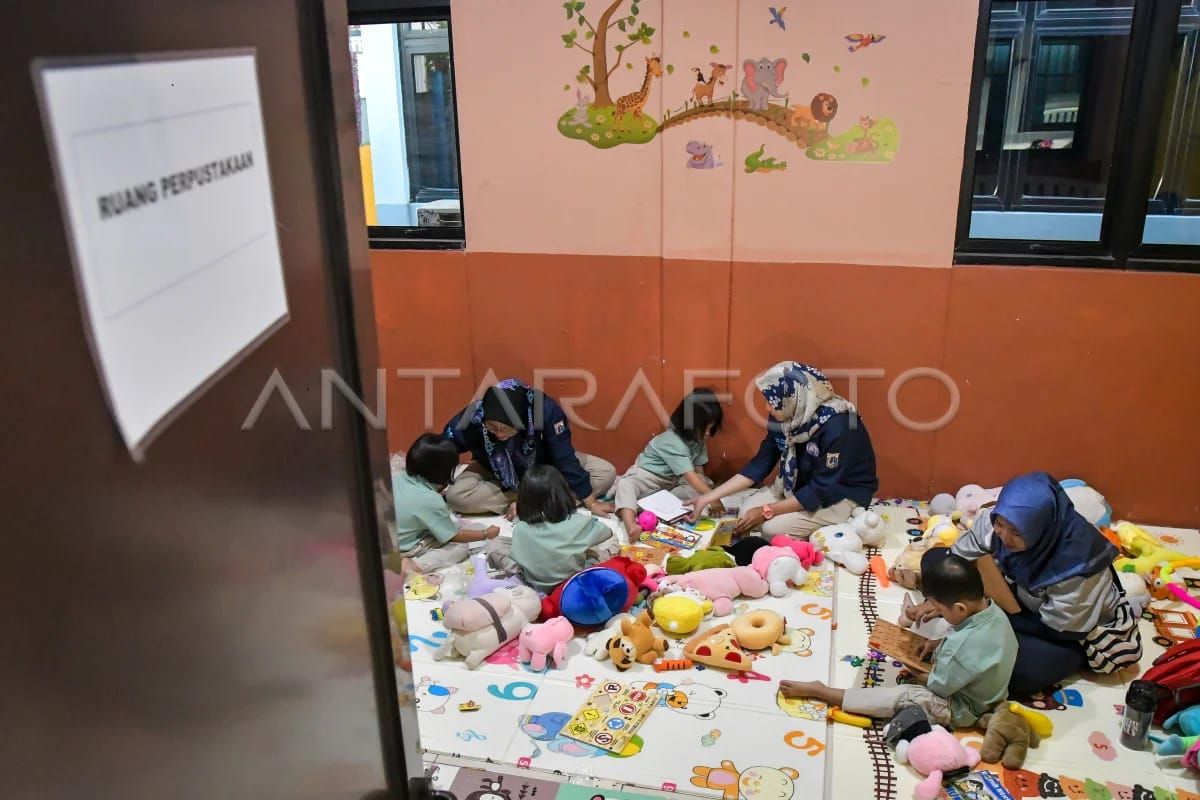
One of the requirements for daycare centres will be that staff undergo assessments, such as psychological tests.
Banda Aceh (ANTARA) - Cases of violence against children in daycares that have recently emerged in Banda Aceh and Yogyakarta seem to open a Pandora’s box. For early childhood education experts, this incident is a stark warning that should have been realised long ago.
Child psychologist Wenny Aidina said that the impact of violence on young children cannot be taken lightly. Referring to Bronfenbrenner’s ecological theory, she said that daycare is one of the first environments where children learn to understand the world.
The experiences children have during this period will be ingrained as core memories that affect their growth and development into adulthood.
“Children who experience violence are at risk of recording that hurting others is normal,” Wenny told ANTARA on Sunday (May 3).
In the short term, children may become more suspicious, selective in interacting, or withdraw from social environments. In the long term, they are at risk of becoming aggressive, having difficulty managing emotions, or becoming very withdrawn due to trauma.
Six have permits
Based on licensing data from the Banda Aceh City Investment and Integrated One-Stop Service Agency (DPMPTSP), as of April 2026, only six daycare centres in the capital city of Aceh Province have official permits. The rest are stated to not have legality or operate illegally.
The six daycares that have obtained permits are TPA Annisa Arfah, TPA Islam Al-Azhar Cairo, PAUD Cerdas Ceria, TPA Islam Bustan As Sofa, TPA Cinta Ananda, and TPA Kiddy Kid Center.
Yusfaini, the manager of TK IT Annisa Arfah which has been established since 2017 in Banda Aceh, admitted that he was surprised to learn that out of the many daycares operating in his city, only six have official permits, including his own.
According to him, from the beginning, they prioritized legality by taking care of licensing through DPMPTSP. The process was completed within three years, complete with accreditation B.
“I liken a permit to being like a ‘father’ for the school. If there is no permit, we are like children without a father, not safe and not recognised. With a permit, if something happens, we can report it to the agency,” he said.