
Villages Minister proposes village governments be involved in resolving agrarian conflicts
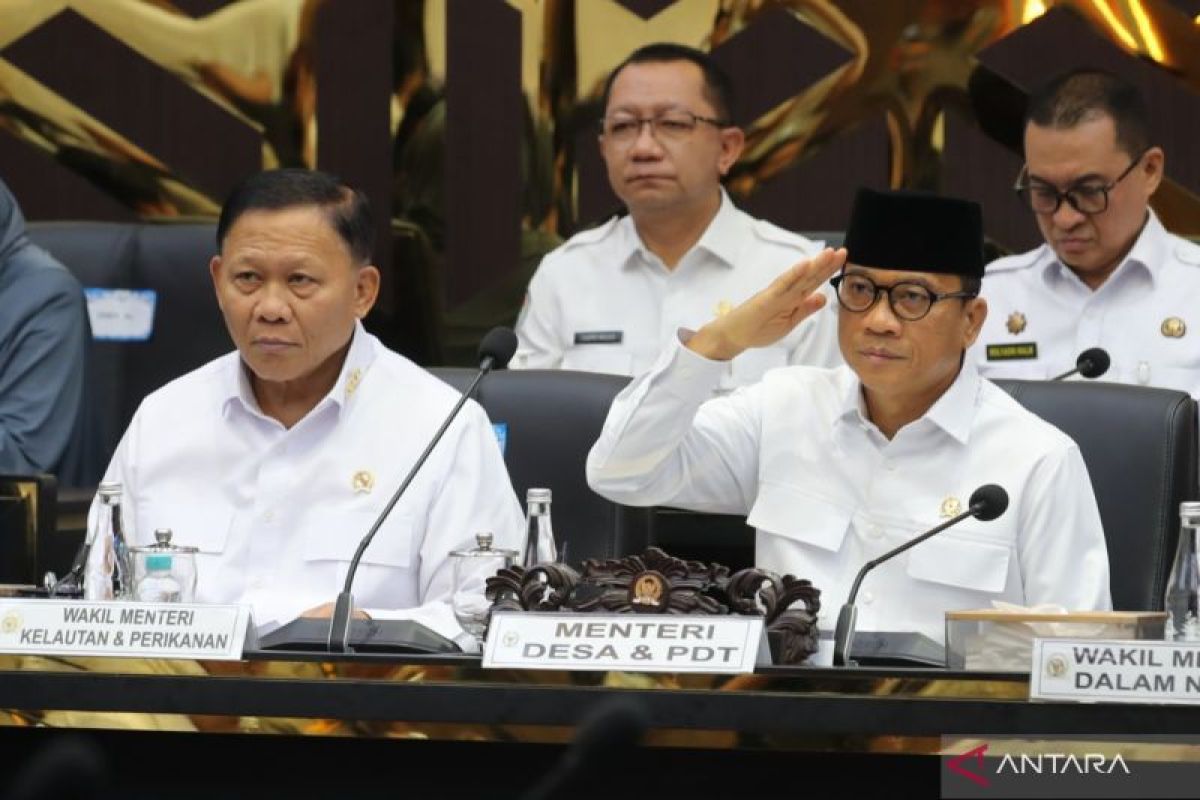
Jakarta (ANTARA) - Minister of Villages and Development of Disadvantaged Regions (Mendes PDT) Yandri Susanto has proposed that village governments be given a role in resolving agrarian conflicts, ranging from receiving complaints to mediating disputes.
The proposal was put forward by Minister Yandri during a working meeting of the House of Representatives’ Legislative Body (Baleg) discussing views and input from relevant parties in the drafting of the Agrarian Reform Bill.
“The bill needs to give village governments a firm function to receive complaints, identify facts, facilitate mapping, and mediate local conflicts,” said Minister Yandri at the working meeting with the DPR’s Legislative Body in Jakarta on Monday.
In addition, Minister Yandri also proposed involving customary institutions in resolving agrarian issues, particularly those relating to ulayat rights, customary territories, and customary law. According to him, the Agrarian Reform Bill also needs to require village governments to carry out an inventory of various objects related to spatial management and community life.
“The bill needs to require village governments to carry out an inventory of settlements, public facilities and village assets, livelihood land, customary territories, business activities, and ecological objects through an integrated data system,” he said.
On that occasion, Minister Yandri also highlighted the issue of villages located within or directly bordering forest areas. Based on data from coordination with the Ministry of Forestry, the Geospatial Information Agency, and the Ministry of Home Affairs, there are 35,974 forest areas covering conservation forests, protected forests, and production forests.
Meanwhile, the number of villages located within forest areas, based on the forest area map, reaches 34,323 villages with a population of around 72.28 million people.
Minister Yandri then explained that the term “villages within forest areas” does not distinguish the geographical location of village territory. According to him, this issue deserves attention because communities in forest areas are citizens who hold identity documents, take part in general elections, pay taxes, and have managed land for generations to produce agricultural commodities.
“The Agrarian Reform Bill concerns not only land status, but also the continuity of village governance, public services, living space, and people’s sources of livelihood. Imagine, of 75,266 villages, 34,323 overlap with forests — that is half of them,” he said.
Beyond involving village governments, Minister Yandri conveyed a number of other recommendations to be included in the Agrarian Reform Bill, including land redistribution accompanied by a post-redistribution action plan and protection for redistributed land. He also proposed that changes in land function be subject to spatial planning and take into account the sustainability of production and the livelihoods of recipients.
Source: jawawa.id (https://jawawa.id/newsitem/villages-minister-proposes-village-governments-be-involved-in-resolving-agrarian-conflicts-1788782120)
Originally published by Antara (Indonesian) (https://www.antaranews.com/berita/5729919/mendes-usul-pemerintah-desa-dilibatkan-di-penyelesaian-konflik-agraria), translated from Indonesian