
Village Waste Processing Sites in Klungkung Overwhelmed by Organic Waste Due to Lack of Shredding Machinery
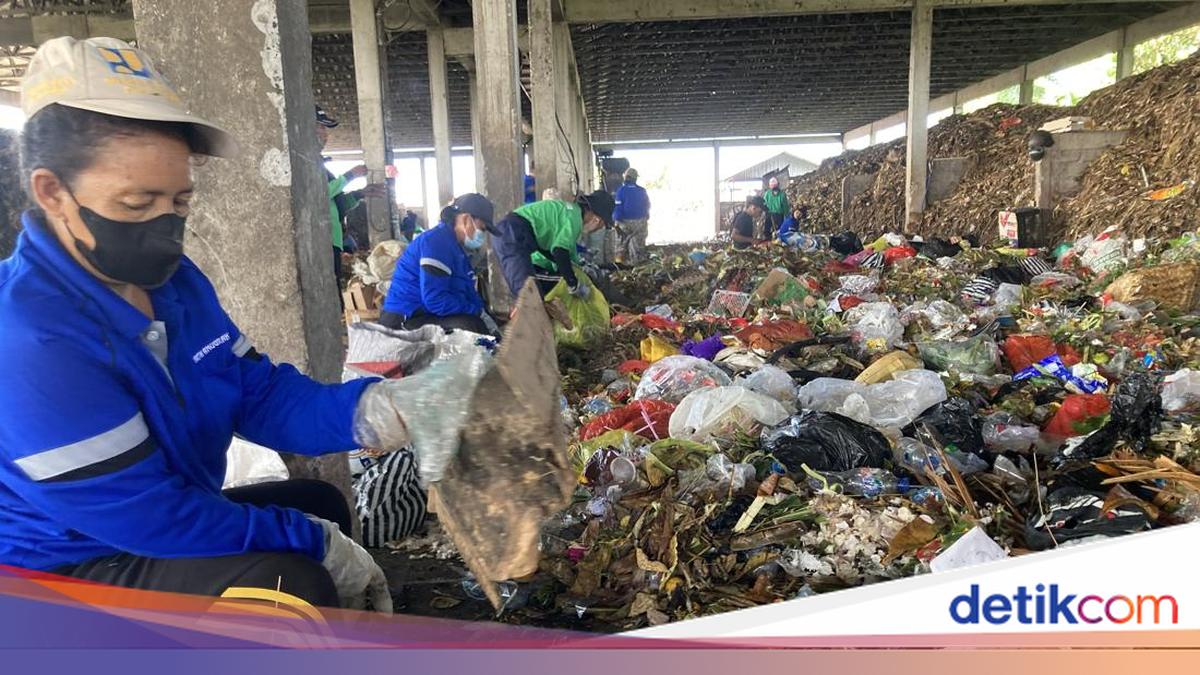
Several village waste processing sites (TPS) in Klungcap Klungkung Regency, Bali, are currently overwhelmed by the management of organic waste. Both integrated waste processing sites and TPS3R facilities are facing primary obstacles in the form of limited shredding tools and operational difficulties for staff.
On the other hand, the Local Waste Processing Centre (Toss Centre) continues to implement a specific policy of only accepting inorganic waste and residue. Organic waste processing is still prioritised for waste originating from urban areas.
One site experiencing difficulties in processing organic waste is TPST Tojan in the Klungkung District. The Head of Tojan Village, I Wayan Suastawa, stated that they do not possess the machinery required to shred organic waste into compost.
“We have frequently requested the Department of Environment and Land (DLHP) to allow organic waste to be transported to the Toss Centre, but permission has not yet been granted,” said Suastawa on Monday (5/10/2026).
“How can we manage it without the necessary machines? As a result, it is simply being piled up to prevent it from scattering across the roads,” he added.
In addition to TPST Tojan, the TPS 3R Bhuana Asri in Selat Village, Klungkung District, is also experiencing an organic waste overload. The staff member at TPS 3R Bhuana Asri, Ni Komang Sandat, explained that the organic waste processing capacity is intended for 800 households.
However, the facility serves 9 hamlets and 7 hamlets (dusun), resulting in an excess of approximately 400 households. Consequently, there is a surplus every single day. The surge in organic waste largely stems from leftovers from traditional ceremonies, such as canang and coconut leaves (janur). This surplus is expected to spike significantly during festive periods.
Klungkung’s Head of the Department of Environment and Land (DLHP), I Dewa Komang Aswin, did not deny that the organic waste processing capacity in each village is currently very limited. Therefore, his department plans to gradually increase the organic waste management capacity at the village-level TPS 3R sites.
“Regarding organic management in each village, we see that the capacity is very limited. Moving forward, we have planned to increase the organic waste processing capacity in each village, particularly at the TPS 3R sites,” Aswin stated when confirmed on Monday (5/10/2026).
Addressing public pressure for the Toss Centre to open its doors to organic waste from villages, Aswin explained that this is due to the limited capacity of the processing machinery at the centre.
Currently, the inorganic waste processing capacity at the Toss Centre is supported by two ‘gibrik’ machines with a capacity of 10 tonnes each (total 20 tonnes), as well as a trommel machine from TPBL with a capacity of approximately 5 tonnes per day. With a total capacity of around 25 tonnes per day for inorganic waste, the department must focus on optimising waste sorting by the community.
“The processing capacity for inorganic waste is around 25 tonnes per day. We expect the community to sort their waste so that we can optimise inorganic waste to be used as Refuse Derived Fuel (RDF) and material for our pyrolysis machines,” he explained.
Aswin noted that in the near future, the Toss Centre cannot yet accept organic waste from villages because the specialised organic waste processing machines are still in the long-term partnership planning stage. Until these machines arrive, the Toss Centre will focus on maximising the processing of inorganic waste and urban residue.
If organic waste from villages is not shredded beforehand, the management finds it difficult to transport it. Furthermore, several villages face operational hurdles with their local shredding machines, which frequently suffer from technical malfunctions.
“As long as the waste can be shredded, it should be able to be transported there. That is why we intend to increase the organic waste shredding capacity in the villages,” he added.
According to DLHP data, the total volume of waste in Klungkung’s urban areas reaches approximately 40 tonnes per day, of which 60 to 70 per cent (about 25 tonnes) is organic waste.
Aswin emphasised that the issue of overcapacity cannot be resolved if the burden is placed solely on the local government or village authorities without community awareness regarding waste sorting at the source.
“Let us work together to care for our waste management. If it is only burdened upon the local government or villages, it will require significant costs. If the community is willing to sort their waste, our waste processing costs will become more effective and efficient in the future,” he concluded.
Source: jawawa.id (https://jawawa.id/newsitem/village-waste-processing-sites-in-klungkung-overwhelmed-by-organic-waste-due-to-lack-of-shredding-machinery-1791179544)
Originally published by detikBali (https://www.detik.com/bali/berita/d-8692631/tps-desa-di-klungkung-kewalahan-olah-sampah-organik-mesin-cacah-tak-punya), translated from Indonesian