
Village electricity programme targets 10,000 remote locations across Indonesia
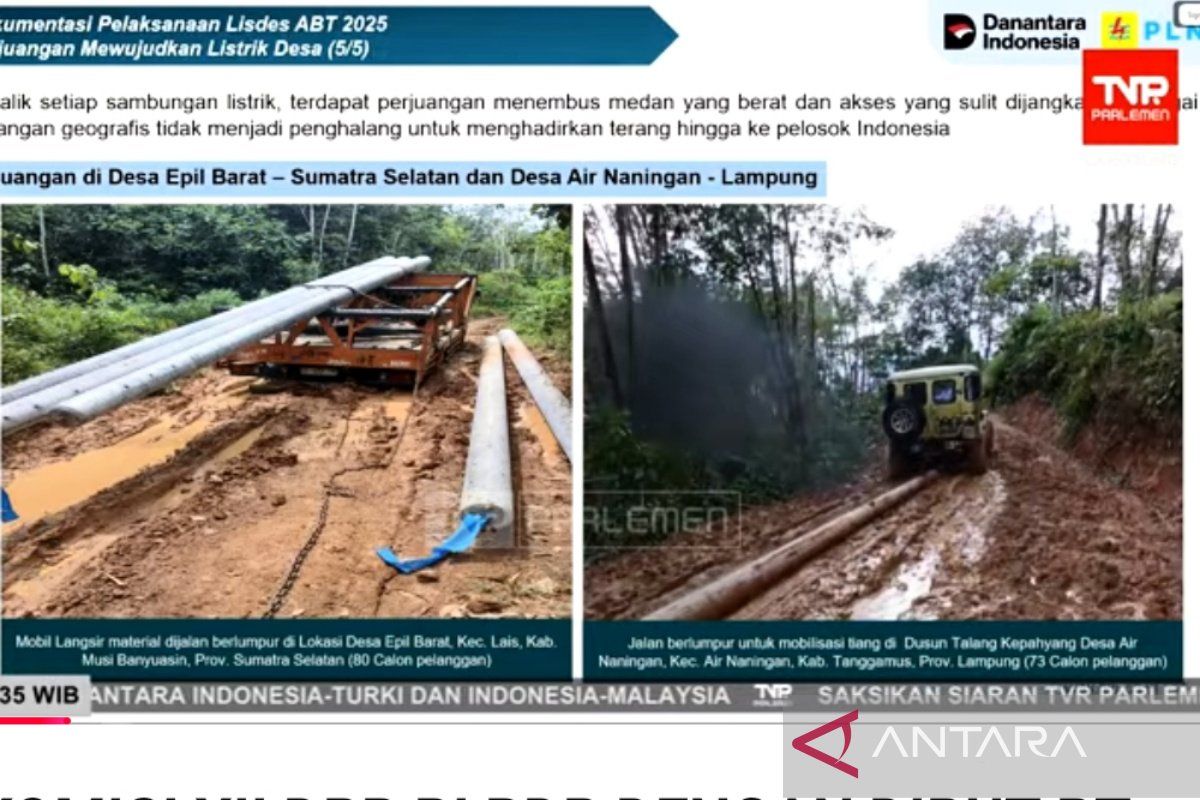
PLN is implementing the 2025-2029 village electricity programme roadmap to expand electricity access for communities that remain unserved. PLN President Director Darmawan Prasodjo stated that the village electricity programme targets 10,000 locations in remote parts of Indonesia through to 2029 and has so far completed 1,433 sites across various provinces. Speaking during a hearing with Commission XII of the Indonesian House of Representatives in Jakarta on Thursday, Darmawan said the programme targets a total of 10,068 locations across 5,700 villages situated in various remote areas of Indonesia. He noted that the programme represents the government’s effort to deliver social justice for all citizens, given that these locations have remained without electricity for 80 years since Indonesia’s independence. Darmawan said the initiative, championed by President Prabowo Subianto, targets approximately 735,000 households nationwide. The total 10,068 locations have been divided across the years 2025, 2026, 2027, 2028, and 2029. Darmawan added that the village electricity provision is divided by capacity into solar panels, medium-voltage networks of 20,000 volts, low-voltage networks of 220 volts, and distribution substations. Furthermore, PLN has also deployed a Geographical Information System, which includes cost estimates and budget allocations necessary to ensure the programme runs effectively. Darmawan concluded that the company interprets the President’s directive on social justice for all Indonesians not merely as words on paper but as something to be built into a tangible reality—light across the entire archipelago. He added that the village electricity programme under the 2025 budget targets 1,516 locations, and as of 27 June 2026, 1,433 locations have been completed, with the remainder in the process of completion under a budget allocation of Rp3.6 trillion. For the 2026 fiscal year, phase one covers 1,520 locations with a budget of Rp4.15 trillion, while phase two covers 1,272 locations with a budget of Rp3.36 trillion.