
Village Economy as the Engine of Indonesia's Transformation
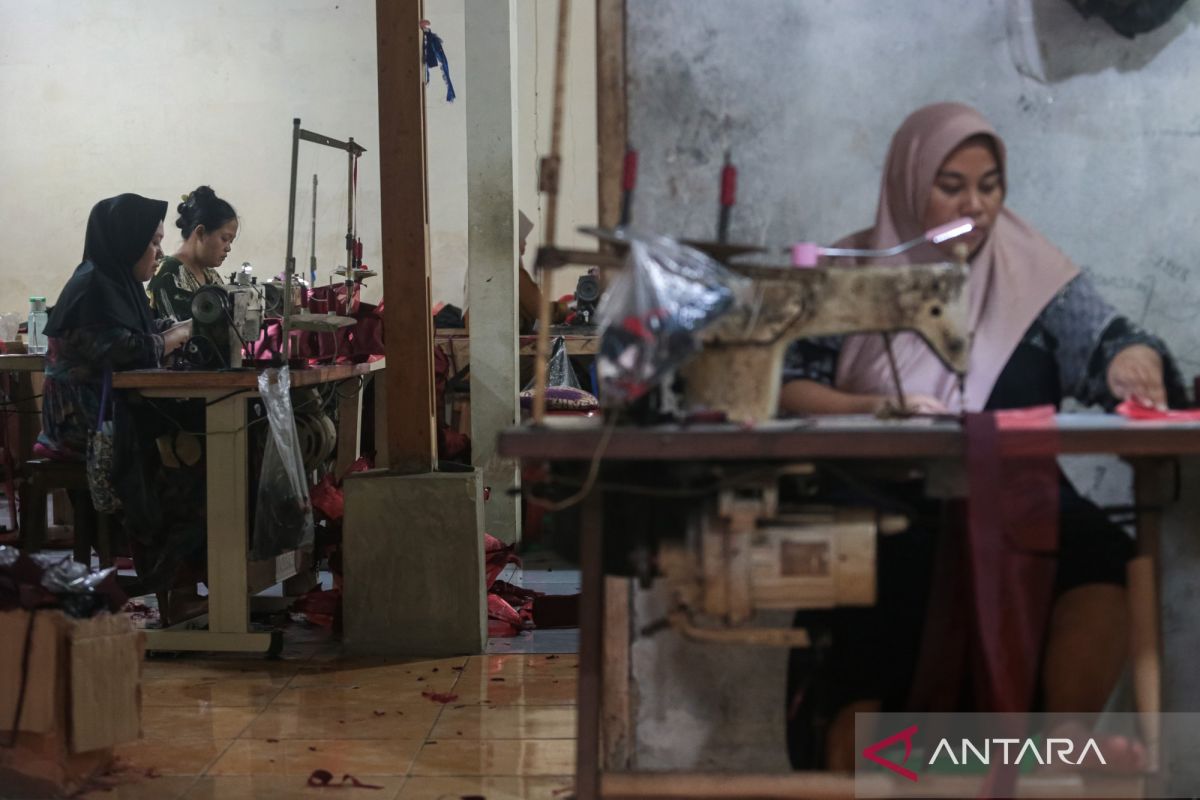
Villages are now in a more complex position; on one hand, they are expected to become a new engine of growth, while on the other, they are asked to support the national economy from below. Jakarta (ANTARA) - In many developing countries, economic transformation often begins in cities and gradually seeps into the peripheries. Indonesia is beginning to show a slightly different pattern. Amid increasingly complex global pressures, from energy uncertainty to supply chain tensions, villages are being placed earlier in the architecture of national economic resilience. This change does not stem from a single policy but from an accumulation of shifts in perspective that economic resilience is not determined solely by the strength of industrial centres, but also by the stability of the economic base at the lowest level. Within this framework, villages are no longer in a passive position. They are beginning to be treated as production spaces with strategic functions, not just for equity, but for the overall stability of the economic system. However, behind this grand narrative lies a more fundamental question: are villages truly being empowered as a new economic engine, or are they merely being burdened with ever greater policy expectations? This question is important because it determines how the direction of village transformation is interpreted, not only as a development programme, but as part of a broader national economic design. Village Production Logic For a long period, village development in Indonesia followed a relatively simple logic, namely redistribution. Infrastructure was improved, access was expanded, and basic services were strengthened. Villages were in a position to receive benefits from growth that primarily occurred in cities and industrial centres. However, in recent years, that logic has begun to shift direction. Villages are no longer only required to develop administratively or infrastructurally, but also to generate economic value. Through various fiscal policy instruments, including the Village Fund, villages are being pushed into production spaces such as the food sector, local economies, and strengthening business institutions. This change fundamentally marks an important shift. Villages are no longer positioned as spaces of development consumption, but as economic production units expected to support part of national needs, especially in the food sector. In the context of global uncertainty and supply chain pressures, this direction can be understood as a rational strategy to strengthen resilience from within. However, on the other hand, this change also shifts part of the economic stability burden to the local level. Villages now are not only recipients of policies but also part of the national economic support system. They are asked not only to grow but also to absorb pressures, both from price fluctuations, logistics distribution, and domestic market dynamics. At this point, tensions emerge that are not always visible on the surface. Not all villages have the same capacity to transform from administrative areas into productive economic entities. Disparities in infrastructure, human resource quality, and institutional capacity make this process uneven. Some villages are able to adapt more quickly, utilising road access, market connectivity, and policy support to expand economic activities. However, others remain in a slower transition phase, where development programmes have not yet fully produced tangible economic impacts. These differences create a new dynamic in the village economic map, which is no longer homogeneous but increasingly layered. Digitalisation and Village Institutions