
Village Cooperatives Enter the Barracks: A Mismatch Between Military, Management, and Civilian Safety
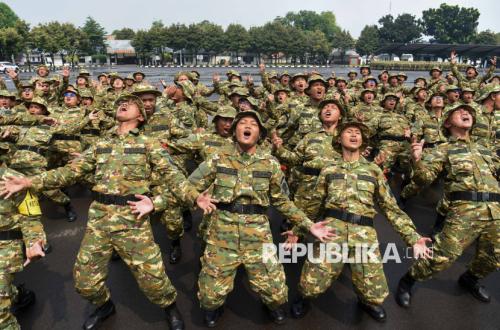
The loss of five lives during a series of training sessions for prospective village cooperative managers must not be treated merely as an administrative incident. In public policy, the death of a citizen is a signal to stop. It forces the state to pause, look back, examine the design, and ask honestly whether the chosen method aligns with the intended goals.
As an economist, I view this issue not solely as a matter of physical training, national defence, or discipline. This is a matter of institutional design. In economics, every objective requires the appropriate instrument. A good objective can fail, or even cause harm, if achieved through the wrong tools.
Village cooperatives are a grassroots economic project. Therefore, the primary tools should be governance, business management, financial literacy, integrity, accountability, and the ability to interpret local economics. When prospective managers are trained in an environment too closely resembling a military barracks, a critical question must be raised: is the state building cooperative capacity, or is it misreading the needs of the civilian sector?
Village cooperatives are not battalions. Cooperative managers are not soldiers. Their field of work is not a battlefield, but rather the village economic landscape, which is far more complex than often imagined. It involves limited capital, unstable markets, fragile supply chains, local conflicts of interest, the temptation of malpractice, pressure from village elites, the risk of bad debts, and the fragile trust of members.
A cooperative manager must indeed be resilient. However, that resilience is not primarily tested by the ability to endure rigorous physical training. Their resilience is tested by the ability to safeguard members’ funds, read financial reports, develop business plans, manage stock, resist intervention, and remain accountable for decisions within member forums.
Therefore, we must be careful to distinguish between discipline and a militaristic approach. Discipline is a necessity for all institutions. A cooperative without bookkeeping discipline will be fragile. A cooperative without transparency discipline will be easily misappropriated. A cooperative without service discipline will be abandoned by its members. However, discipline does not always have to originate from the barracks. Discipline can also arise from good systems, appropriate curricula, strong supervision, correct incentives, and a healthy organisational culture.
Recently, the public has witnessed the strengthening of military-style training patterns in several civilian spheres. At the start of the administration, a cabinet retreat was held at the Magelang Military Academy, conveying messages of cohesion, loyalty, and discipline. This activity can be understood as the leadership style of a president with a military background.
A large government does indeed require rhythm, solidarity, and a shared direction. However, problems arise when patterns that initially appeared to be a style of cabinet consolidation begin to spread into civilian programmes whose character and competency needs are different.
Programmes for human resource strengthening for nutrition agendas, village cooperatives, and fishing villages have also adopted the language of character building, national defence, discipline, and management. Normatively, there is nothing wrong with character building.
There is also nothing wrong with national defence. A village cooperative manager certainly needs to possess a sense of nationality, integrity, responsibility, and a commitment to serving the community. However, the issue lies in the proportion and method. If the emphasis on physical training and barracks-style discipline outweighs the mastery of cooperative competencies, then the state risks deploying the wrong tools for a very specific task.
Source: jawawa.id (https://jawawa.id/newsitem/village-cooperatives-enter-the-barracks-a-mismatch-between-military-management-and-civilian-safety-1782991217)
Originally published by Republika (https://analisis.republika.co.id/berita/thjmg8368/koperasi-desa-masuk-barak-salah-tempat-antara-militer-manajemen-dan-keselamatan-warga-sipil), translated from Indonesian