
Vietnam's 'Green Taxi' Set to Storm US and Europe, Aiming for Rp354 Trillion IPO
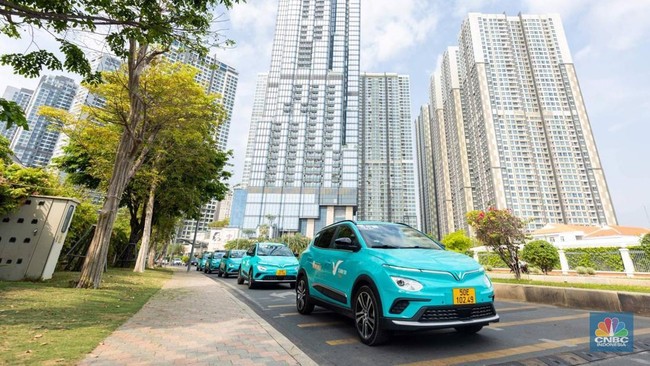
Vietnamese electric taxi operator, Green and Smart Mobility (GSM), is preparing to expand its business into the United States and Europe. This expansion is being undertaken ahead of plans for an initial public offering (IPO) in Hong Kong in 2028.
The company, which is a partner to the Vietnamese car manufacturer VinFast, will deploy its fleet in the US, Sweden, and the Netherlands by the end of 2026. This move is part of GSM’s ambition to bring its electric taxi business to the global market, after the company rapidly increased its market share in Vietnam since its launch in 2023.
“This expansion initiative is being undertaken ahead of the Hong Kong IPO planned by GSM in 2028,” a GSM spokesperson said in an interview with Reuters, as reported on Thursday.
GSM is owned by VinFast CEO Pham Nhat Vuong and his family. The company previously revealed that IPO preparations would begin this year through initial offerings to potential large investors, but declined to disclose target valuations or the amount of funds it intends to raise. GSM’s advisors have previously suggested a valuation of around US20billion, orapproximatelyRp352trillion(assuminganexchangerateofRp17, 600/US).
Following its entry into the US, Sweden, and the Netherlands, GSM plans to expand its operations to other European markets in 2027. The company has already operated in several Asian markets and recently deployed a fleet in Denmark, with all vehicles sourced from VinFast.
GSM’s expansion presents an opportunity for VinFast to strengthen its electric vehicle sales outside of Vietnam. The car manufacturer is working to boost international sales after previous expansions into the US and Europe failed to meet expectations. In 2025, VinFast sold nearly 200,000 cars, but only about 11% were sold abroad.
Nevertheless, GSM’s expansion strategy is considered high-risk due to its reliance on a capital-intensive business model.
“It has not yet been determined whether overseas markets can achieve sufficient fleet utilisation to provide the scale necessary to balance the risk,” said Mehdi Jaouadi, an automotive industry analyst and consulting partner at YCP in Singapore.
Jaouadi warned that expanding with its own fleet in several countries could increase GSM’s dependence on external funding.
“Continually funding the company’s own fleet in several markets could increase reliance on external capital,” he noted.
GSM’s business model differs from ride-hailing companies such as Grab and GoTo Gojek Tokopedia, which rely more heavily on drivers using their own vehicles. In Vietnam, approximately 40% of the vehicles operating through the GSM platform are owned by the company, though GSM is beginning to implement a hybrid model by combining employees and freelancers to reduce costs.
In the US and the EU, GSM will initially rely on company-owned vehicles and directly recruited drivers before transitioning to a platform model. GSM also plans to purchase up to 1 million VinFast cars throughout 2026-2030. This move ensures that GSM remains a significant buyer for VinFast, even though its share of VinFast’s total car sales has dropped from 72% in 2023 to approximately one-quarter at present.