
Vietnam’s Economy Could Grow by 9%: Why Is Indonesia Falling Behind?
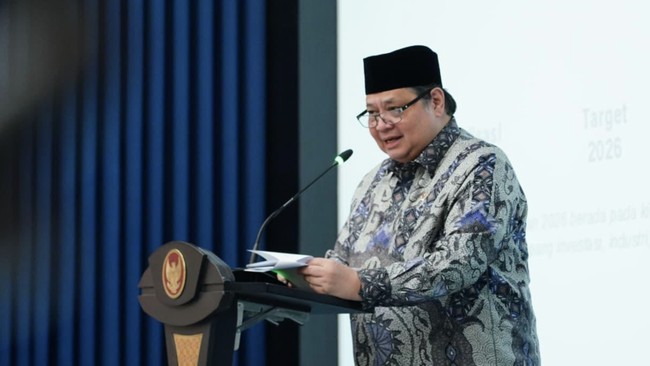
Jakarta, CNBC Indonesia — Vietnam recorded economic growth of 9.95% in the third quarter of 2026. Coordinating Minister for Economic Affairs Airlangga Hartarto outlined several factors behind the strong growth of Indonesia’s neighbour.
The first is Vietnam’s free-trade agreements with several partners, including Europe and the United States.
“As a result, Vietnam’s average import duty across the world is zero per cent, while Indonesia’s is 10 to 15 per cent,” Airlangga said at Bappenas in Jakarta on Monday (19 October 2026).
Second, Vietnam has promoted electronics-based exports, which are in high demand in the digital era. Airlangga said electronics account for nearly 40 per cent of Vietnam’s exports.
Vietnam also has 1.8 million special economic zones, which can attract foreign investment and drive its domestic economy.
Airlangga acknowledged that Indonesia had opportunities to develop its electronics industry, but these were set aside because the sector was not considered labour-intensive.
“We once shifted away from the electronics industry because it is robotic, and we felt that if an industry was not labour-intensive, it had no right to exist in the republic,” Airlangga said.
Indonesia also had momentum to accelerate industrialisation through aviation, including the manufacture of the CN-235 aircraft, he said. However, he argued, many efforts were made to thwart the country’s progress.
“We nearly took off in the 1990s. But when we tried to take off, many countries did not like it. They wanted Indonesia to remain on the runway. One example is the aerospace industry,” the Coordinating Minister for Economic Affairs said.
“When we developed the CN-235, it was a breakthrough. The turboprop and jet-engine issues were not insurmountable, as both technologies were advancing at a similar pace. And when we sought to move towards a 100-seat aircraft, the world was shocked. At the time, the IMF said Indonesia should not have an aircraft industry because it was an industry that was, what, close to the people,” he added.
Indonesia’s industry is now developing towards digitalisation. Airlangga said the start of digital adoption presented a major opportunity.
One reason, he said, is that all countries are now facing the industrial revolution and transformation at the same time. Indonesia also has a large market for adopting technology.
“Digitalisation has a very broad scope. This is an opportunity because all countries are facing the industrial revolution and transformation together at the moment. There is no country that is currently ahead, such as China or the United States, particularly in areas such as artificial intelligence and quantum computing,” he said.
Source: jawawa.id (https://jawawa.id/newsitem/vietnams-economy-could-grow-by-9-why-is-indonesia-falling-behind-1792403441)
Originally published by CNBC Indonesia (https://www.cnbcindonesia.com/news/20261019142606-4-777495/ekonomi-vietnam-bisa-tumbuh-9-kenapa-indonesia-malah-tertinggal), translated from Indonesian