
Vietnam Stock Market Soars 22% Despite Frontier Status
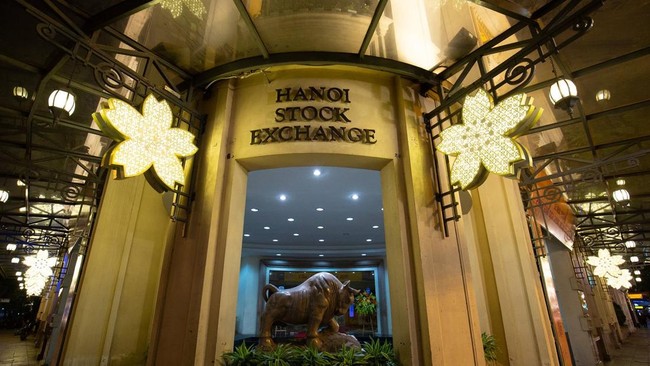
Vietnam’s stock market is entering a significant period. High economic growth, a revival of initial public offerings (IPOs), and an upgrade in its FTSE classification are making the country increasingly prominent on Asia’s equity capital market map.
As of 30 June 2026, the combined market capitalisation of the Ho Chi Minh Stock Exchange (HOSE), Hanoi Stock Exchange (HNX) and UPCoM reached nearly VND10,600 trillion, or approximately US$405 billion. For comparison, the market capitalisation of the Indonesian stock exchange is US$571 billion. HOSE is the centre of activity with a capitalisation of over VND8,765 trillion, while UPCoM has a capitalisation of around VND1,300 trillion and HNX is close to VND500 trillion.
Throughout this year, the main Hanoi index (HNX) has surged 22%, contrasting sharply with the Jakarta Composite Index (IHSG), which has fallen 31%. This is despite Indonesia’s stock exchange and overall country rating being better than Vietnam’s.
The VN-Index closed at 1,860.01 at the end of June 2026. After soaring 40.87% throughout 2025, the index added approximately 4.2% in the first half of 2026. The VN-Index’s valuation stands at a trailing price-to-earnings ratio of around 15.1 times, indicating that Vietnam can no longer be called uniformly cheap after the previous year’s strong rally.
Index movement is also highly concentrated. The combined capitalisation of Vingroup and Vinhomes exceeds VND2,300 trillion, representing more than one-fifth of the entire market’s capitalisation. The two accounted for over 70% of the increase in Vietnam’s market capitalisation during the first half of 2026. This condition allows the VN-Index to strengthen even when the majority of stocks do not move as strongly as the index. Besides the Vingroup group, market direction is largely determined by major banks such as Vietcombank, BIDV, VietinBank and Techcombank.
The average daily transaction value on HOSE reached VND18,419 billion in June 2026, down 24.34% compared to May. However, the average combined transaction value across the three boards during the first half of 2026 still increased by about 36% year-on-year. This liquidity is primarily supported by domestic investors. Conversely, foreign investors recorded net sales of approximately VND14,904 billion on HOSE during June. For the entire first half of 2026, foreign net selling across the three boards is estimated to have reached US$3.1 billion. The outflow demonstrates that emerging market status does not automatically generate inflows; global investors still consider exchange rate risk, foreign ownership limits, low free float and index concentration.
Vietnam’s IPO market began to revive in 2025, with funds raised exceeding VND35,000 billion. In 2026, the planned value of IPOs and share issuances is estimated to reach VND289,500 billion, or US$11.13 billion. However, this figure is not solely for IPO realisations; it includes rights issues, private placements and other share issuances. Around 70% of these plans had not been executed by the end of May 2026. The specific IPO pipeline is estimated at around US$861.5 million.
The biggest catalyst comes from FTSE Russell, which confirmed Vietnam’s upgrade from Frontier to Secondary Emerging Market status, effective 21 September 2026. Nevertheless, MSCI still classifies Vietnam as a Frontier Market due to issues with foreign ownership, foreign exchange access, free float and information disclosure.
Historically, Vietnam’s stock market has been driven more by domestic investors than foreign ones. As of early 2026, foreign ownership accounted for only about 14.5% of total outstanding shares on the Vietnamese stock exchange. In 2025, foreign investors recorded a net outflow of approximately US$5.1 billion, the largest in history. Interestingly, amid this heavy selling, the VN-Index surged by about 41%. Domestic investors dominate daily trading activity, with foreign transactions contributing only around 10-15% of total trading value. For instance, foreign transactions accounted for 15.24% of total trading value in February 2026, falling to 12.89% in April and 11.47% in May. This means that around 85-90% of transactions on the Vietnamese stock exchange originate from domestic investors. Despite their small share, foreign funds still exert significant influence, as they typically invest in large-cap blue-chip stocks in sectors such as banking, property, consumer goods and technology. Consequently, the flow of foreign funds often determines the direction of these leading stocks. Moreover, foreign investor activity serves as a barometer of global confidence in the Vietnamese economy. When foreign funds flow in, the market views the economic outlook more positively. Conversely, foreign selling often triggers psychological pressure, even though domestic investors dominate transactions. The role of foreign investors is becoming increasingly important as Vietnam prepares to transition from a frontier market to a secondary emerging market under FTSE Russell’s classification. If this status is realised, Vietnam could potentially receive billions of US dollars in passive fund inflows.