
Vietnam Builds 'Paradise Island' Off Natuna, Trump and Xi Jinping Set to Visit
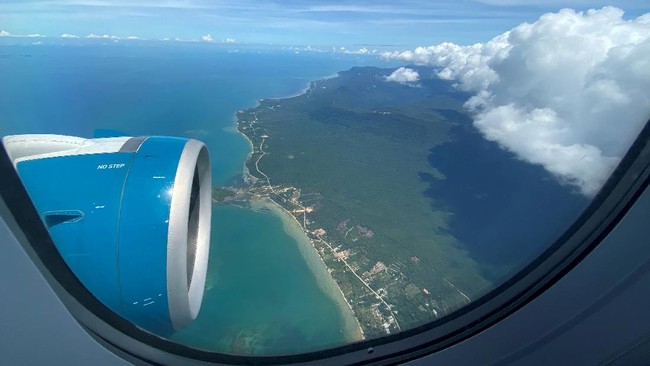
Jakarta, CNBC Indonesia – Sun Group, the Vietnamese real estate and hospitality giant, is accelerating an ambitious mega-project to transform Phu Quoc Island into a regional-scale integrated centre for tourism, conferences and entertainment. The move is deliberately timed to meet the deadline for the Asia-Pacific Economic Cooperation (APEC) Summit 2027, when the strategic island will become a stage for international diplomacy attended by world leaders including US President Donald Trump and Chinese President Xi Jinping.
According to a report by The Business Times on Wednesday (8/7/2026), Phu Quoc, which covers nearly 600 square kilometres – the size of Singapore before reclamation – is being developed holistically as a unified island economic system. Key infrastructure projects supporting the 2027 APEC Summit include the construction of the APEC Convention and Exhibition Centre, cultural facilities, luxury resort hotels and a massive expansion of Phu Quoc International Airport.
Sun Group chairman Dang Minh Truong stressed that the biggest challenge in developing an island region is logistics planning that must not be done in a fragmented manner. The company is therefore building a complete experience ecosystem called Sun Paradise Land in the southern part of the island, integrating accommodation, shopping centres, water attractions, dining, shows and access to the Hon Thom cable car into one controlled circuit.
“Sun Group is not investing to capture a share of an existing market,” Truong said in an exclusive interview with The Business Times.
“We are investing in infrastructure to create a new market together with Phu Quoc,” he added, referring to the company’s strategy.
The integrated planning model adopts management philosophies from Sentosa in Singapore, Jeju in South Korea and Okinawa in Japan to lengthen tourist stays and boost per capita spending. The strategy aims to dispel analysts’ concerns about the risk of oversupply pressure on accommodation facilities once global delegations leave the island.
As a demand driver, Sun Group is collaborating with Singapore’s Changi Airports International to overhaul Phu Quoc International Airport to meet “Changi” quality standards and raise capacity from 5.2 million passengers in 2025 to 24 million passengers a year. Under this long-term vision, management targets the paradise island to accommodate 40 to 50 million visitors a year by 2045.
To ensure global connectivity, the group’s new leisure airline, Sun PhuQuoc Airways (SPA), has been operating since the end of last year to bring foreign tourists in directly. SPA is scheduled to open a daily Singapore–Phu Quoc route from 25 July using Airbus A321 aircraft, with competitive promotional fares of 1.8 million dong (around Rp 1.1 million).
The direct flight network will be massively expanded to China, South Korea, Japan, Thailand, Russia, Mongolia and Kazakhstan throughout this year, followed by the Philippines and Australia in 2027. The airline has also drawn up long-term plans to adopt wide-body aircraft in 2028 to open long-haul routes to the Middle East and Europe.
On a macro level, this aggressive expansion runs alongside the strategic policy of the State Bank of Vietnam, which has extended special credit relaxation worth a total of US$28 billion for 18 national mega-products outside the annual credit growth quota. Of that budget stimulus, Sun Group’s own project pipeline exceeds US$10 billion, including funding for the APEC project in Phu Quoc and the Rach Chiec National Sports Complex in Ho Chi Minh City.
To address execution risks such as material shortages and a scarcity of skilled labour on the island due to the explosion of public investment, management has begun applying modern modular construction methods and 3D printing technology. This prefabrication approach is intended to shift much of the building process from the site to the factory so that construction time can be drastically cut before the international deadline arrives.
“When the private sector is given the mechanism and the trust, it can optimise capital flows and drastically shorten the time needed to build infrastructure,” Truong explained, referring to the public-private partnership model.
“Pressure creates diamonds. The biggest challenge is always maintaining a harmonious balance between business efficiency and the primary interests of the nation and society,” Truong concluded.
Source: jawawa.id (https://jawawa.id/newsitem/vietnam-builds-paradise-island-off-natuna-trump-and-xi-jinping-set-to-visit-1783583502)
Originally published by CNBC Indonesia (https://www.cnbcindonesia.com/news/20260708131750-4-749129/vietnam-bangun-pulau-surga-depan-natuna-trump-xi-jinping-bakal-mampir), translated from Indonesian