
Vietnam and Philippines Upgrade Status, Indef Warns of Tighter ASEAN Economic Competition
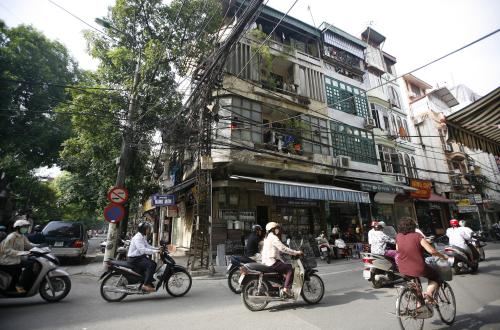
The Head of the Macroeconomics and Finance Centre at the Institute for Development of Economics and Finance (Indef), M. Rizal Taufikurahman, believes the ASEAN economic landscape is becoming increasingly competitive as Vietnam and the Philippines rise into the upper-middle-income group.
The World Bank has set the Gross National Income (GNI) per capita range of US$4,636–$14,375 as the threshold for upper-middle-income countries for the 2027 fiscal year. Within ASEAN, Vietnam and the Philippines have now joined Indonesia, Malaysia, and Thailand in this category.
“This means that ASEAN is no longer merely competing as a low-wage region, but is entering a competition of productivity, industrialisation, exports, and the quality of human resources,” Rizal stated in Jakarta on Monday (6/7/2026).
For Indonesia, Rizal suggests this condition presents both challenges and opportunities. Competition to attract foreign investment will intensify as investors compare Indonesia with Vietnam, which is strong in export-oriented manufacturing; the Philippines, which excels in the services sector and educated labour; and Malaysia and Thailand, which are more mature within industrial supply chains.
On the other hand, this situation also opens opportunities for ASEAN collaboration as an integrated production base, provided Indonesia can integrate more deeply into regional value chains rather than merely serving as a large market and supplier of raw materials. Rizal noted that Indonesia’s advantages lie in its economies of scale, large domestic market, strategic natural resources, and potential for downstreaming.
However, Indonesia still faces several challenges, including low labour productivity, the burden of logistics and energy costs, frequently changing regulatory certainty, and uneven quality of human resources and innovation.
“Therefore, compared to Vietnam and the Philippines, Indonesia excels in terms of market size and natural resources, but must still catch up in export manufacturing aggressiveness, bureaucratic efficiency, and labour quality,” Rizal explained.
He also views Indonesia’s target of becoming a high-income country as realistic in the long term, though not easily achievable in the near future. According to the World Bank, the threshold for high-income countries is a GNI per capita above US$14,370, whereas Indonesia remains within the upper-middle-income group.
Consequently, according to Rizal, the key is not merely maintaining five per cent growth, but driving productivity-based growth through value-added industrialisation, modern manufacturing and service exports, vocational education, innovation, investment certainty, and bureaucratic reform.
“Without this, Indonesia risks falling into the middle-income trap—moving up a class statistically, but failing to become a strong, advanced economy,” said Rizal.
Source: jawawa.id (https://jawawa.id/newsitem/vietnam-and-philippines-upgrade-status-indef-warns-of-tighter-asean-economic-competition-1783346006)
Originally published by Republika (https://ekonomi.republika.co.id/berita/thr8q1423/vietnam-dan-filipina-naik-kelas-indef-ingatkan-persaingan-ekonomi-asean-kian-ketat), translated from Indonesian