
Video: Learning from Vietnam, PERHEPI Reveals Conditions for Sustainable Self-Sufficiency
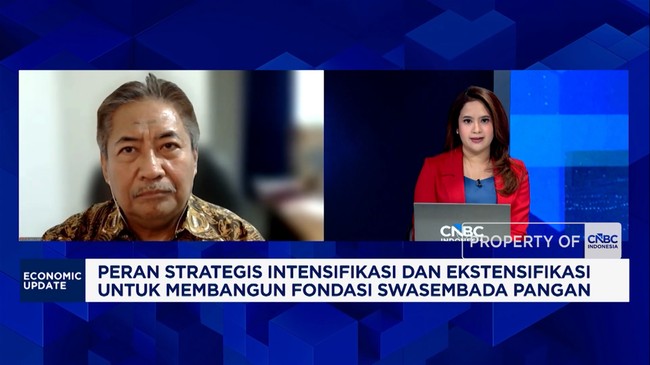
In an effort to maintain sustainable food self-sufficiency, the Chairman of the Advisory Board of the Indonesian Agricultural Economics Association (PERHEPI), Bustanul Arifin, has highlighted several key factors, most notably the improvement of farmer welfare. PERHEPI notes that land lease costs and labour expenses remain significant burdens on farmers trying to increase production. Additionally, price certainty, new agricultural technology, and superior seeds are factors that can boost productivity, pointing to Vietnam’s success as a benchmark.
Meanwhile, Agrinas Pangan Nusantara President Director Joao Mota revealed the company’s strategy to drive agricultural productivity through both intensification and extensification. In the short term, Agrinas is promoting intensification via modernisation and agricultural technology, such as satellite monitoring, to help ensure harvest success and prevent crop failure. The company also provides mechanisation equipment ranging from soil tillage tools, tractors, and harvesters to post-harvest storage facilities, aiming to achieve local food self-sufficiency. Farmers are also encouraged to play a role in production to attract younger generations to the sector.
On the other hand, Rumah Tani President Director Bahtiar stated that while extensification and intensification efforts are necessary to increase agricultural production, these policies must be balanced with strengthened market access, logistics, and downstream food industries to prevent oversupply.