
Video: KAI Logistics’ Strategy for Meeting Demand for Halal Freight Services
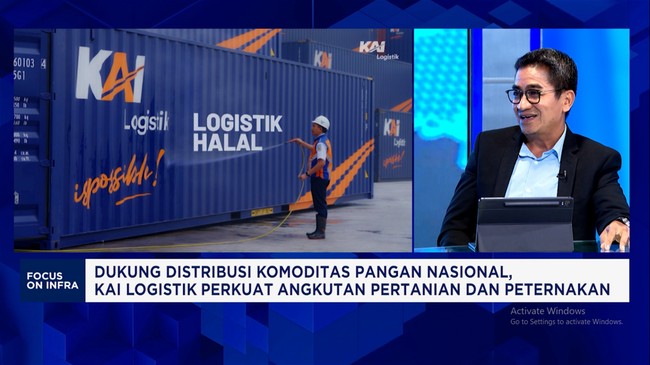
Jakarta — To strengthen the national logistics ecosystem and its rail freight business, KAI Logistik is implementing four main strategies. These include improving efficiency and service quality, speed and reliability by diversifying its business and markets. The company is also optimising its wagons and maximising capacity utilisation, while collaborating with partners to strengthen the logistics ecosystem and expand digital services.
KAI Logistik President Director Yuskal Setiawan said the company transports and distributes a range of commodities, from coal to livestock and agricultural produce. It also supports the government’s efforts to enforce the ban on trucks that exceed permitted dimensions and loads (ODOL). Strengthening KAI Logistik’s facilities and infrastructure is expected to help shift the transport of ODOL goods to rail.
Digitalisation is expected to improve freight services for customers and enable operators to track the movement of goods. KAI Logistik is also preparing a logistics ecosystem for halal-industry supply chains by strengthening systems, wagon standards and storage processes in line with halal certification requirements.
The company is promoting sustainable logistics by expanding into sustainable sectors, including integrated agriculture, which can reduce time and costs.
KAI Logistik’s business-development efforts have earned it the Sector Champion title in the Logistics category and 48th place in the Top Danantara Indonesia CX100 BUMN 2026 ranking.
What are KAI Logistik’s strategies, targets and challenges in developing its logistics business? Bunga Cinka discusses these issues with Yuskal Setiawan, President Director of KAI Logistik, on CNBC Indonesia’s Focus On Infra programme.