
Video: BI’s Swift Response to Support the Rupiah and Keep Volatility in Check
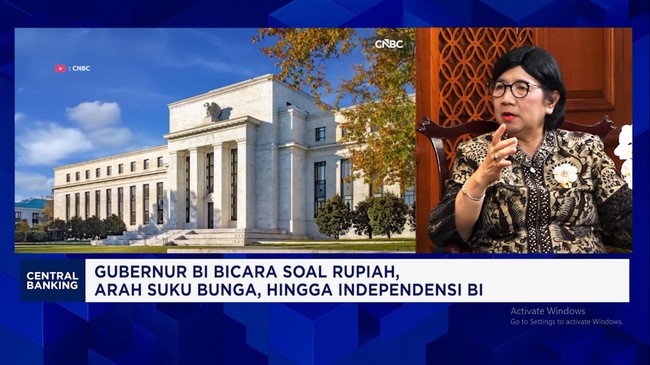
Jakarta — Bank Indonesia Governor Destry Damayanti said persistent global geopolitical uncertainty was a challenge for central banks worldwide, including Indonesia. Turmoil in the Middle East has affected global supply chains, while inflation has risen globally, including in the United States. US Treasury yields have also climbed and the US dollar index has strengthened.
The “higher for longer” environment has also affected global financial markets, as reflected in increased foreign capital outflows from emerging markets such as Indonesia. This has put pressure on domestic markets and weakened the rupiah.
Despite global uncertainty, Bank Indonesia says Indonesia’s economic fundamentals remain strong, as shown by robust economic growth and inflation staying within the central bank’s projected range. To counter capital outflows and pressure on the rupiah, BI says it is responding swiftly through market interventions in the spot, domestic non-deliverable forward (DNDF) and non-deliverable forward (NDF) markets.
What direction will Bank Indonesia’s policy take in response to global volatility? Andi Shalini discusses the issue with BI Governor Destry Damayanti on Power Lunch, CNBC Indonesia (Friday, 9 October 2026).