
Vice President pushes for acceleration of Way Bungur Bridge construction in Lampung
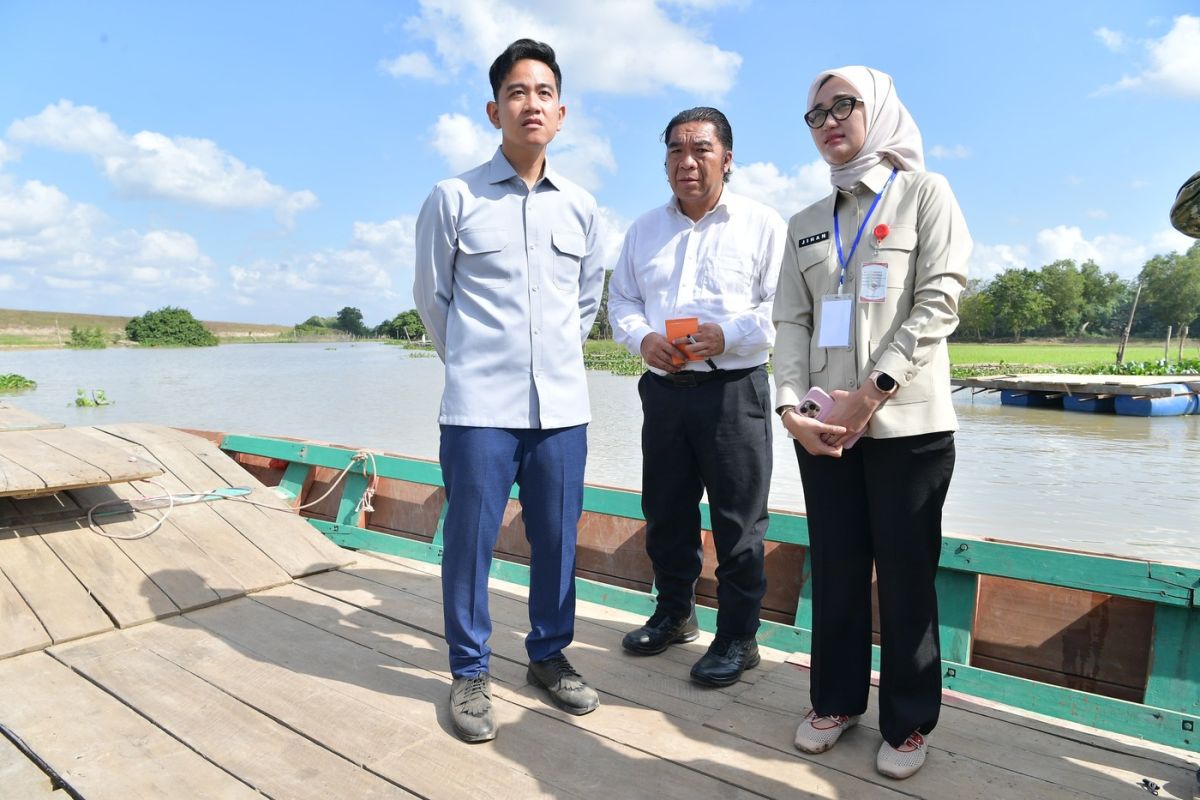
Jakarta (ANTARA) - Vice President Gibran Rakabuming has assured that the government continues to accelerate infrastructure development in order to strengthen connectivity and equalise access, including the Way Bungur Bridge in East Lampung Regency.
According to a statement from the Vice Presidential Secretariat received in Jakarta on Wednesday, during an inspection of the Way Bungur Bridge construction in Lampung today, the Vice President said that, as an implementation of President Prabowo Subianto’s Astacita vision, the government is accelerating quality and evenly distributed infrastructure development as a foundation for equitable development and strengthening the national economy.
“In two weeks, the emergency bridge will be ready. The permanent bridge will also be built soon,” said Vice President Gibran.
He made the remarks during a field dialogue with Deputy Governor of Lampung Jihan Nurlela, Regent of East Lampung Ela Siti Nuryamah, and local residents.
The Vice President ensured the emergency bridge would be completed within two weeks, or around the end of July 2026, so that two-wheeled vehicles and schoolchildren can cross safely.
The Vice President emphasised that accelerating infrastructure development requires strong synergy between the central government and regional governments.
According to Gibran, various obstacles, both technical and non-technical, must be resolved through intensive coordination.
To that end, the government will apply a priority scale in infrastructure development and repair, prioritising road sections and bridges that have a direct impact on community economic activity.
“Road points that need repair, particularly roads that support economic activities, will be our priority,” he said.
The construction of the Way Bungur Bridge, also known as the Kali Pasir Bridge, holds strategic value as one of the main links between East Lampung Regency and Central Lampung Regency.
Without bridge access, schoolchildren and local residents have had to cross the river using simple wooden boats for their daily activities. The limited number of boats has also meant that community mobility is far from optimal.