
Vice-President Gibran Says He Intends to Resign: What Happens Next Under the Rules?
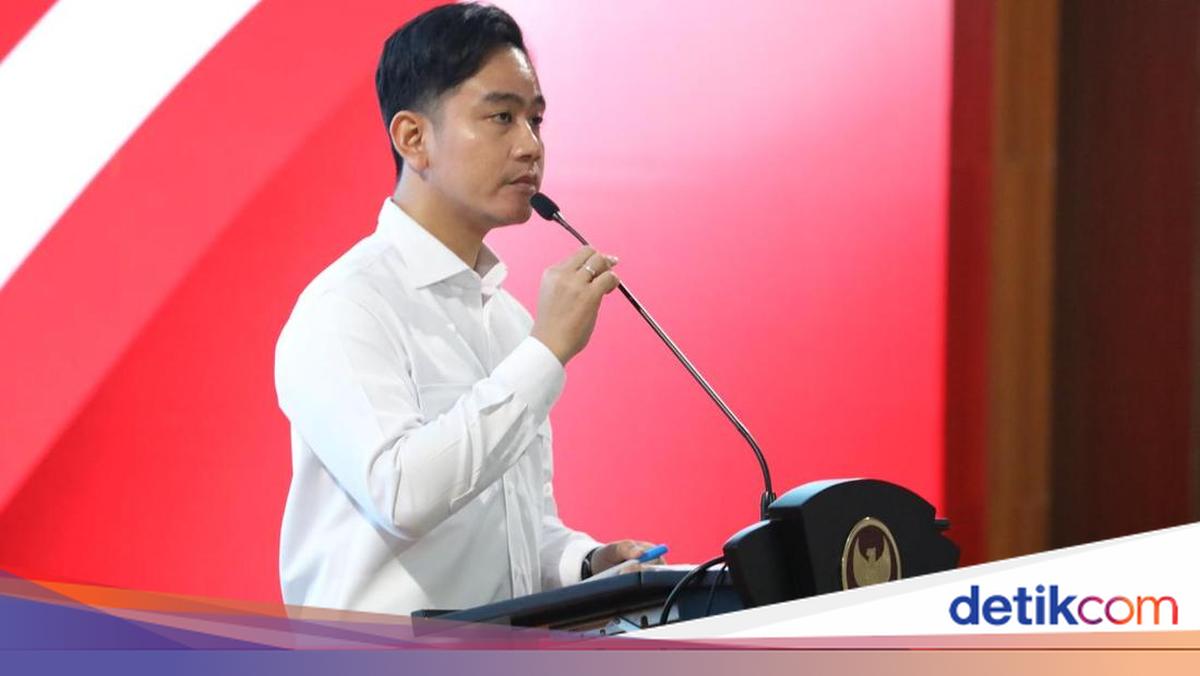
Vice-President Gibran Rakabuming Raka has conveyed his intention to resign to President Prabowo Subianto. What is the procedure for a resignation and for filling the vice-presidential post if Gibran leaves office?
State Secretary Prasetyo Hadi said Gibran met Prabowo today. During the meeting, Gibran expressed his intention to resign after the Supreme Court declared his educational equivalency certificate invalid and void.
“The meeting lasted around two and a half hours. During the discussion, the Vice-President told the President, Mr Prabowo Subianto, that he intended to resign in response to the developments surrounding the decisions at the Constitutional Court and the Supreme Court,” Prasetyo said at a press conference at the Palace in Central Jakarta on Tuesday (10 November 2026).
He said Prabowo had not rejected the proposal, but had offered Gibran advice.
“We also want to clarify that it is not true that the President rejected the intention during the meeting,” Prasetyo said.
What does the 1945 Constitution say if a vice-president resigns?
Dr Qurrata Ayuni, a constitutional law lecturer at the University of Indonesia, said the 1945 Constitution does not use the term “resignation”. However, she said, Gibran could still resign by submitting a request to the President.
“The Indonesian Constitution, the 1945 Constitution, does not recognise the term ‘resign’. Gibran’s resignation would therefore take the form of a request to the President, who would then decide whether to approve his departure,” she said.
If Prabowo agrees, Article 8(2) of the 1945 Constitution would apply. Qurrata said the article governs a vacancy in the vice-presidential office.
“If President Prabowo approves the request to leave office, Article 8(2), concerning a vacancy in the vice-presidency, will apply. Within 60 days, the People’s Consultative Assembly (MPR) must convene to choose a vice-president from two candidates nominated by the President. My advice is that the President should submit two replacement candidates promptly once the office is vacated,” Qurrata said.
The relevant provisions of Article 8 of the 1945 Constitution state:
If the President dies, resigns, is dismissed or is unable to perform his duties during his term, the Vice-President replaces him until the end of the term.
If the office of Vice-President becomes vacant, no later than 60 days afterwards the People’s Consultative Assembly convenes to elect a Vice-President from two candidates nominated by the President.
If the President and Vice-President both die, resign, are dismissed or are unable to perform their duties at the same time during their term, the Foreign Minister, Home Affairs Minister and Defence Minister jointly perform the duties of the presidency. No later than 30 days afterwards, the People’s Consultative Assembly convenes to elect a President and Vice-President from two pairs of candidates nominated by the political party or coalition whose presidential and vice-presidential tickets received the first- and second-highest numbers of votes in the previous general election. They serve for the remainder of the term.
Titi Anggraini, a constitutional law lecturer at the University of Indonesia, said Gibran’s resignation would not need to go through impeachment. She said impeachment begins with a process initiated by the House of Representatives (DPR) if it finds a serious violation or determines that the office-holder no longer meets the requirements for office.
“Regarding the State Secretary’s statement that Vice-President Gibran wants to resign, the process would not involve impeachment. Impeachment applies only where there is an alleged serious violation or the office-holder no longer meets the requirements, and must proceed through a proposal by the DPR, a Constitutional Court ruling and then an MPR decision (Articles 7A and 7B of the 1945 Constitution, in conjunction with the MD3 Law),” she said.
She said the legal basis for resignation is found in Article 8(1) and (2) of the 1945 Constitution. The word “resigns” in Article 8(1), she said, can encompass voluntary departure from office.
“For resignation—that is, leaving office voluntarily—the basis is Article 8(1) and (2) of the 1945 Constitution. Article 8(1) states that if the President dies, resigns, is dismissed or is unable to perform his duties, the Vice-President replaces him. The word ‘resigns’ here includes voluntary resignation. Article 8(2) specifically provides that if the vice-presidential office becomes vacant, the MPR must convene within 60 days to elect a Vice-President from two candidates nominated by the President,” she said.
She said the rules are also set out in Articles 46 to 49 of the MD3 Law. Those provisions govern how the MPR elects a new Vice-President when the office is vacant, including following a resignation.
“These provisions are elaborated in the MD3 Law, particularly Articles 46 to 49. If the vice-presidential office becomes vacant, including as a result of resignation, the MPR must hold a plenary session within 60 days to elect a new Vice-President. The President submits two candidates, together with their supporting documents, to the MPR leadership no later than 14 days before the session. Both candidates must then declare their readiness to serve, after which the MPR elects one by majority vote. If the vote is tied, it is held once more; if it remains tied, the President chooses one of the candidates. The new Vice-President is then sworn in and confirmed by an MPR resolution,” she said.
She said Gibran’s resignation would be an administrative and constitutional process involving the creation of a vacancy, rather than impeachment. She added that the resignation should be formally submitted to the President and/or the MPR.
“So, if Gibran does resign, the process will be administrative and constitutional, through the creation of a vacancy, not through impeachment. The resignation should be formally submitted, usually in a letter to the President and/or the MPR, after which the MPR follows the procedure for electing a replacement under Article 8(2) of the 1945 Constitution and Articles 46 to 49 of the MD3 Law,” she said.
Source: jawawa.id (https://jawawa.id/newsitem/vice-president-gibran-says-he-intends-to-resign-what-happens-next-under-the-rules-1794307885)
Originally published by detikcom (https://news.detik.com/berita/d-8746998/wapres-gibran-sampaikan-niat-mundur-ini-aturan-proses-selanjutnya), translated from Indonesian