
Vice President Gibran Promotes AI and Coding from Primary School, Volunteers: A Strategy to Gain an Early Advantage
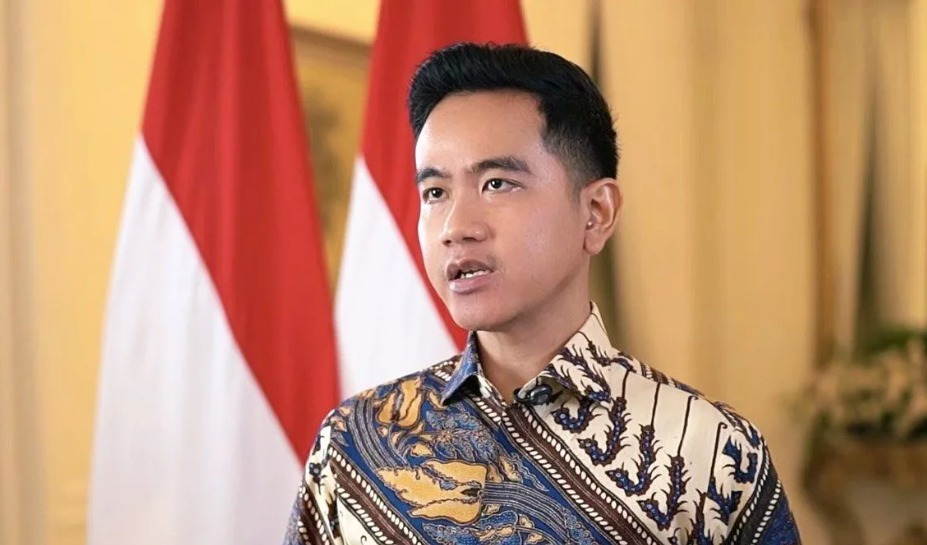
The GIBRANKU volunteer network believes that Vice President Gibran Rakabuming Raka’s consistent push for the implementation of Artificial Intelligence (AI) and coding lessons from primary school level is a tactical move to ensure Indonesia does not merely become a consumer of global technology.
The General Chairperson of GIBRANKU, Ananta Agung Junaedy, stated that the Vice President’s idea should be viewed as an attempt to ‘gain an early start’ in the global digital competition landscape, where a nation’s strength is now measured by its ability to manage data and technology.
‘Indonesia is currently the largest digital market in Southeast Asia, but so far we have more often been consumers rather than producers. The Vice President’s focus on AI encourages our youth to become creators of added value with high competitiveness, rather than just being targets for other nations’ sales,’ Junaedy said in a written statement on Monday.
Junaedy addressed public misconceptions that view a coding curriculum for primary school children as an excessive technical burden. He explained that the essence of introducing programming at an early age is the formation of computational thinking.
‘Many protest, asking why primary school children are being asked to be computer code typists. However, just as learning mathematics does not automatically make a child a mathematician, the same applies to learning coding. The true goal is to train children’s brains from an early age to think critically, logically, and systematically, and to become proficient in problem-solving,’ he clarified.
He also cited Vice President Gibran’s viral statement: ‘AI will not replace humans, but people who use AI will defeat those who do not.’ This statement is seen as a challenge for the Indonesian nation to take the helm of change.
Furthermore, Junaedy appreciated the Vice President’s policy direction, which does not limit the use of advanced technology only to large corporations in the capital, but targets the grassroots economic sector through the principle of equality.
In addition to boosting the grassroots economy, the implementation of AI systems in the government sector is believed to be able to untangle bureaucratic complexities, such as synchronising social assistance data, traffic management, and closing loopholes for illegal levies and corruption through transparent systems.
Despite the optimism, Junaedy warned of significant challenges regarding the potential misuse of technology. Without strong regulation, AI is vulnerable to being used as an instant cheating tool for students, the spread of hoaxes, and the theft of personal data.
‘The government has a major homework task to immediately establish firm legal regulations regarding the ethical boundaries of AI use in Indonesia. Essentially, this technological training must be accompanied by digital moral education,’ concluded Junaedy.