
Vice President Gibran Engages Students to Highlight Benefits of Free Nutritious Meals in Underdeveloped Regions
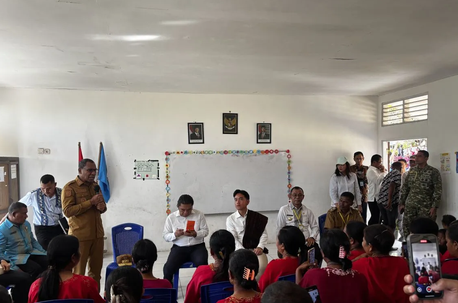
Vice President (Wapres) RI Gibran Rakabuming Raka has affirmed that the Free Nutritious Meals (MBG) programme holds high urgency, particularly for communities in disadvantaged, frontier, and outermost (3T) regions. He made the statement while inspecting SDN Wolomoni state primary school in Niawula Village, Ende Regency, East Nusa Tenggara (NTT), on Thursday (18/6/2026).
During the visit, Wapres Gibran stressed that the current school holiday period is a crucial momentum to evaluate and improve the governance of the MBG programme so that it is more targeted. He noted that the benefits of the programme are eagerly anticipated by teachers and parents in remote areas.
Wapres highlighted the conditions at SDN Wolomoni as representative of regions in dire need of nutritional intervention. The MBG programme not only targets schoolchildren but is also designed for other vulnerable groups in an effort to suppress the national stunting rate.
In a notable move, Wapres Gibran invited five university student representatives from various institutions to observe the conditions on the ground firsthand. This step was taken in response to student aspirations that had previously voiced criticism of the programme. “Previously, the demonstrating students told me they disagreed and that it should be stopped. Personally, I believe this must be continued, especially in the 3T regions,” Wapres Gibran asserted.
Rapid Bena Main, a student from Jenderal Soedirman University (Unsoed) in Purwokerto who joined the delegation, acknowledged the programme’s urgency after witnessing the reality in NTT. He agreed that the MBG and the Koperasi Desa Merah Putih (Red and White Village Cooperative) must be prioritised to close the economic and health gap.
Wapres Gibran underscored that the continuation of the MBG programme in areas like Ende is a tangible manifestation of a development vision that is no longer Java-centric. The government is committed to ensuring every strategic policy reaches all corners of the country for equitable welfare. Through direct supervision and the involvement of student elements, the government hopes the governance of the Free Nutritious Meals programme can be continuously refined, minimising potential irregularities and delivering a real impact on the quality of future human resources.