
Verbal Abuse Against Nadhif Basalamah Deemed a Violation of Human Dignity
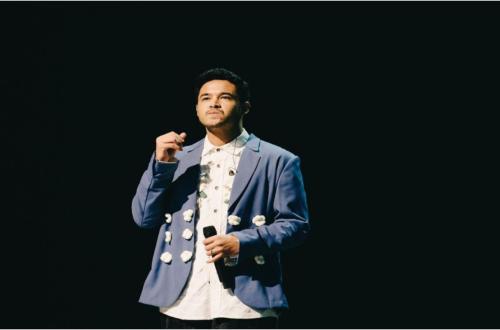
The case of verbal abuse experienced by young musician Nadhif Basalamah on social media has drawn public attention. The singer of ‘Kota Ini tak Sama Tanpamu’ was subjected to sexual fantasies and received inappropriate comments that crossed the boundaries of decency.
Communications and media expert and lecturer at Muhammadiyah University of Yogyakarta, Dr Fajar Junaedi, assessed that this case is proof that Indonesia’s digital space is not yet fully safe, healthy, and civilised for every individual. ‘The digital space should be a place for exchanging ideas, giving appreciation, and constructive criticism. The virtual realm is not an arena for objectification and harassment,’ Fajar said in a written statement on Wednesday (1/7/2026).
From the perspective of communication ethics, Fajar considered the sexually nuanced comments received by Nadhif to be a violation of human dignity. Communication ethics teaches that every individual must be treated as a subject with rights, feelings, and dignity that must be respected. When a person is reduced to an object of fantasy, communication shifts into a form of dehumanisation.
Fajar explained that in the deontological ethical theory developed by philosopher Immanuel Kant, the actions of these netizens clearly contradict universal moral principles. Deontology asserts that humans must be treated as ends in themselves, not as a means to satisfy the desires of others. ‘Thus, comments containing sexual harassment cannot be justified, even if the perpetrator claims it was merely a joke or without malicious intent. Morally, such actions have violated the duty to respect fellow human beings,’ Fajar stated.
Fajar noted that while freedom of expression is an important part of democracy, this right is always accompanied by ethical responsibility. When a comment begins to demean, hurt, or disrupt another person’s mental health, that freedom has violated moral values. ‘This case shows that our society’s digital literacy still needs to be strengthened. Digital literacy is not just the ability to use social media or understand technology. More than that, it encompasses the ability to think critically, build empathy, and be responsible for every digital footprint left behind,’ he said.
He stressed the importance of digital empathy, a concept that involves users being aware that behind every social media account is a real human being with feelings who can experience psychological pressure from the comments they receive. ‘Every social media user needs to get into the habit of reflecting before typing a comment. Ask yourself: does this comment respect the other person? Is it appropriate to say directly? And what impact will it have on the recipient? These simple questions need to become part of our social media culture,’ he said.