
VEICHI Launches Energy Storage and Microgrid Solutions for C&I Segment
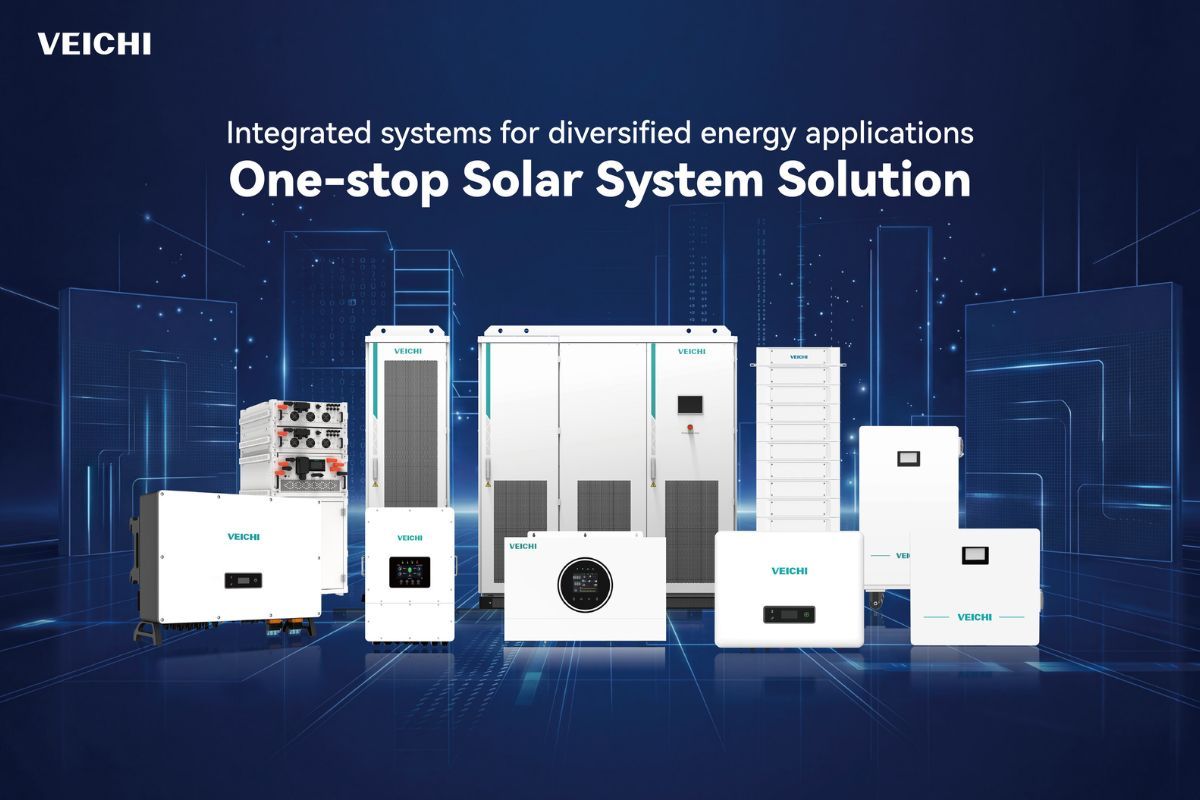
Suzhou, China (ANTARA/PRNewswire) - VEICHI, a global provider of industrial automation and renewable energy solutions, has launched a solar energy system for the commercial and industrial (C&I) segment. This solution helps businesses reduce the risk of electricity supply fluctuations and optimise energy costs amid the accelerating global energy transition.
Supported by expertise in power electronics, electric drive systems, and industrial control systems, VEICHI has developed a portfolio of energy storage systems for the C&I segment that includes hybrid inverters, off-grid inverters, microgrid inverters, and battery energy storage systems (BESS).
Director of VEICHI Renewable Energy, Shylock Fan, stated that the new renewable energy storage solutions represent a significant development in VEICHI’s strategy for the renewable energy sector. Drawing on experience in developing residential energy storage inverters, battery systems, and various supporting applications, VEICHI is now delivering an integrated energy ecosystem covering smart homes, commercial facilities, and industry. VEICHI combines industrial automation capabilities with renewable energy technology and is committed to providing reliable and comprehensive green energy solutions for partners across various countries.
The VPS Hybrid Inverter is the main component in the latest generation of hybrid inverter and microgrid solutions developed by VEICHI. This product features greater power density, better system flexibility, and more optimal reliability for complex C&I segments. The system can be connected to the grid or operate off-grid, and its capacity can be expanded with multiple units installed in parallel.
The VPS Series offers industrial-grade stability and a shock-resistant design, capable of handling complex industrial workloads due to high durability for inductive load applications. The system also supports a bypass maintenance method without halting system operations. With hardware protection features, system performance is maintained in harsh operating environments.
Equipped with integrated Static Transfer Switch (STS) technology, the system can switch power sources within milliseconds during a grid disturbance. With a built-in isolation transformer, the system also maintains voltage stability when operating independently in a microgrid network, as well as during three-phase imbalances. This capability helps users overcome grid fluctuations and maintain operational continuity.
Thanks to a system design that connects energy sources and storage via a direct current (DC-coupled) path, solar energy utilisation reaches up to 2 per cent higher efficiency. The system integrates anti-backflow control, grid-forming, Virtual Synchronous Generator (VSG), and black-start functions. Furthermore, the system is equipped with a built-in Energy Management System (EMS) that makes energy management and distribution increasingly intelligent. Through these capabilities, users can maximise solar energy consumption for self-use, reduce diesel generator usage, and improve overall energy utilisation efficiency.
VEICHI’s renewable energy solutions have been deployed in various key markets, including Southeast Asia, South Asia, the Middle East, Central Asia, and Africa. The company’s products have also been exhibited at various international energy events in the Philippines, Thailand, Vietnam, Myanmar, Pakistan, Iraq, Lebanon, Saudi Arabia, Türkiye, Uzbekistan, Egypt, and Nigeria, and it continues to expand into other regional markets.
With decades of experience in electric drive technology and industrial automation, VEICHI applies strict manufacturing and quality control standards throughout its product lifecycle. Going forward, VEICHI will continue to expand technical support and local services in international markets to provide faster responses and professional solutions for customers. Through these steps, VEICHI aims to help customers accelerate the adoption of clean energy, maintain operational continuity, and achieve long-term sustainability targets.