
Vegetable Prices Rise Due to Strange Phenomenon in Wartegs? BPS Reveals the Facts
The Indonesian Central Statistics Agency (BPS) has confirmed a recent increase in the prices of various vegetable commodities across Indonesia, coinciding with higher demand for side dishes at local eateries, such as Wartegs, as reported by traders.
This condition is reflected in the inflation data for May 202<0xA0>26, specifically within the Food, Beverage, and Tobacco expenditure group. Inflationary pressure for this group reached 0.39%, acting as the largest contributor at 0.28% to the overall monthly inflation rate of 0.28% recorded in May 2026.
According to BPS records, vegetable commodities are part of the volatile food inflation component, which experienced an inflation rate of 0.22%, rebounding from a deflation of 0.88% in April 2026.
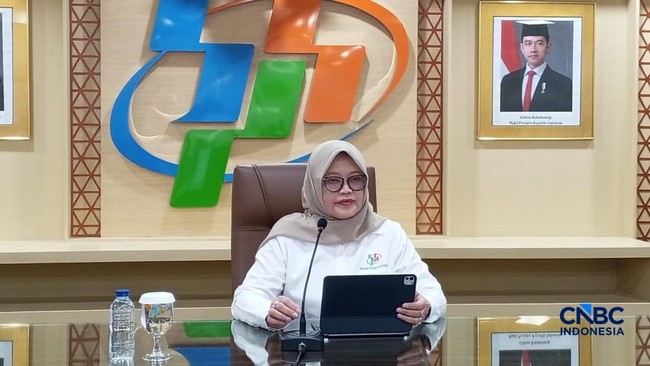
Pudji Ismartini, Deputy for Methodology and Statistics at BPS, explained that price developments in this commodity group were primarily triggered by seasonal factors, such as high demand leading up to national religious holidays like Eid al-Adha.
“These commodities fall into the volatile food category. This is seasonal because religious holidays act as a trigger for changes in public demand,” Pudji stated during a press conference at the BPS Headquarters in Jakarta on Tuesday (2/6/2026).
Furthermore, she noted that prices also rose due to production issues. For instance, chilli production decreased in several key centres such as Garut, Temanggung, and Malang in April 2026. Similarly, shallot harvests declined in May 2026 across production hubs including Sampang, Enrekang, Bojonegoro, Pati, and Demak, driven by extreme weather, pest attacks, and drought conditions.
Tomato prices also fluctuated, which Pudji attributed to the high demand for horticultural products in several regions ahead of the Eid al-Adha 1447 Hijriah celebrations.
Pudji confirmed that red chilli, shallots, tomatoes, green mustard, bird’s eye chilli, and cucumbers all contributed to inflation in May 2026, with red chilli contributing 0.08%, shallots 0.04%, and tomatoes 0.03%.
Meanwhile, Warteg traders have expressed growing concern regarding the impact of rising food prices and declining consumer purchasing power. Monitoring in the Senen area of Central Jakarta revealed that several traders are complaining that customers are reducing their side dish consumption due to the increasing cost of ingredients.
One trader, Amirah, noted that more customers are now opting for side dishes priced between Rp15,000 and Rp20,000, such as tempeh, tofu, egg balado, and various fried foods. Customers are also compensating by consuming more vegetables.
Premium side dishes such as fried chicken, beef rendang, beef stew, black squid, and prawns are becoming less frequent purchases. “It is true, customers are starting to reduce purchases of side dishes like fried chicken or beef; they are buying egg balado, tempeh, tofu, vegetables, and fried snacks,” Amirah told CNBC Indonesia.
Customers are now seeking Warteg meals priced around Rp10,000, with those exceeding Rp20,000 becoming rare. Consequently, Amirah has begun to stop selling side dishes priced above the Rp20,000 mark.
Similarly, another trader, Kusuma, reported a shift in customer orders, noting that rendang and prawn dishes are seeing less demand. “Most people are buying vegetables, tempeh, fried tofu, perkedel, and fried potatoes—basically things that are still around the Rp10,000 mark,” Kusuma said.
Kusuma even stopped selling prawn dishes because interest has dwindled. “Prawns are quite expensive; even with rice, the total doesn’t reach Rp20,000, but when you add vegetables and sambal, it nears Rp20,000, so people are reducing their prawn consumption.”
Another trader, Surono, also confirmed that many customers are now choosing menus priced between Rp10,000 and Rp15,000. “Because prices have risen, people are becoming more selective with their side dishes. Usually, our beef tendon (kikil) sells out quickly, but now some remains until the afternoon. The same goes for beef rendang.”
Surono added that side dishes like perkedel, fried potatoes, tempeh, tofu, and various vegetables are more popular, while fried fish, beef, and prawns are being avoided. “People are looking for practical menus. The rice remains the same because we do not reduce the portion size; people are just more selective with the side dishes to ensure they are full while staying within budget.”