
Vatican Opens Its Sacred Garage, Featuring a Century-Old Car
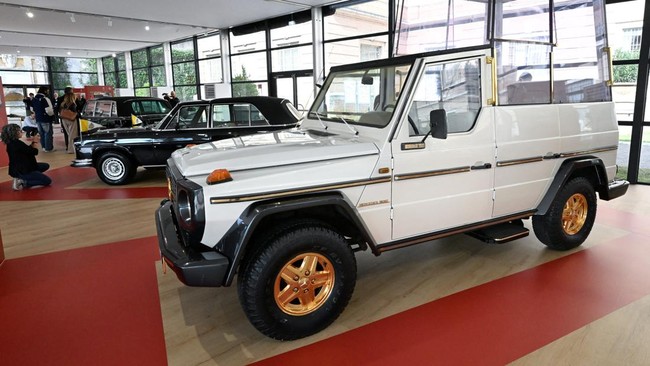
The Vatican is holding a special celebration of the popemobile, the iconic vehicle that for almost a century has enabled popes to get closer to the faithful, both on visits at home and on trips abroad.
On Wednesday, the Vatican Museums presented a preview of an exhibition entitled “A Century of the Popemobile”, featuring eight Mercedes-Benz vehicles used by popes since 1930. The exhibition opened to the public on Thursday.
Separately, Pope Leo XIV met Mercedes-Benz executives and expressed his appreciation for the carmaker’s partnership with the Holy See. He said developments in automotive technology had gone hand in hand with changes in papal travel over time.
“For decades, the popemobile has evolved from a mere means of transport into a means of encounter, enabling the pope to be closer to the faithful during pastoral visits and public celebrations,” Leo XIV said, according to CNN International on Thursday (29 October 2026).
Mercedes-Benz Nürburg 460: the oldest vehicle
One of the exhibition’s highlights is the Mercedes-Benz Nürburg 460, presented to Pope Pius XI on 23 May 1930. It is the oldest papal vehicle on display at the Vatican Museums.
The vehicle was specially designed for the pope, with a luxurious interior that includes brocade silk-upholstered armchairs and high-quality wood and metal finishes.
Sandro Barbagallo, curator of the Vatican Museums’ Historical Collections Department, said the vehicle showed how a car based on a production model could be adapted for the specific needs of the papacy.
He said popemobile design was not solely about luxury: it also needed to make the pope visible to the faithful and allow him to see his surroundings, while providing an appropriate level of safety and comfort.
From removable windows to a transparent dome
Over time, popemobile designs continued to evolve to meet the pope’s need to interact directly with the faithful. The vehicles in the exhibition illustrate these changes.
In 1960, Pope John XXIII received a Mercedes-Benz 300 d Landaulet. It had removable rear side windows, allowing the pope to reach out to people he encountered along the way.
The next innovation came in 1980, when Mercedes-Benz developed the 230 G for Pope John Paul II’s visit to Germany. The vehicle was fitted with a tall transparent dome at the rear.
The dome was designed to provide protection while allowing the millions gathered to see the pope more clearly.
These developments reflect the popemobile’s changing role. It became more than a vehicle taking the pope from one place to another: it also served as a way to greet the faithful, foster closeness and, on some occasions, enable the pope to bless babies brought to him.
Electric popemobile and a message on environmental care
During his meeting with Mercedes-Benz executives, Leo XIV also recalled the electric papal vehicle presented to Pope Francis. The vehicle reflected Francis’s concern for environmental and ecological issues.
Leo XIV urged Mercedes-Benz to continue developing technology that is not only focused on industrial progress but also benefits people and the environment.
“In this spirit, I encourage you to continue placing technological innovation at the service of human dignity, care for creation and the common good,” he said.
The “A Century of the Popemobile” exhibition offers a look at the long history of papal vehicles, from a luxury car in 1930 to vehicles equipped with modern technology. More than an automotive collection, the vehicles illustrate how innovation has continued to support the popes’ efforts to be closer to the faithful around the world.