
Vape Retailers Association Ready to Collaborate with Government to Prevent Substance Abuse
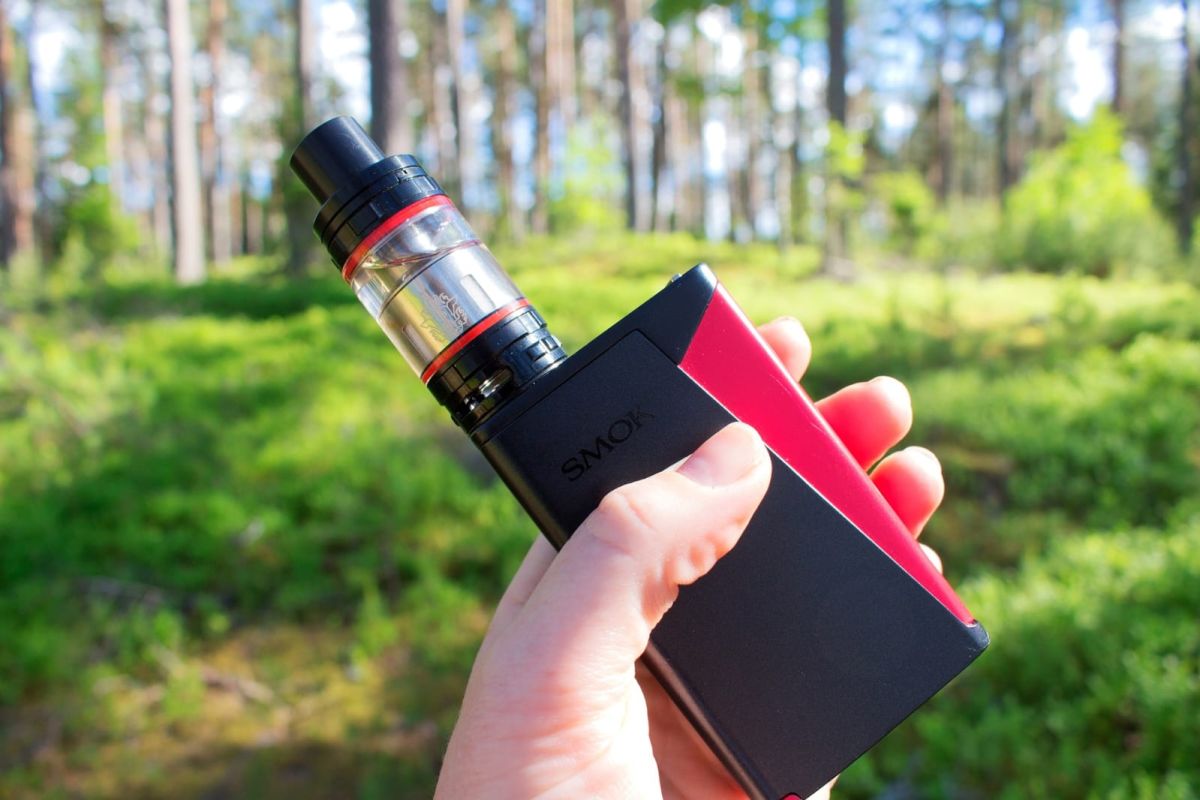
The Indonesian Vape Retailers Association (Arvindo) is ready to collaborate with the government and various stakeholders to prevent the misuse of narcotics through electronic cigarettes (vapes) and to support law enforcement against the circulation of illegal products. This collaboration is necessary to strengthen the prevention of narcotics abuse via electronic cigarettes, support law enforcement against violators, and ensure that legal products within the supervisory system are not equated with the circulation of illegal products.
Arvindo Chairman Fachmi Kurnia Firmansyah Siregar stated that all parties share the same goal of preventing narcotics abuse and enforcing the law without neglecting the sustainability of the legal electronic cigarette industry that complies with regulations. “We want to work together with the government to reduce the number of narcotics abuse cases. We also hope that together we can protect the legal industry that has adhered to the rules,” Fachmi said.
He continued that policies regarding electronic cigarettes must be able to clearly distinguish between legal and illegal products. According to him, legal products can be easily identified by the excise tax stamp affixed to the product, their business permits, and a clear distribution chain, making them easier for the government and law enforcement to supervise. Conversely, illegal products circulating outside the regulatory system are very difficult to trace. Given these differences, Fachmi argued that equating legal products with illegal ones is a mistake.
“If it is legal, the business permit is clearly there, the address is there, the excise stamp is there, the distribution chain is visible because it is recorded, and it is easier to educate about and inspect. If it is illegal, the channel is clearly closed; we cannot know where it is circulating, it is certainly without excise stamps and difficult to trace,” he said. According to him, the misuse of electronic cigarettes as a medium for narcotics use is found only in illegal products. He cited the results of an inspection by the National Narcotics Agency (BNN) at several official vape shops, which found no narcotic content in tax-stamped liquids.
Therefore, Arvindo emphasised that efforts to prevent narcotics abuse must be carried out through supervision of illegal distribution channels, public education, and cross-sector cooperation. Fachmi also stated that his party agrees that nicotine remains addictive and that the use of electronic cigarettes is not without risk.
Meanwhile, Djaka Kusmartata, Technical and Excise Facilities Director at the Directorate General of Customs and Excise of the Ministry of Finance, conveyed that the electronic cigarette industry also makes a tangible contribution to state revenue through the excise sector. “If we look at the 2026 tobacco products excise revenue target, it is IDR 225.7 trillion. Revenue from electronic cigarettes alone is approximately IDR 2.8 trillion,” he revealed.
However, Djaka assessed that this great potential is overshadowed by the rampant circulation of illegal electronic cigarettes, which has surged drastically. This condition is considered capable of triggering widespread losses, ranging from state revenue and industry sustainability to labour, farmers as raw material suppliers, and consumers. Seeing this threat, strict and comprehensive supervision from upstream to downstream is now urgent. Djaka stressed the importance of synergy and collaboration across stakeholders so that supervisory policies can be effective in the field. “We very much hope that in addition to enforcing supervision from upstream to downstream, from production to free circulation, all ministries and agencies truly support effective supervision. We are not talking about pros and cons, but we are talking about cross-sector coordination so that we can find solutions,” he said.