
Vale Indonesia Receives Autoclave, Accelerates HPAL Smelter Construction
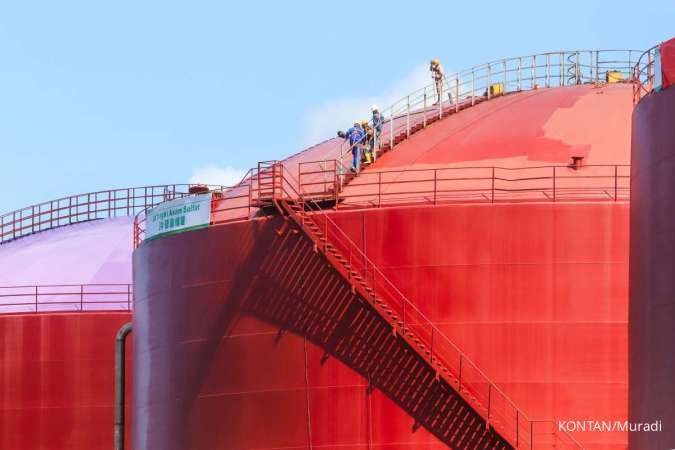
PT Vale Indonesia Tbk (INCO), a member of Mining Industry Indonesia (MIND ID), along with its partners GEM Co., Ltd., and Ecopro, has taken delivery of an autoclave, the main equipment for the High Pressure Acid Leaching (HPAL) project in Sambalagi, Bungku Pesisir, Morowali, Central Sulawesi. The arrival marks significant progress in the construction of the low-carbon nickel processing facility, which is part of the Indonesia Growth Project (IGP) Morowali.
As a National Strategic Project (PSN), the HPAL Sambalagi project is a key part of the government’s agenda to accelerate nickel downstreaming and develop the national electric vehicle ecosystem. This status was established through Coordinating Ministry for Economic Affairs Regulations No. 9/2022 and No. 21/2022, which designated the mega-project integrating PT Vale Indonesia’s mine in the Bahodopi Block and the nickel processing facility as a PSN. The integrated HPAL project is being developed through PT Bahodopi Nickel Smelting Indonesia (BNSI), a joint venture between INCO, GEM Co., Ltd., and EcoPro.
The arrival of the autoclave is a strategic achievement in the project’s construction phase. As the core equipment in HPAL technology, the autoclave functions as the heart of the process for treating limonite ore using a combination of high temperature, high pressure, and sulphuric acid to efficiently extract nickel and cobalt. The resulting product is Mixed Hydroxide Precipitate (MHP), an intermediate material crucial for the electric vehicle battery supply chain.
The Sambalagi HPAL facility is designed to have a production capacity of approximately 90,000 tonnes of contained nickel per year in the form of MHP, with a raw material supply of around 10.4 million tonnes of limonite ore sourced from INCO’s mining area in Bahodopi. The plant is being developed in three production lines (Line A, B, and C) as part of the facility’s development, which is targeted to achieve first mechanical completion by the end of 2026.
Vale Indonesia President Director and Chief Executive Officer Bernardus Irmanto stated that the arrival of the autoclave symbolises real progress for the project and reinforces the company’s commitment to delivering sustainable mineral downstreaming. He noted that as the heart of the HPAL process, the autoclave will enable the processing of limonite ore into high-value-added products that support the global electric vehicle supply chain. The project also integrates low-carbon solutions, with operational electricity needs to be supported by a Waste Heat Recovery Power Generation (WHRPG) system that utilises waste heat from the production process to generate electricity more efficiently. In addition to the processing facility, the project includes the development of supporting infrastructure such as a logistics jetty, utility facilities, worker housing, and various social amenities.
Minister of Investment and Downstreaming/Head of the Investment Coordinating Board (BKPM) Rosan Perkasa Roeslani emphasised that the construction of the Sambalagi HPAL reflects a new direction for Indonesia’s downstreaming efforts, which not only focuses on increasing mineral value but also sets new standards in international collaboration, sustainability, and community-oriented development. He stated that the project is tangible proof that cross-country collaboration between Indonesia, South Korea, and China can align with national interests to build resource sovereignty, create jobs, and improve public welfare. Rosan also appreciated the development approach that includes sports facilities, recreational spaces, and other social amenities for the surrounding community, describing it as an inclusive industrial development model. He added that the commitment to developing a low-carbon industrial area aligns with the Indonesian government’s agenda to achieve Net Zero Emissions, ensuring that current development provides economic benefits while preserving environmental sustainability for future generations.