
UWG–UBHINUS Collaborative Community Partnership Programme Strengthens Batik Lintang in Ngijo Village, Malang
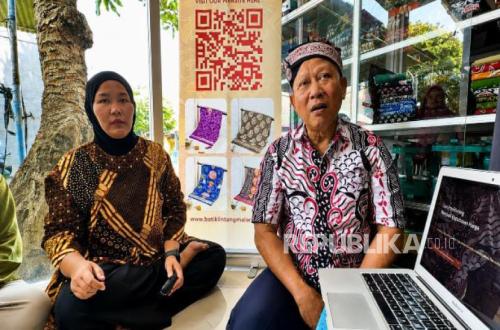
A collaboration between Universitas Widyagama Malang (UWG) and UBHINUS under the 2026 Community Partnership Programme (PKM) is driving the strengthening of the Batik Lintang small enterprise in Ngijo Village, Karangploso District, Malang Regency. The mentoring initiative brings together the use of generative design technology with artisan knowledge to broaden motif exploration without removing the batik makers’ control over identity, cultural meaning and production feasibility.
The programme is funded by the Directorate of Research and Community Service (DPPM) of the Ministry of Higher Education, Science and Technology (Kemdiktisaintek) for 2026. As of the progress report period of 15 August 2026, activities carried out include programme socialisation and agreement, artisan storytelling and heritage value training, batik design and motif exploration training, as well as mentoring on premium product pricing and portfolio development integrated with digital branding and product storytelling.
Design strengthening was then linked to managerial value escalation training delivered by Dr Sodik, an Accounting lecturer at Universitas Widya Gama Malang. The mentoring encourages partners to shift their perspective from merely covering production costs towards managing product value. Artisans and business owners are guided to recognise the value-forming elements of batik, ranging from complexity of workmanship, time, craftsmanship, design rarity, motif philosophy, to cultural legitimacy. These components are then used to differentiate regular, premium and exclusive portfolios so that each product is not treated with the same pricing logic.
“Batik products cannot be calculated solely from materials and production costs. Value is also shaped by process, artisan skill, rarity and cultural narrative. Therefore, partners need to be able to explain why a product falls into the regular, premium or exclusive category, and what value basis distinguishes it,” he said.
Batik Lintang possesses strong cultural capital through its handmade process, batik makers’ skills and Malangan motifs. However, these strengths require a design development and value management system to remain relevant to market developments without losing the cultural character that is the product’s main differentiator.
PKM team leader Dr Hanif Rani Iswari, a Management lecturer at Universitas Widya Gama Malang, said technology in this programme is not positioned as a replacement for batik makers. Generative design is used to expand the exploration space, while artisans remain the party that determines visual suitability, philosophy and the possibility of a design being realised as batik.
“What we want to build is not batik that depends on technology, but artisans who are able to use technology critically. Technology helps open up alternatives, while decisions about identity, meaning, quality and production feasibility remain with the batik makers,” she said.
This approach is important because visuals that technology can produce are not necessarily compatible with the cultural language of Batik Lintang. Exploration results must be read back by artisans: whether the form is relevant, whether the symbols are appropriate, whether they can be translated into batik techniques, and whether they have a clear position within the product identity.
Saiful Yahya, a Visual Communication Design lecturer at UBHINUS’s Creative Economy Faculty, emphasised that the collaboration between technology and artisans must place humans as the primary filter. According to him, generative design can accelerate the process of seeking alternatives, but cannot take over the contextual knowledge that batik makers have built through experience.
“We position generative technology as an exploration space. Artisan knowledge remains the primary filter because not all visuals that technology can produce have cultural suitability and feasibility to be translated into batik,” he said.
Design strengthening was then connected to managerial aspects. Partners are guided to distinguish regular, premium and exclusive products so that differences in workmanship complexity, design rarity, artisan skill and cultural value can be translated into clearer product positioning.
At the same time, artisan storytelling and heritage value training is directed so that the knowledge long embedded in batik makers does not stop at the production room. Motif philosophy, the batik-making process, artisan identity and the daily lives of batik makers are being compiled as product communication material.
Ita Fitriyah, owner of Batik Lintang, welcomed the approach that continues to place batik makers at the centre of the process. For the partner, technology serves as a tool to expand possibilities, while knowledge about Batik Lintang’s character must still come from artisan experience.
“Technology helps us see more design possibilities, but the results still need to be read again: whether they match Batik Lintang’s character, can be made into batik, and have the right story. Therefore, batik makers’ experience remains very important,” she said.
Dr Sodik, an Accounting lecturer at Universitas Widya Gama and PKM team member, emphasised that the focus of this PKM lies in capacity strengthening, implementation mentoring, curation of motif exploration results, strengthening of premium product categories, development of limited thematic collections, design and narrative documentation, as well as gradual digital content production.
The collaboration between Widya Gama and UBHINUS is expected to strengthen the two-way knowledge transfer process between universities and cultural business actors. Technology brings new possibilities in exploration, while artisans safeguard the knowledge, context and meaning that keep batik retaining its identity.
Through this approach, the strengthening of Batik Lintang is not directed solely at digitalisation or production increases. The programme positions innovation as a tool to strengthen artisan capacity so that product development, value management and cultural communication can continue more independently after the mentoring programme ends.
Source: jawawa.id (https://jawawa.id/newsitem/uwg-ubhinus-collaborative-community-partnership-programme-strengthens-batik-lintang-in-ngijo-village-malang-1787277121)
Originally published by Republika (https://rejogja.republika.co.id/berita/tk3h79456/pkm-kolaborasi-uwgubhinus-perkuat-batik-lintang-di-desa-ngijo-malang), translated from Indonesian