
UU-PPRT: State Legitimacy for "Domestic Worker Diplomacy"
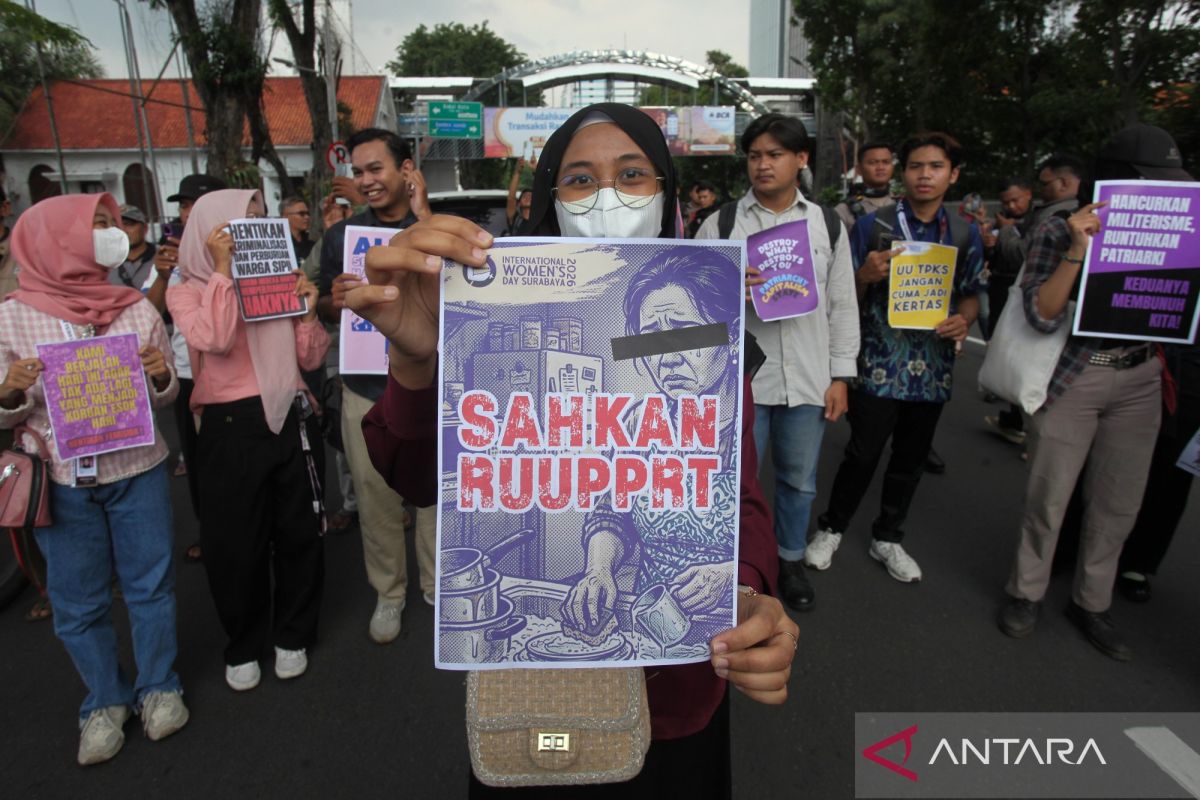
The strategic value of the UU PPRT lies in strengthening legal sovereignty in the domestic sphere, while eliminating modern feudal practices that have long been hidden within household employment relations. Jakarta (ANTARA) - The legislative process of the Domestic Workers Protection Act (UU PPRT) by the Indonesian House of Representatives (DPR RI) serves as evidence of the political commitment of President Prabowo Subianto’s administration towards marginalised groups that have previously been neglected in legal protection. The approval of the PPRT Bill into law has captured widespread attention, given its protracted process without certainty for 22 years. This long impasse was finally resolved through the bold decision of the government alongside the DPR, coinciding with Kartini Day commemorations. This momentum holds not only political value but also a sacred and philosophical national significance, that the state is truly present, reaching silent spaces that have long escaped attention. Legal Sovereignty Grounded in Articles 27 and 28 of the 1945 Constitution, the Domestic Workers Protection Act emerges as an instrument to uphold the sovereignty of the weak. This regulation provides guarantees for a more decent life for domestic workers. Moreover, this law holds strategic value as an effort to transform relations that were previously feudal in nature into professional employment relationships based on a more humane social contract. By equalising the rights of domestic workers through social security protection and wage standards, Indonesia not only eradicates systematic discriminatory practices but also strengthens its moral authority on the global diplomatic stage. This policy is a tangible embodiment of the second principle of Pancasila, namely humanising humanity in a just and civilised manner, realised in the smallest unit of society. Therefore, the UU PPRT cannot be viewed merely as a technical labour regulation. It is an important political statement to dismantle the myth of imbalanced power: where employers have tended to be absolute, while workers are present without protection and often trapped in unfair contractual relations. President Prabowo understands that citizens’ sovereignty must not be limited by sectoral interests. The approval of the PPRT Bill into law reflects the state’s presence in changing the fate of millions of domestic workers, while also enhancing their bargaining position. This historic moment was created when Deputy Speaker of the DPR RI, Sufmi Dasco Ahmad, hammered the approval in the DPR Legislation Body Meeting. That decision becomes a concrete answer to the long wait for the fulfilment of citizens’ constitutional rights.