
UTM promotes Madura industrialisation based on research and innovation
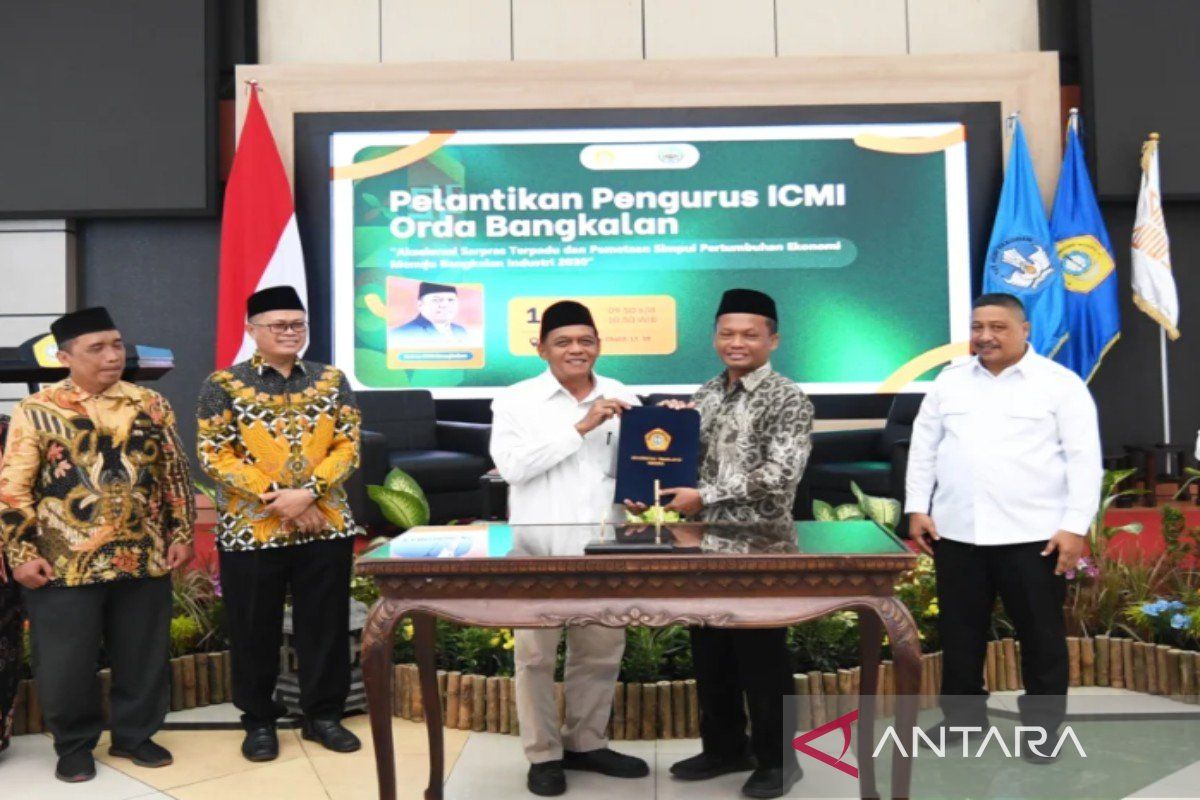
Bangkalan — Universitas Trunodjoyo Madura (UTM) Bangkalan is strengthening its collaboration with the local Indonesian Muslim Intellectuals Association (ICMI) to promote the development of Madura, focusing on research, innovation, human resource empowerment, and industrialisation that benefits the community.
This commitment was marked by the signing of a Memorandum of Understanding (MoU) between UTM and the ICMI Bangkalan Regional Branch, accompanied by a public discussion regarding support for port infrastructure for Madura’s industrialisation, food security, and industrial development.
“This cooperation serves as a space to bring together the strengths of universities with the networks of intellectuals and regional stakeholders to formulate more directed development steps,” said the Rector of UTM Bangkalan, Prof. Safi’, in a written statement received in Bangkalan on Tuesday.
According to him, universities possess scientific resources that can be utilised by local governments and the community to address development issues through data-driven studies and research.
“UTM is always ready to collaborate to develop Bangkalan Regency across various aspects, including education, health, and community welfare. Whatever the region requires can be communicated to UTM, and as long as we possess the relevant expertise, we will provide our services,” said Safi’.
He added that the development of industrialisation in Madura needs to be closely monitored from the planning stage. Any industries developed must undergo comprehensive studies, be environmentally friendly, and focus on increasing community welfare by ensuring the involvement of local labour.
“We want the industries entering Madura to truly benefit the community. Therefore, studies must be comprehensive, environmentally friendly, and provide significant space for local human resources,” he said.
UTM, he noted, possesses various research potentials based on local strengths, but downstreaming and large-scale production require the involvement of the industrial sector and local government.
“Universities have limits in implementing the ‘tridharma’ (three pillars of higher education). Therefore, research and innovation must be brought together with the government and industry so that the results can be applied and the benefits truly reach the community,” said Safia’.
Meanwhile, the Chairman of ICMI Bangkalan, Abdul Azis Jakfar, stated that the cooperation with UTM is aimed at encouraging development ideas based on community empowerment.
He noted that research and innovation must be pushed through to the stages of downstreaming and commercialisation to serve as instruments for increasing prosperity.
“Research and innovation must be endeavoured to be downstreamed, commercialised, and made part of community service. From that cycle, community welfare can be built,” he said.
He cited the development of community potential in the northern coastal areas of Bangkalan, which could be strengthened through research and downstreaming. The potential of agricultural commodities and local resources can be developed as part of the community empowerment agenda while supporting food security and industrial needs.
In line with this, the Chairman of ICMI East Java, Pitono Nugroho, positioned ICMI as a collaborator playing a role in ensuring that various elements within the development ecosystem move together.
He stated that ICMI does not act as an operator for all programmes, but rather helps build connections and ensures collaboration between actors.
“ICMI is a collaborator. We want to ensure the ecosystem functions, rather than merely chasing numerous programmes. The important thing is how ideas and innovations truly produce an impact,” said Pitono.
He emphasised the importance of innovation in regional development. Development needs to have a measurable direction so that the progress achieved can be tracked, including its impact on the community down to the village level.
In the context of industrialisation, Pitono warned that the development of industrial areas should not stop at the physical transformation of the region, but must also provide economic and social impacts for the people of Bangkalan. Therefore, development must be prepared through an ecosystem involving the government, universities, the business world, and the community.
Through the MoU with ICMI Bangkalan, UTM is opening a wider space for collaboration to connect research, innovation, government, industry, and the community. Each party is expected to play a role according to their capacity, ensuring that Madura’s development agenda moves beyond discourse towards measurable programmes that provide benefits.