
Utilising climate information prevents crop failure across thousands of hectares
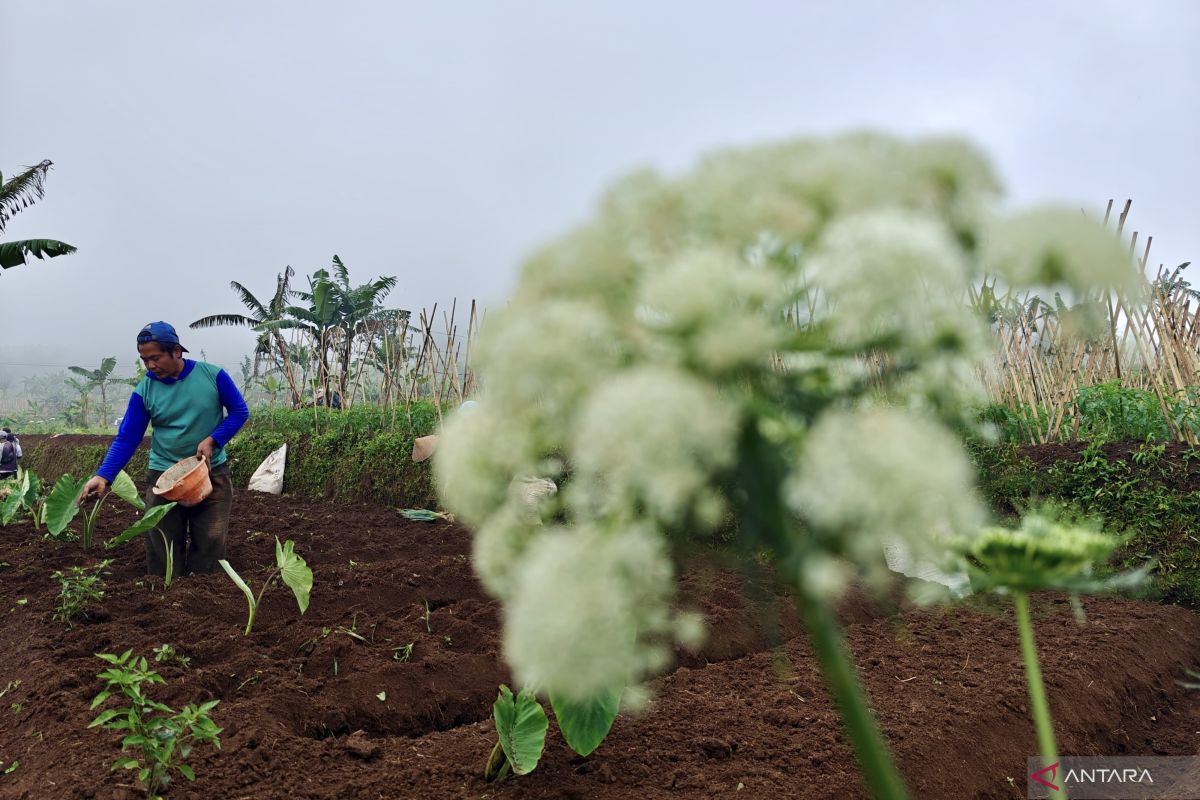
Jakarta (ANTARA) - The Meteorology, Climatology, and Geophysics Agency (BMKG) assesses that adaptation measures based on precise climate information have proven effective in preventing the risk of crop failure for food commodities on rain-fed lands across various production centres due to El Niño pressures.
BMKG Deputy for Climatology, Ardhasena Sopaheluwakan, stated in Jakarta on Wednesday that the El Niño phenomenon and this year’s prolonged dry season have generally exerted pressure on almost all agricultural regions in Indonesia.
“The impacts of El Niño and the dry season are hitting almost all regions of Indonesia, particularly rain-fed agricultural areas. However, through the integration of climate information, field mitigation measures can proceed effectively,” he said.
Nevertheless, Ardhasen explained that the adaptive synergy coordinated by the Ministry of Agriculture—through a series of intensification, extensification, pumpisation programmes, and adjustments to planting patterns—has successfully suppressed potential losses significantly.
A successful example of applying climate information can be seen in the Pangkajene and Islands Regency (Pangkep), South Sulawesi, where farmers advanced their planting season and selected appropriate varieties after receiving early warnings from BMKG regarding the accelerated onset of the dry season.
According to him, BMKG continues to encourage local governments and agricultural sector stakeholders to use climate forecast data as the primary reference for designing planting calendars to maintain national food security.
The dry season period in Indonesia is predicted to end with the arrival of the rainy season between October and December 2026, although the El Niño phenomenon in the Pacific Ocean is projected to persist until the first quarter of 2027.
The peak of the rainy season will begin in December 2026 across 155 Seasonal Zones (ZOM), covering most of Sumatra, West Kalimantan, North Kalimantan, and northern Sulawesi.
Subsequently, in January 2027, the peak of the rains will shift to 162 ZOM, encompassing almost the entire island of Java, Lampung, South Kalimantan, western South Sulawesi, and most of Papua.
By February 2027, an estimated 140 ZOM are expected to experience the peak of the rainy season, concentrated in central Sulawesi, Southeast Sulawesi, Maluku, and southern Papua.
Source: jawawa.id (https://jawawa.id/newsitem/utilising-climate-information-prevents-crop-failure-across-thousands-of-hectares-1790143403)
Originally published by Antara (Indonesian) (https://www.antaranews.com/berita/5754129/pemanfaatan-informasi-iklim-cegah-gagal-panen-ribuan-hektare-lahan), translated from Indonesian