
Utilise Toll Discounts to Avoid Peak Return Flow for Eid
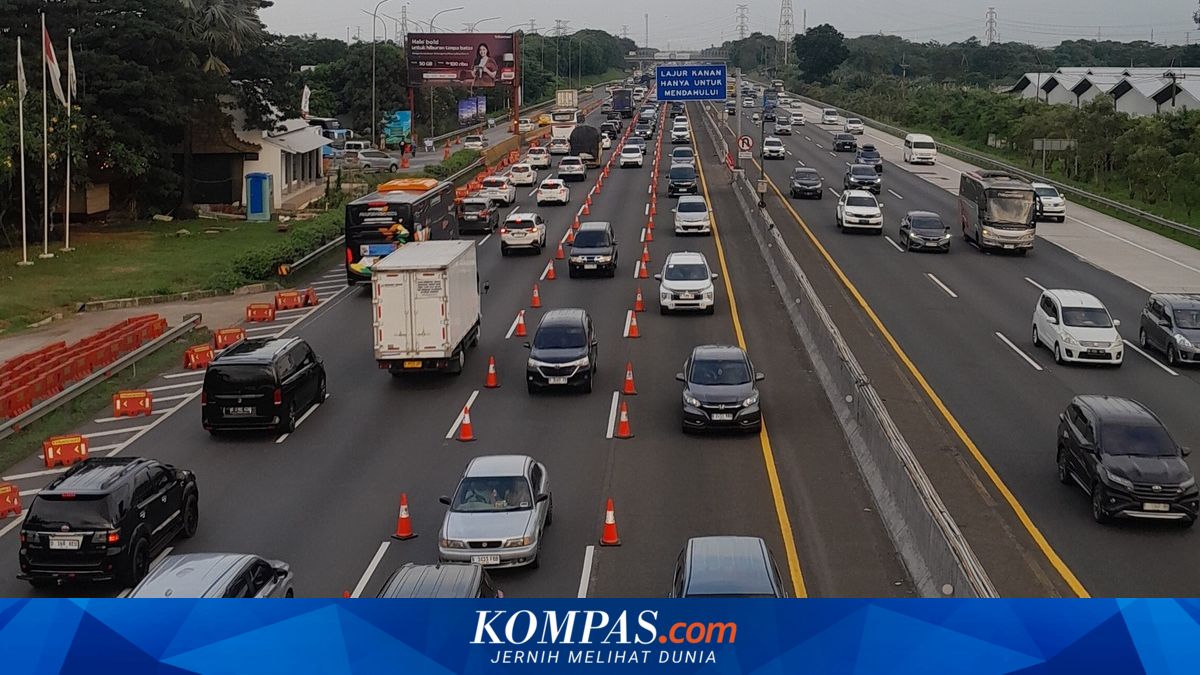
JAKARTA, KOMPAS.com - The public is advised to utilise toll discounts and plan their travel times to avoid congestion during the peak of the 2026 Eid return flow, predicted to occur from 28 March 2026 to 29 March 2026.
PT Jasa Marga (Persero) Tbk’s President Director, Rivan Achmad Purwantono, stated that this advice is intended to encourage the public not to travel simultaneously on the peak dates.
“Hopefully, the call to utilise toll discounts will be heeded by everyone, so they don’t return at the end of 28 or 29. In particular, our prediction is that the peak could be on the 29th,” he said after the joint Return Flow Monitoring press conference in Bekasi, West Java, on Wednesday (25/3/2026).
He explained that traffic density is heavily influenced by the public’s choice of travel times.
According to him, distributing vehicle flow on 26 March 2026 and 27 March 2026 is crucial to reduce accumulation during the peak return flow.
“If the influx is too gradual on the 26th-27th, then the potential for an increase will emerge on the 29th,” he said.
Rivan added that the trend of vehicle movement during the return flow generally occurs from afternoon to evening.
Therefore, the public is asked to pay attention to this pattern when determining travel times.
In addition, the driver’s physical condition is also an important factor in the journey.
Drivers are advised to adjust departure times to their own capabilities, including choosing daytime travel if not able to drive at night.
“If you’re worried about returning on the 29th which is crowded, why not return on the 26th or 27th. Choose the right time, choose the right condition,” he said.
He also appreciated the role of various parties in disseminating traffic information to the public.
“We inform the traffic or the hourly traffic growth, so the public can make their choices to depart,” he said.
By utilising toll discounts and available information, it is hoped that the Eid homecoming and return flows can be more evenly distributed and peak congestion can be avoided.